


Screening over Speech in Unselected Populations for Clinical Trials in AD (PROSPECT-AD): Study Design and Protocol
- PMID: 36946458
- PMCID: PMC9851094
- DOI: 10.14283/jpad.2023.11
Screening over Speech in Unselected Populations for Clinical Trials in AD (PROSPECT-AD): Study Design and Protocol
Abstract
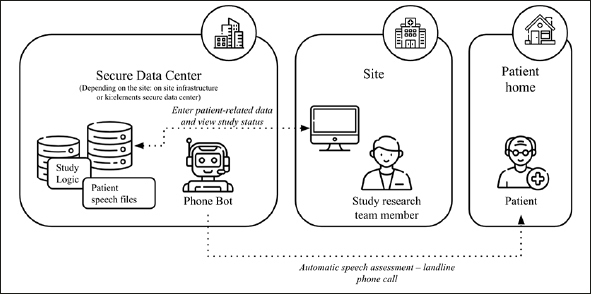
Background: Speech impairments are an early feature of Alzheimer's disease (AD) and consequently, analysing speech performance is a promising new digital biomarker for AD screening. Future clinical AD trials on disease modifying drugs will require a shift to very early identification of individuals at risk of dementia. Hence, digital markers of language and speech may offer a method for screening of at-risk populations that are at the earliest stages of AD, eventually in combination with advanced machine learning. To this end, we developed a screening battery consisting of speech-based neurocognitive tests. The automated test performs a remote primary screening using a simple telephone.
Objectives: PROSPECT-AD aims to validate speech biomarkers for identification of individuals with early signs of AD and monitor their longitudinal course through access to well-phenotyped cohorts.
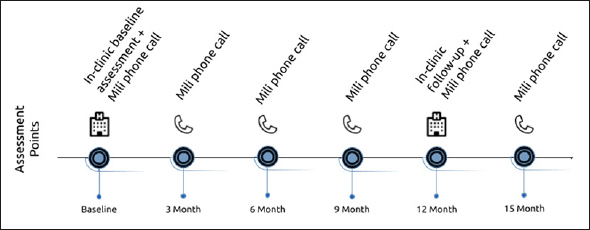
Design: PROSPECT-AD leverages ongoing cohorts such as EPAD (UK), DESCRIBE and DELCODE (Germany), and BioFINDER Primary Care (Sweden) and Beta-AARC (Spain) by adding a collection of speech data over the telephone to existing longitudinal follow-ups. Participants at risk of dementia are recruited from existing parent cohorts across Europe to form an AD 'probability-spectrum', i.e., individuals with a low risk to high risk of developing AD dementia. The characterization of cognition, biomarker and risk factor (genetic and environmental) status of each research participants over time combined with audio recordings of speech samples will provide a well-phenotyped population for comparing novel speech markers with current gold standard biomarkers and cognitive scores.
Participants: N= 1000 participants aged 50 or older will be included in total, with a clinical dementia rating scale (CDR) score of 0 or 0.5. The study protocol is planned to run according to sites between 12 and 18 months.
Measurements: The speech protocol includes the following neurocognitive tests which will be administered remotely: Word List [Memory Function], Verbal Fluency [Executive Functions] and spontaneous free speech [Psychological and/ or behavioral symptoms]. Speech features on the linguistic and paralinguistic level will be extracted from the recordings and compared to data from CSF and blood biomarkers, neuroimaging, neuropsychological evaluations, genetic profiles, and family history. Primary candidate marker from speech will be a combination of most significant features in comparison to biomarkers as reference measure. Machine learning and computational techniques will be employed to identify the most significant speech biomarkers that could represent an early indicator of AD pathology. Furthermore, based on the analysis of speech performances, models will be trained to predict cognitive decline and disease progression across the AD continuum.
Conclusion: The outcome of PROSPECT-AD may support AD drug development research as well as primary or tertiary prevention of dementia by providing a validated tool using a remote approach for identifying individuals at risk of dementia and monitoring individuals over time, either in a screening context or in clinical trials.
Keywords: Alzheimer’s disease; Dementia; cognitive assessment; machine learning; phone-based; screening; speech biomarker.
Conflict of interest statement
AK is partially employed by the company ki:elements. NL, EB and JT are employed by the company ki:elements. Within the last three years ST has served on national and international advisory boards for Roche, Eisai, Biogen, and Grifols. He is member of the independent data safety and monitoring board of the study ENVISION (sponsor: Biogen). SP has served on scientific advisory boards and/or given lectures in symposia sponsored by Bioartic, Biogen, Eli Lilly, Geras Solutions, and Roche. SS receives salary from Sony Research and holds a research grant from the Scottish Neurological Research Fund. OH has acquired research support (for the institution) from ADx, AVID Radiopharmaceuticals, Biogen, Eli Lilly, Eisai, Fujirebio, GE Healthcare, Pfizer, and Roche. In the past 2 years, he has received consultancy/speaker fees from AC Immune, Amylyx, Alzpath, BioArctic, Biogen, Cerveau, Fujirebio, Genentech, Novartis, Roche, and Siemens. SK has nothing to disclose.
Figures
References
Publication types
MeSH terms
Substances
LinkOut - more resources
Full Text Sources
Medical