


Investigating Thymic Epithelial Cell Diversity Using Systems Biology
- PMID: 36947816
- PMCID: PMC10037528
- DOI: 10.4049/jimmunol.2200610
Investigating Thymic Epithelial Cell Diversity Using Systems Biology
Abstract
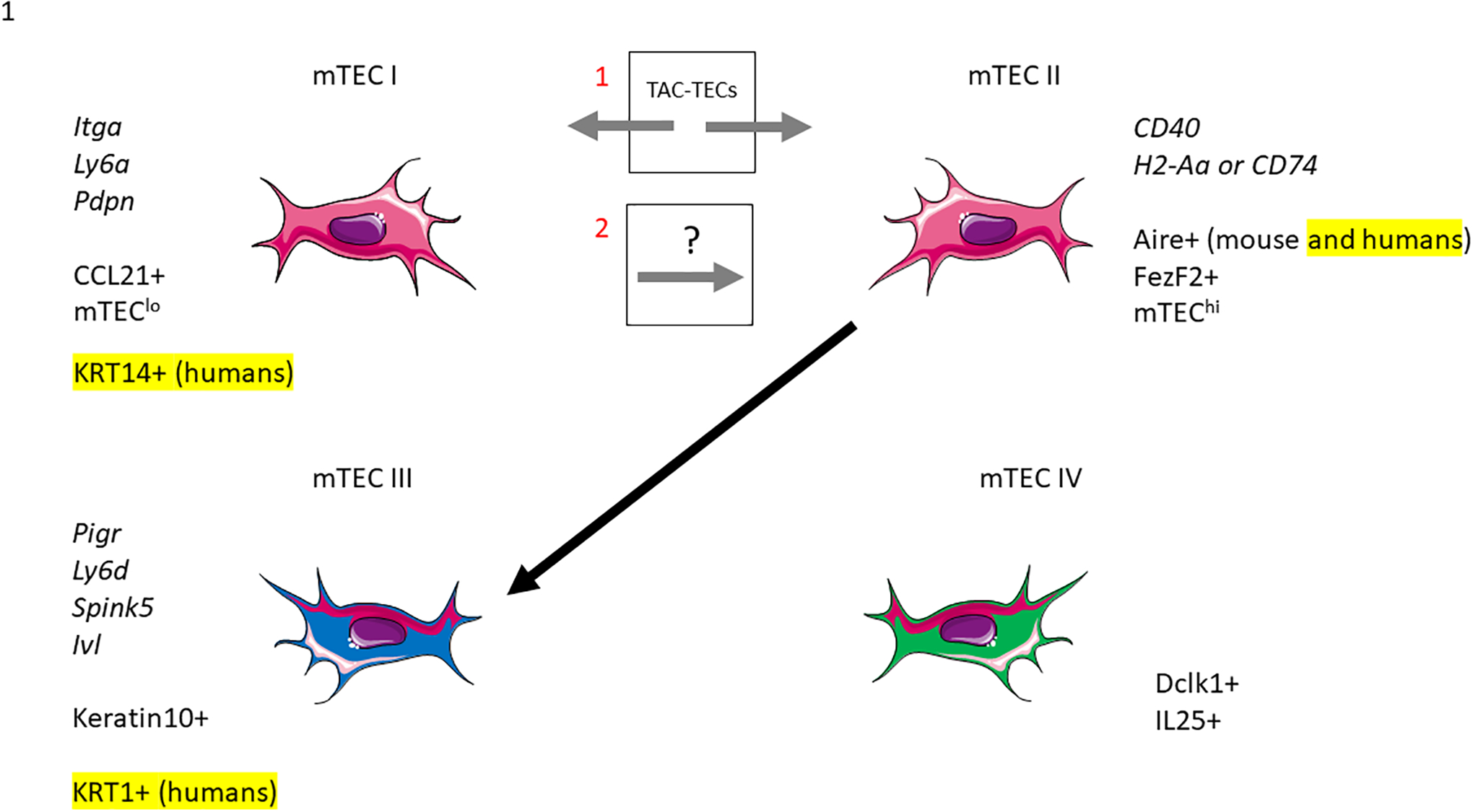
The thymus is an intricate organ consisting of a diverse population of thymic epithelial cells (TECs). Cortical and medullary TECs and their subpopulations have distinct roles in coordinating the development and selection of functionally competent and self-tolerant T cells. Recent advances made in technologies such as single-cell RNA sequencing have made it possible to investigate and resolve the heterogeneity in TECs. These findings have provided further understanding of the molecular mechanisms regulating TEC function and expression of tissue-restricted Ags. In this brief review, we focus on the newly characterized subsets of TECs and their diversity in relation to their functions in supporting T cell development. We also discuss recent discoveries in expression of self-antigens in the context of TEC development as well as the cellular and molecular changes occurring during embryonic development to thymic involution.
Copyright © 2023 by The American Association of Immunologists, Inc.
Figures
References
-
- Tai X, Erman B, Alag A, Mu J, Kimura M, Katz G, Guinter T, McCaughtry T, Etzensperger R, Feigenbaum L, Singer DS, Singer A, Foxp3 Transcription Factor Is Proapoptotic and Lethal to Developing Regulatory T Cells unless Counterbalanced by Cytokine Survival Signals. Immunity. 38, 1116–1128 (2013). - PMC - PubMed
-
- Sansom SN, Shikama-Dorn N, Zhanybekova S, Nusspaumer G, Macaulay IC, Deadman ME, Heger A, Ponting CP, Holländer GA, Population and single-cell genomics reveal the Aire dependency, relief from Polycomb silencing, and distribution of self-antigen expression in thymic epithelia. Genome Res. 24, 1918–1931 (2014). - PMC - PubMed
Publication types
MeSH terms
Grants and funding
LinkOut - more resources
Full Text Sources
