


Resource utilization and preparedness within the COVID-19 pandemic in Tunisian medical intensive care units: A nationwide retrospective multicentre observational study
- PMID: 36947950
- PMCID: PMC9998281
- DOI: 10.1016/j.jiph.2023.02.022
Resource utilization and preparedness within the COVID-19 pandemic in Tunisian medical intensive care units: A nationwide retrospective multicentre observational study
Abstract
Background: The worldwide SARS-CoV-2 pandemic represents the most recent global healthcare crisis. While all healthcare systems suffered facing the immense burden of critically-ill COVID-19 patients, the levels of preparedness and adaptability differed highly between countries.
Aim: to describe resource mobilization throughout the COVID-19 waves in Tunisian University Medical Intensive Care Units (MICUs) and to identify discrepancies in preparedness between the provided and required resource.
Methods: This is a longitudinal retrospective multicentre observational study conducted between March 2020 and May 2022 analyzing data from eight University MICUs. Data were collected at baseline and at each bed expansion period in relation to the nation's four COVID-19 waves. Data collected included epidemiological, organizational and management trends and outcomes of COVID-19 and non-COVID-19 admissions.
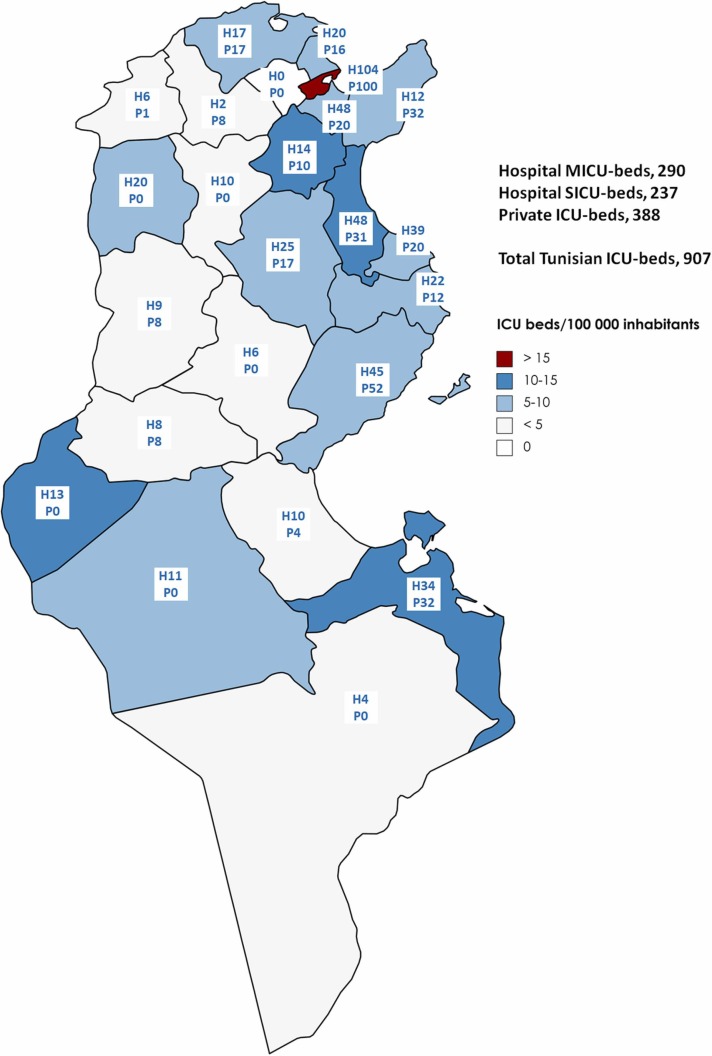
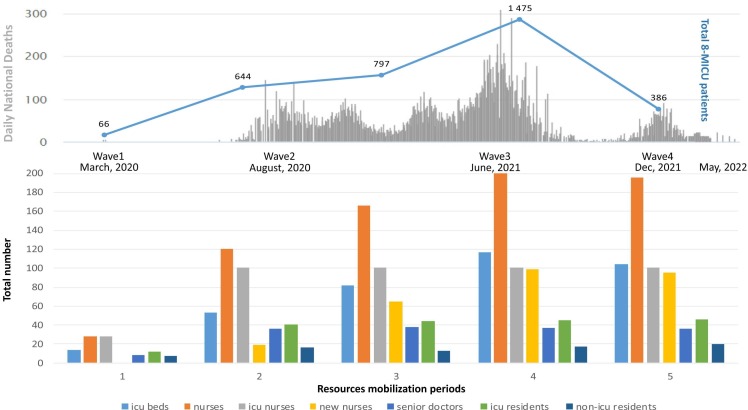
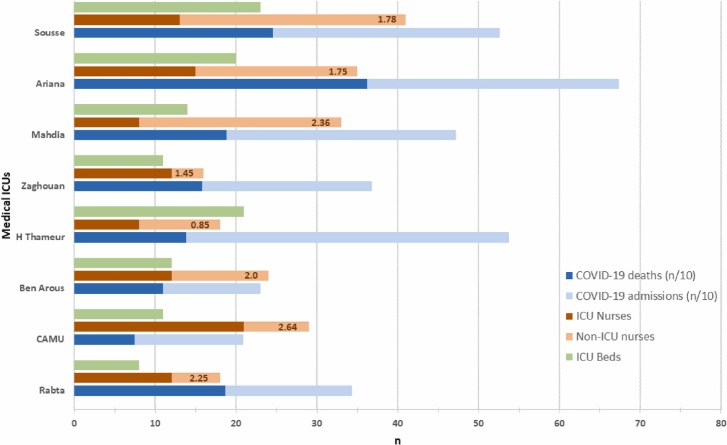
Results: MICU-beds increased from 66 to a maximum of 117 beds. This was possible thanks to equipping pre-existing non-functional MICU beds (n = 20) and creating surge ICU-beds in medical wards (n = 24). MICU nurses increased from 53 to 200 of which 99 non-ICU nurses, by deployment from other departments and temporary recruitment. The nurse-to-MICU-bed ratio increased from 1:1 to around 1·8:1. Only 55% of beds were single rooms, 80% were equipped with ICU ventilators. These MICUs managed to admit a total of 3368 critically-ill patients (15% of hospital admissions). 33·2% of COVID-19-related intra-hospital deaths occurred within the MICUs.
Conclusion: Despite a substantial increase in resource mobilization during the COVID-19 pandemic, the current study identified significant persisting discrepancies between supplied and required resource, at least partially explaining the poor overall prognosis of critically-ill COVID-19 patients.
Keywords: COVID-19; Healthcare workers; Intensive care unit; Preparedness; Public health.
Copyright © 2023 The Author(s). Published by Elsevier Ltd.. All rights reserved.
Conflict of interest statement
Conflict of interest All the authors certify that they have no affiliations with/or involvement in any organization or entity with any financial interest in the subject matter or materials discussed in this manuscript.
Figures
References
-
- Soudani S.F.M.I.: La Tunisie doit contenir la masse salariale à 15% du PIB en 2022. lecourrierdelatlas 2021. https://www.lecourrierdelatlas.com/fmi-la-tunisie-doit-contenir-la-masse... (accessed September 27, 2022).
-
- Réduction de la masse salariale: Ce qu’a proposé le gouvernement Bouden au FMI | Webmanagercenter n.d. https://www.webmanagercenter.com/2021/12/27/478129/reduction-de-la-masse... (accessed September 27, 2022).
-
- Tunisia. Principales statistiques sanitaires. World Health Organ - Reg Off East Mediterr n.d. http://www.emro.who.int/fr/right-teasers/tunisia/principales-statistique... (accessed September 27, 2022).
Publication types
MeSH terms
LinkOut - more resources
Full Text Sources
Medical
Miscellaneous
