Smoking cessation and vaccination
- PMID: 36948500
- PMCID: PMC10032588
- DOI: 10.1183/16000617.0187-2022
Smoking cessation and vaccination
Abstract
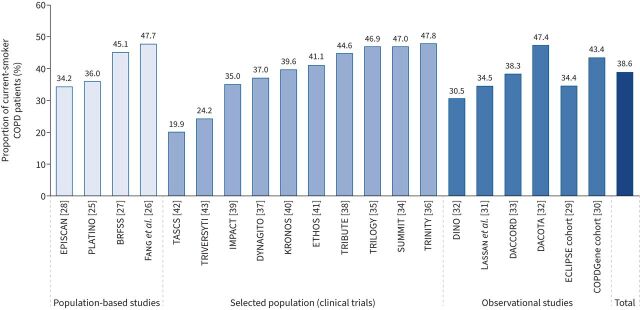
A significant proportion of COPD patients (∼40%) continue smoking despite knowing that they have the disease. Smokers with COPD exhibit higher levels of nicotine dependence, and have lower self-efficacy and self-esteem, which affects their ability to quit smoking. Treatment should be adapted to the needs of individual patients with different levels of tobacco dependence. The combination of counselling plus pharmacotherapy is the most effective cessation treatment for COPD. In patients with severe COPD, varenicline and bupropion have been shown to have the highest abstinence rates compared with nicotine replacement therapy. There is a lack of evidence to support that smoking cessation reduction or harm reduction strategies have benefits in COPD patients. The long-term efficacy and safety of electronic cigarettes for smoking cessation need to be evaluated in high-risk populations; therefore, it is not possible to recommend their use for smoking cessation in COPD. Future studies with the new generation of nicotine vaccines are necessary to determine their effectiveness in smokers in general and in COPD patients.
Copyright ©The authors 2023.
Conflict of interest statement
Conflict of interest: M. Montes de Oca has received honoraria for lectures on COPD from AstraZeneca and GSK, outside the submitted work. M.E. Laucho-Contreras has received an honorarium for Medical Affairs Staff from GSK Colombia and owns GSK stock, all outside the submitted work.
Figures
Comment in
-
Nonpharmacological interventions in COPD.Eur Respir Rev. 2023 Mar 22;32(167):230028. doi: 10.1183/16000617.0028-2023. Print 2023 Mar 31. Eur Respir Rev. 2023. PMID: 36948503 Free PMC article.
References
MeSH terms
Substances
LinkOut - more resources
Full Text Sources
Medical