


A genome-wide association study identifies a possible role for cannabinoid signalling in the pathogenesis of diabetic kidney disease
- PMID: 36949158
- PMCID: PMC10033677
- DOI: 10.1038/s41598-023-31701-w
A genome-wide association study identifies a possible role for cannabinoid signalling in the pathogenesis of diabetic kidney disease
Abstract
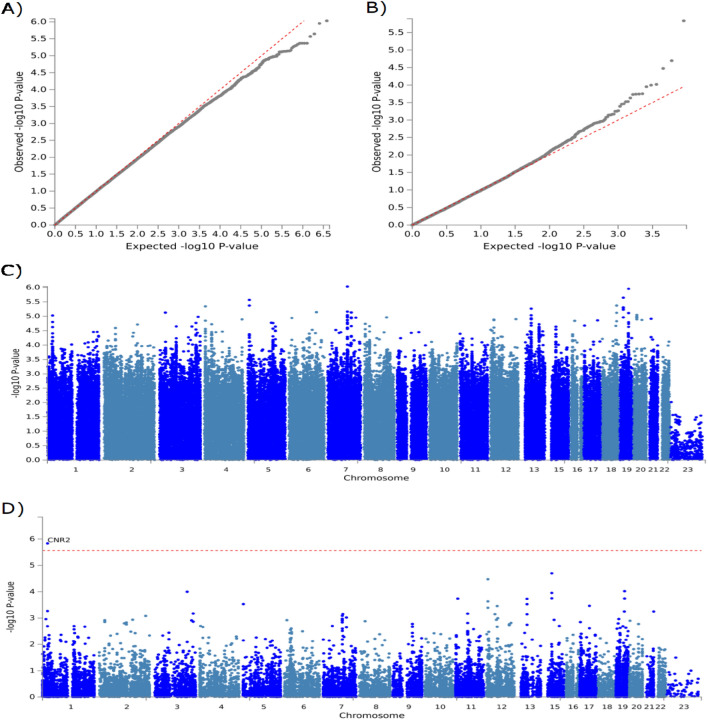
Diabetic kidney disease (DKD), also known as diabetic nephropathy, is the leading cause of renal impairment and end-stage renal disease. Patients with diabetes are at risk for DKD because of poor control of their blood glucose, as well as nonmodifiable risk factors including age, ethnicity, and genetics. This genome-wide association study (GWAS) was conducted for the first time in the Emirati population to investigate possible genetic factors associated with the development and progression of DKD. We included data on 7,921,925 single nucleotide polymorphism (SNPs) in 258 cases of type 2 diabetes mellitus (T2DM) who developed DKD and 938 control subjects with T2DM who did not develop DKD. GWAS suggestive results (P < 1 × 10⁻⁵) were further replicated using summary statistics from three cohorts with T2DM-induced DKD (Bio Bank Japan data, UK Biobank, and FinnGen Project data) and T1DM-induced DKD (UK-ROI cohort data from Belfast, UK). When conducting a multiple linear regression model for gene-set analyses, the CNR2 gene demonstrated genome-wide significance at 1.46 × 10⁻⁶. SNPs in CNR2 gene, encodes cannabinoid receptor 2 or CB2, were replicated in Japanese samples with the leading SNP rs2501391 showing a Pcombined = 9.3 × 10⁻⁷, and odds ratio = 0.67 in association with DKD associated with T2DM, but not with T1DM, without any significant association with T2DM itself. The allele frequencies of our cohort and those of the replication cohorts were in most cases markedly different. In addition, we replicated the association between rs1564939 in the GLRA3 gene and DKD in T2DM (P = 0.016, odds ratio = 0.54 per allele C). Our findings suggest evidence that cannabinoid signalling may be involved in the development of DKD through CB2, which is expressed in different kidney regions and known to be involved in insulin resistance, inflammation, and the development of kidney fibrosis.
© 2023. The Author(s).
Conflict of interest statement
The authors declare no competing interests.
Figures
References
Publication types
MeSH terms
Substances
Grants and funding
LinkOut - more resources
Full Text Sources
Medical
