


Creativity across the lifespan: changes with age and with dementia
- PMID: 36949404
- PMCID: PMC10035174
- DOI: 10.1186/s12877-023-03825-1
Creativity across the lifespan: changes with age and with dementia
Erratum in
-
Correction to: Creativity across the lifespan: changes with age and with dementia.BMC Geriatr. 2023 May 17;23(1):307. doi: 10.1186/s12877-023-03964-5. BMC Geriatr. 2023. PMID: 37198542 Free PMC article. No abstract available.
Abstract
Background: It is well known that older age is associated with losses in cognitive functioning. Less is known about the extent to which creativity is changing with age or dementia. Aim of the current study was to gain more insights into psychometric aspects of creativity in younger and older people as well as people with dementia.
Method: Our sample comprised three groups, (1) participants between age 18-30 years (n = 24), (2) participants 65 + years without cognitive impairment (n = 24), and (3) participants 65 + years with cognitive impairment / dementia (n = 23). Cognitive abilities were assessed via the Standard Progressive Matrices Test (SPM), Montreal Cognitive Assessment Test (MoCa), and Trail Making Test (TMT). Creativity was assessed via the Creative Reasoning Task (CRT), Test of Creative Thinking-Drawing Production (TCT-DP), and Alternate Uses Task (AUT).
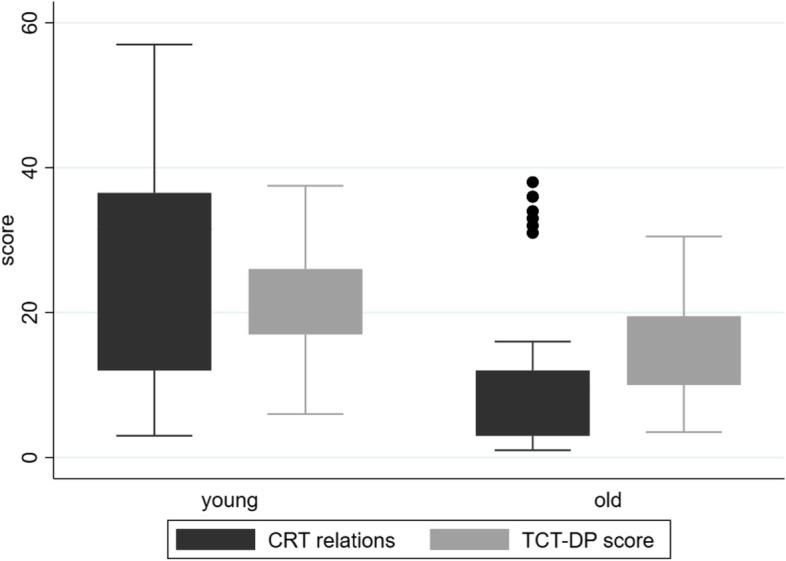
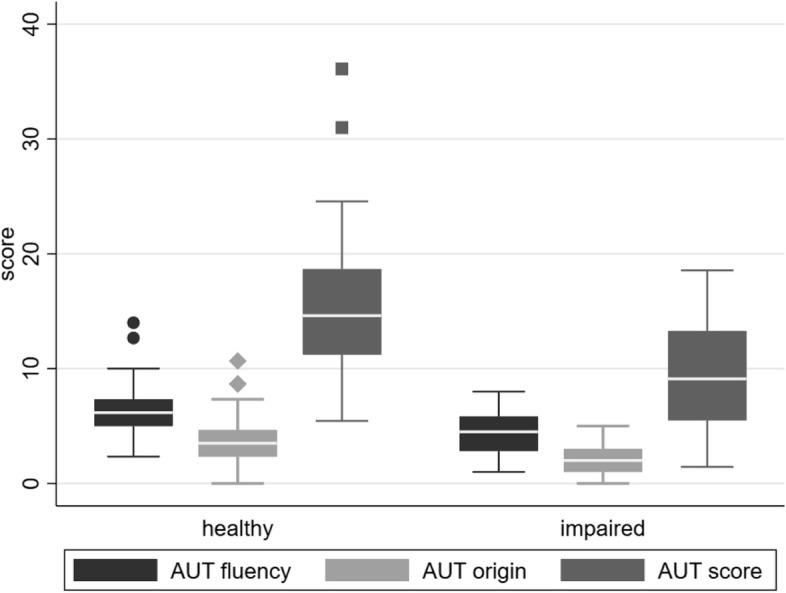
Results: Compared to younger people, older people scored significantly lower in only two out of eleven creativity sub-scores (one in the CRT and one in the TCT-DP). Performance in the SPM was significantly associated with these two sub-scores and age. Cognitively impaired older people had significantly lower scores in the creativity task AUT compared to cognitively healthy older people and younger people. The associations between MoCa and AUT scores were also significant.
Conclusion: Creativity appears relatively stable in older age, with exception of those creativity skills that are affected by abstract reasoning (SPM), which appear susceptible to aging. As our findings suggest, cognitive impairment in older age might impair only some aspects of creativity with other creativity aspects being comparable to cognitively healthy people. The age-related and the cognitive status-related effects seem to be independent. The preserved creative abilities can be used in dementia care programs.
Keywords: Age-related cognitive decline; Creativity; Dementia.
© 2023. The Author(s).
Conflict of interest statement
The authors declare that they have no competing interests.
Figures
References
-
- Anstey KJ, Low L-F. Normal cognitive changes in aging. Aust Fam Physician. 2004;33(10):783–7. - PubMed
-
- Lemaire P, Bherer L. Psychologie du vieillissement: une perspective cognitive: De Boeck Supérieur. 2005.
MeSH terms
LinkOut - more resources
Full Text Sources
Medical
Research Materials
