


Appraising the Preclinical Evidence of the Role of the Renin-Angiotensin-Aldosterone System in Antenatal Programming of Maternal and Offspring Cardiovascular Health Across the Life Course: Moving the Field Forward: A Scientific Statement From the American Heart Association
- PMID: 36951054
- PMCID: PMC10242542
- DOI: 10.1161/HYP.0000000000000227
Appraising the Preclinical Evidence of the Role of the Renin-Angiotensin-Aldosterone System in Antenatal Programming of Maternal and Offspring Cardiovascular Health Across the Life Course: Moving the Field Forward: A Scientific Statement From the American Heart Association
Abstract
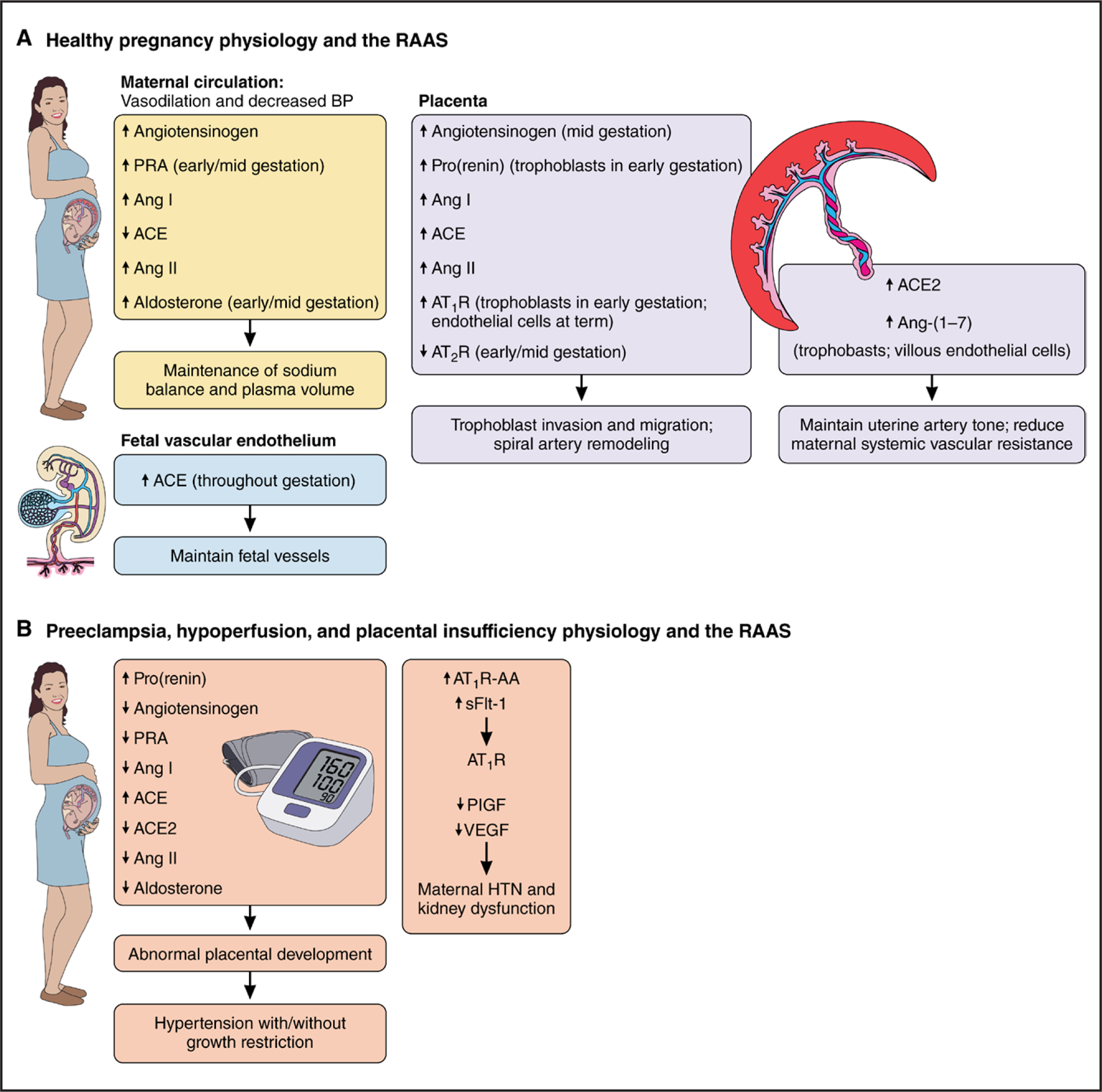
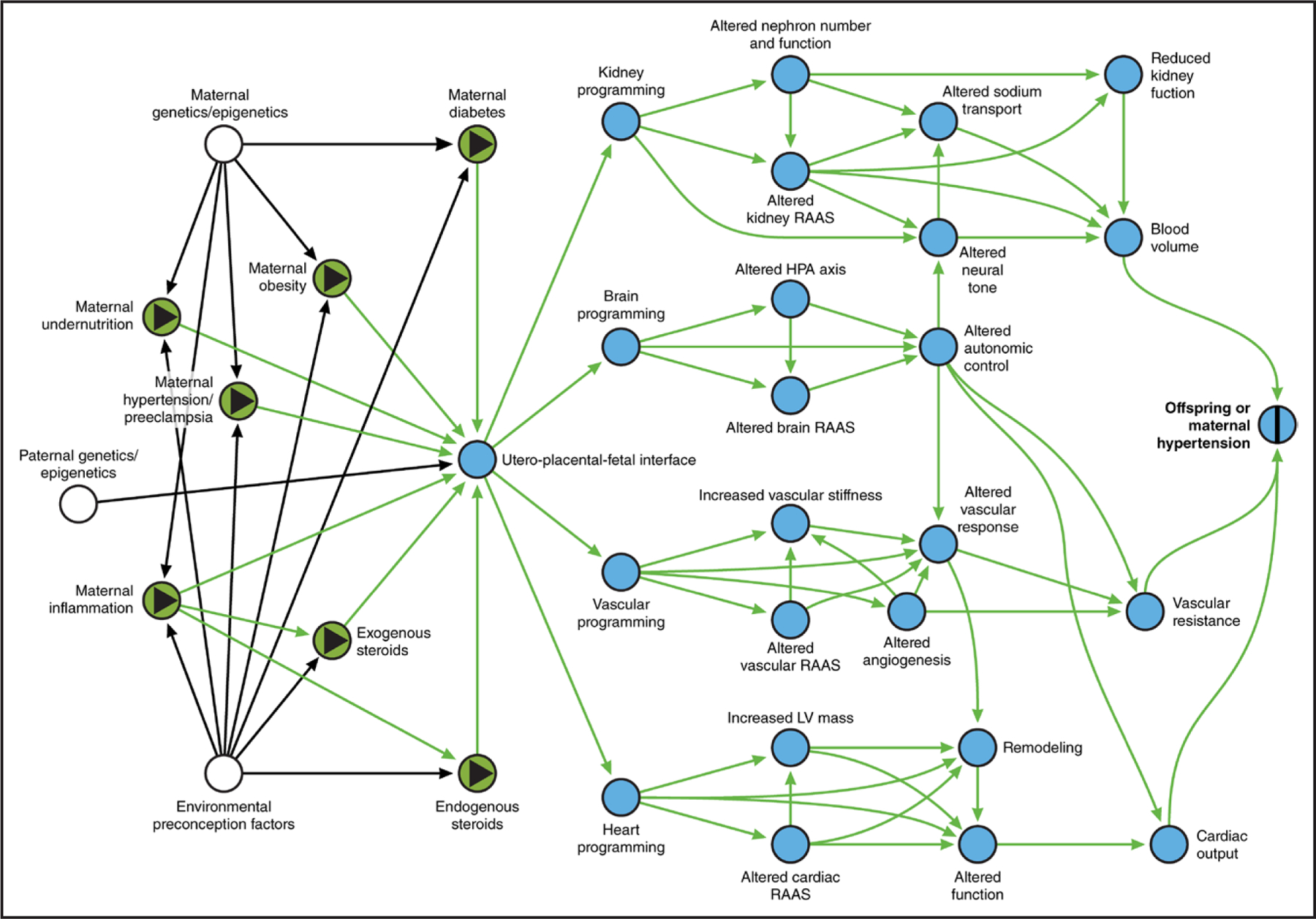
There is increasing interest in the long-term cardiovascular health of women with complicated pregnancies and their affected offspring. Emerging antenatal risk factors such as preeclampsia appear to increase the risk of hypertension and cardiovascular disease across the life course in both the offspring and women after pregnancy. However, the antenatal programming mechanisms responsible are complex and incompletely understood, with roots in alterations in the development, structure, and function of the kidney, heart, vasculature, and brain. The renin-angiotensin-aldosterone system is a major regulator of maternal-fetal health through the placental interface, as well as kidney and cardiovascular tissue development and function. Renin-angiotensin-aldosterone system dysregulation plays a critical role in the development of pregnancy complications such as preeclampsia and programming of long-term adverse cardiovascular health in both the mother and the offspring. An improved understanding of antenatal renin-angiotensin-aldosterone system programming is crucial to identify at-risk individuals and to facilitate development of novel therapies to prevent and treat disease across the life course. Given the inherent complexities of the renin-angiotensin-aldosterone system, it is imperative that preclinical and translational research studies adhere to best practices to accurately and rigorously measure components of the renin-angiotensin-aldosterone system. This comprehensive synthesis of preclinical and translational scientific evidence of the mechanistic role of the renin-angiotensin-aldosterone system in antenatal programming of hypertension and cardiovascular disease will help (1) to ensure that future research uses best research practices, (2) to identify pressing needs, and (3) to guide future investigations to maximize potential outcomes. This will facilitate more rapid and efficient translation to clinical care and improve health outcomes.
Keywords: AHA Scientific Statements; aldosterone; angiotensin-converting enzyme 2; hypertension; pre-eclampsia; pregnancy; renin-angiotensin system.
Conflict of interest statement
The American Heart Association makes every effort to avoid any actual or potential conflicts of interest that may arise as a result of an outside relationship or a personal, professional, or business interest of a member of the writing panel. Specifically, all members of the writing group are required to complete and submit a Disclosure Questionnaire showing all such relationships that might be perceived as real or potential conflicts of interest.
Figures
References
-
- South AM. Antenatal programming of blood pressure. In: Flynn JT, Ingelfinger JR, Brady TM, eds. Pediatric Hypertension Springer, Cham; 2022.
-
- Hoodbhoy Z, Mohammed N, Nathani KR, Sattar S, Chowdhury D, Maskatia S, Tierney S, Hasan B, Das JK. The impact of maternal preeclampsia and hyperglycemia on the cardiovascular health of the offspring: a systematic review and meta-analysis [published online May 3, 2021]. Am J Perinatol doi: 10.1055/s-0041-1728823. 10.1055/s-0041-1728823 - DOI - PubMed
Publication types
MeSH terms
Substances
Grants and funding
LinkOut - more resources
Full Text Sources
Medical
