Activating Transcription Factor 3 Stimulates Follicle-Stimulating Hormone-β Expression In Vitro But Is Dispensable for Follicle-Stimulating Hormone Production in Murine Gonadotropes In Vivo
- PMID: 36951304
- PMCID: PMC10282924
- DOI: 10.1210/endocr/bqad050
Activating Transcription Factor 3 Stimulates Follicle-Stimulating Hormone-β Expression In Vitro But Is Dispensable for Follicle-Stimulating Hormone Production in Murine Gonadotropes In Vivo
Abstract
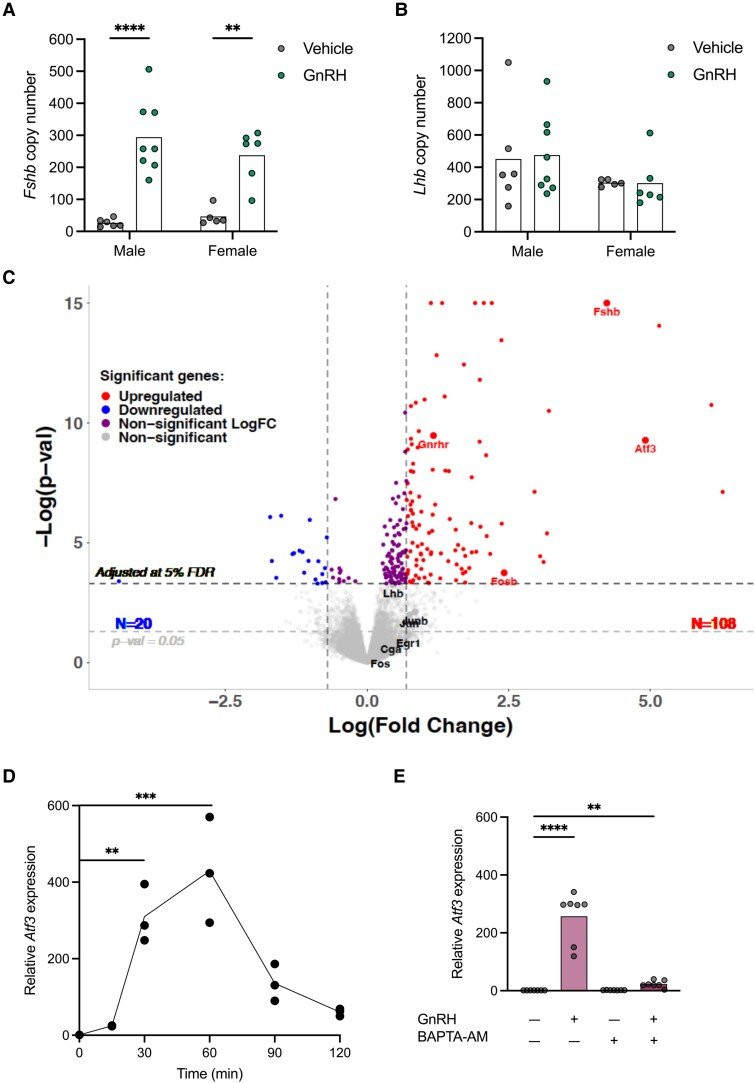
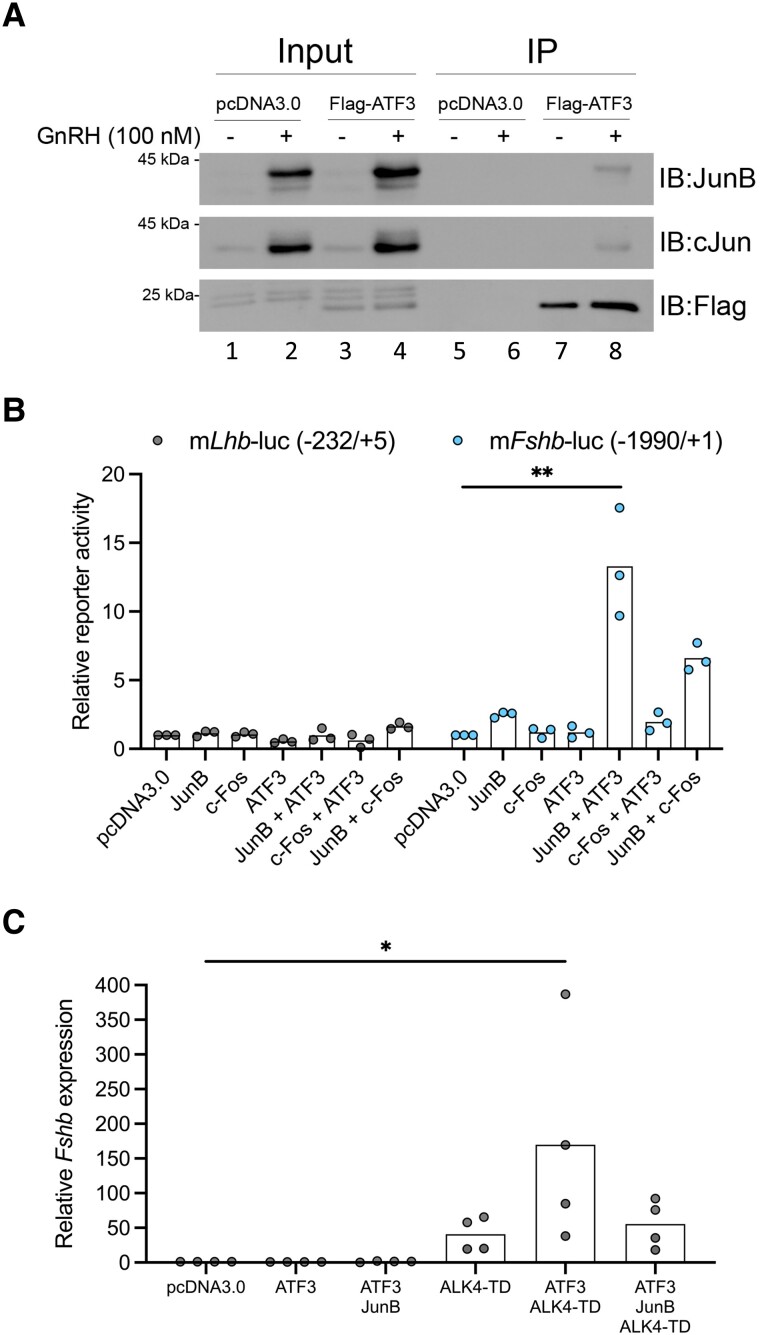
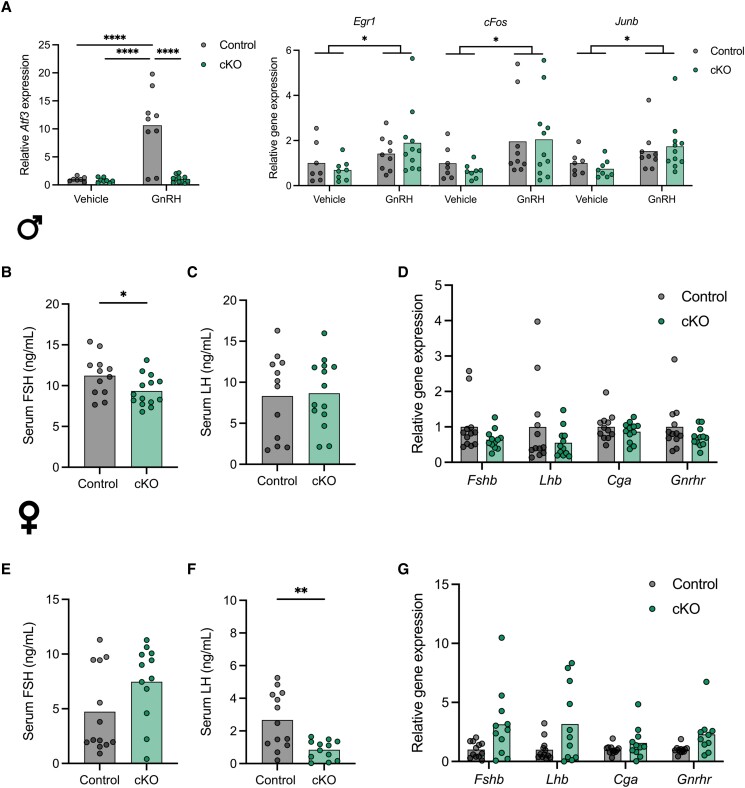
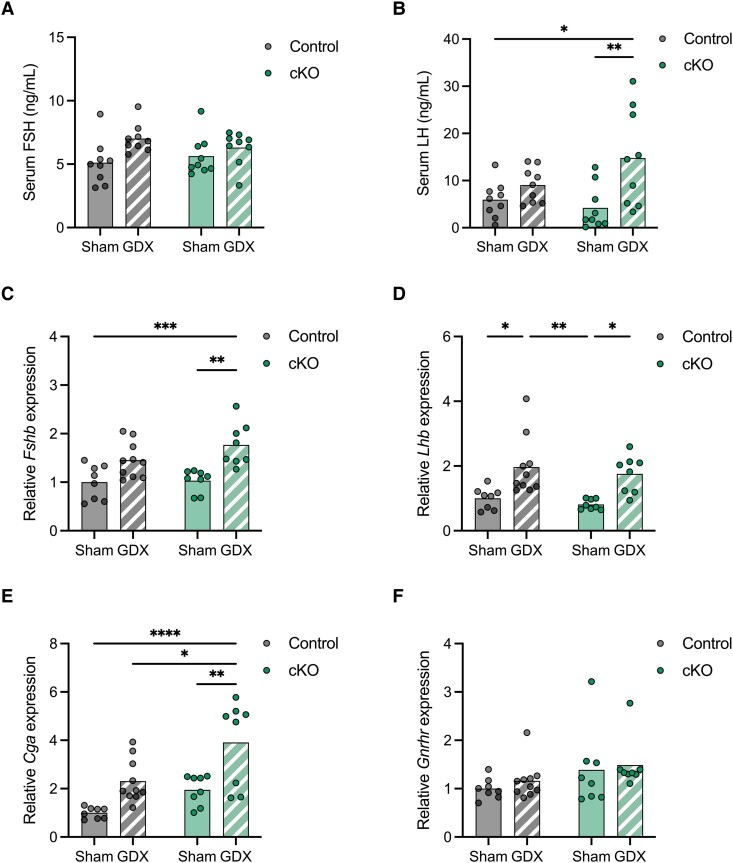
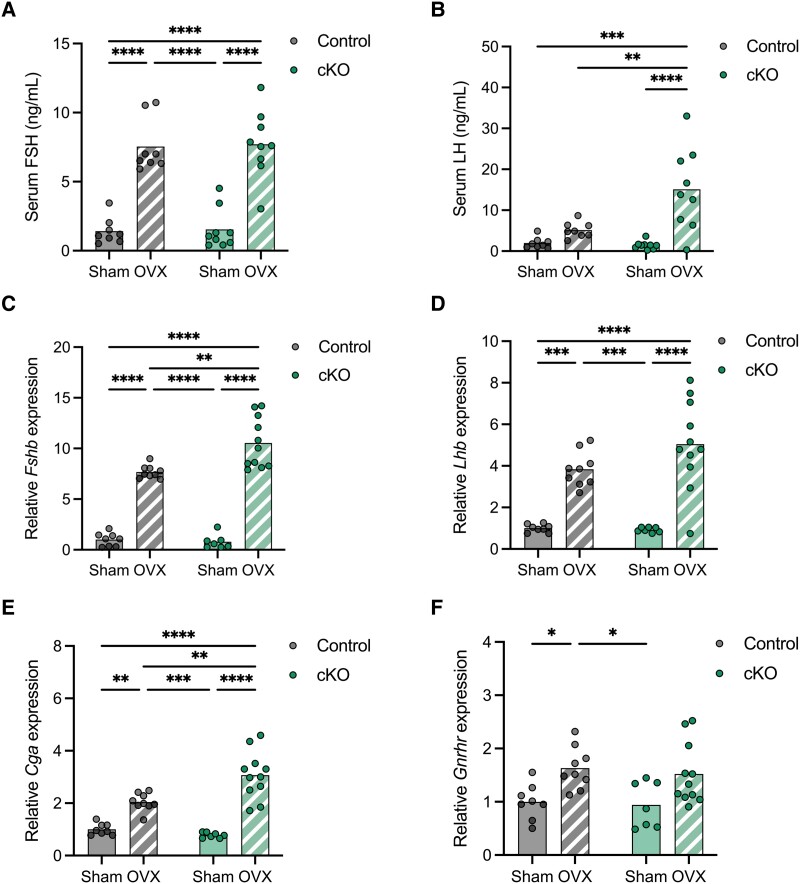
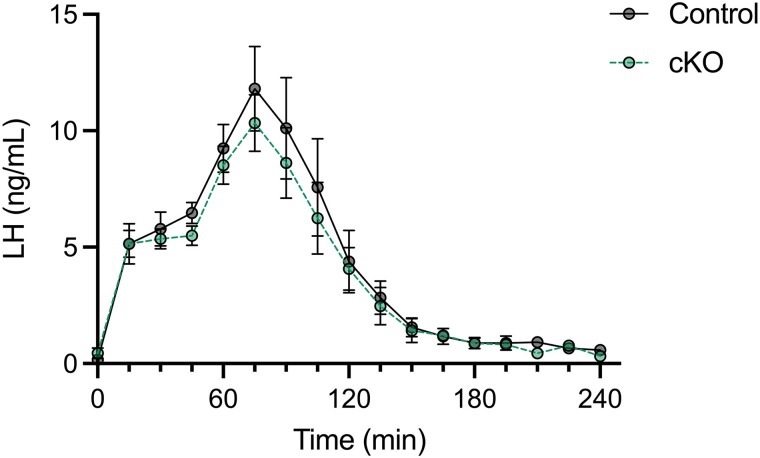
Follicle-stimulating hormone (FSH), a dimeric glycoprotein produced by pituitary gonadotrope cells, regulates spermatogenesis in males and ovarian follicle growth in females. Hypothalamic gonadotropin-releasing hormone (GnRH) stimulates FSHβ subunit gene (Fshb) transcription, though the underlying mechanisms are poorly understood. To address this gap in knowledge, we examined changes in pituitary gene expression in GnRH-deficient mice (hpg) treated with a regimen of exogenous GnRH that increases pituitary Fshb but not luteinizing hormone β (Lhb) messenger RNA levels. Activating transcription factor 3 (Atf3) was among the most upregulated genes. Activating transcription factor 3 (ATF3) can heterodimerize with members of the activator protein 1 family to regulate gene transcription. Co-expression of ATF3 with JunB stimulated murine Fshb, but not Lhb, promoter-reporter activity in homologous LβT2b cells. ATF3 also synergized with a constitutively active activin type I receptor to increase endogenous Fshb expression in these cells. Nevertheless, FSH production was intact in gonadotrope-specific Atf3 knockout [conditional knockout (cKO)] mice. Ovarian follicle development, ovulation, and litter sizes were equivalent between cKOs and controls. Testis weights and sperm counts did not differ between genotypes. Following gonadectomy, increases in LH secretion were enhanced in cKO animals. Though FSH levels did not differ between genotypes, post-gonadectomy increases in pituitary Fshb and gonadotropin α subunit expression were more pronounced in cKO than control mice. These data indicate that ATF3 can selectively stimulate Fshb expression in vitro but is not required for FSH production in vivo.
Keywords: GnRH; cell line; knockout mouse; pituitary; transcription.
© The Author(s) 2023. Published by Oxford University Press on behalf of the Endocrine Society. All rights reserved. For permissions, please e-mail: journals.permissions@oup.com.
Figures

References
-
- Tapanainen JS, Aittomäki K, Min J, Vaskivuo T, Huhtaniemi IT. Men homozygous for an inactivating mutation of the follicle-stimulating hormone (FSH) receptor gene present variable suppression of spermatogenesis and fertility. Nat Genet. 1997;15(2):205‐206. - PubMed
-
- Kumar TR, Wang Y, Lu N, Matzuk MM. Follicle stimulating hormone is required for ovarian follicle maturation but not male fertility. Nat Genet. 1997;15(2):201‐204. - PubMed
-
- Weiss J, Axelrod L, Whitcomb RW, Harris PE, Crowley WF, Jameson JL. Hypogonadism caused by a single amino acid substitution in the beta subunit of luteinizing hormone. N Engl J Med. 1992;326(3):179‐183. - PubMed
-
- Wildt L, Häusler A, Marshall G, et al. Frequency and amplitude of gonadotropin-releasing hormone stimulation and gonadotropin secretion in the rhesus monkey. Endocrinology. 1981;109(2):376‐385. - PubMed
Publication types
MeSH terms
Substances
Grants and funding
LinkOut - more resources
Full Text Sources
Molecular Biology Databases
Research Materials
Miscellaneous