


Photobiomodulation therapy for the prevention of acute radiation dermatitis: a systematic review and meta-analysis
- PMID: 36952036
- PMCID: PMC10034256
- DOI: 10.1007/s00520-023-07673-y
Photobiomodulation therapy for the prevention of acute radiation dermatitis: a systematic review and meta-analysis
Abstract
Purpose: Approximately 95% of patients undergoing radiotherapy (RT) experience radiation dermatitis (RD). Evidence has suggested that photobiomodulation therapy (PBMT) can stimulate skin renewal and minimize RD. The aim of the present paper was to investigate the efficacy of PBMT in RD prevention through a comprehensive literature review.
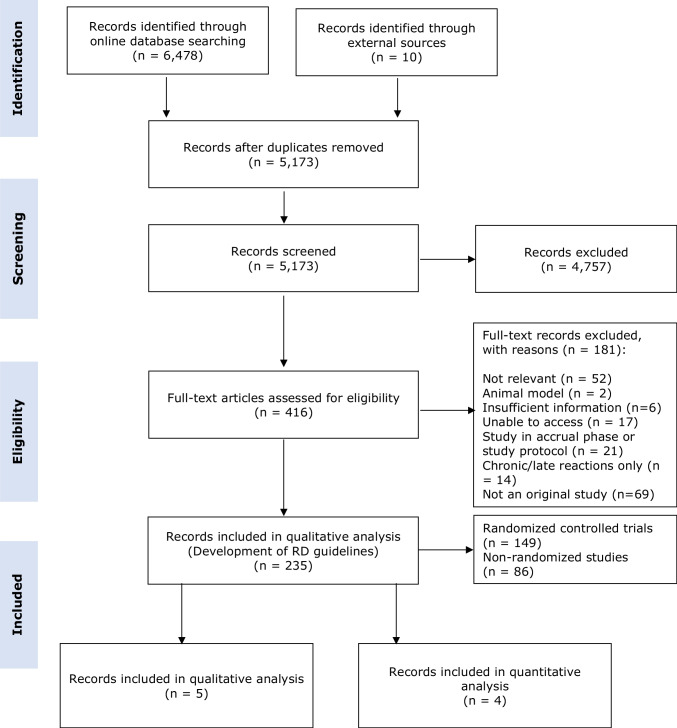
Methods: A literature search of Ovid MEDLINE, Embase, and Cochrane databases was conducted from 1980 to March 2021 to identify RCT on the use of PBMT for RD prevention. Forest plots were developed using RevMan software to quantitatively compare data between studies.
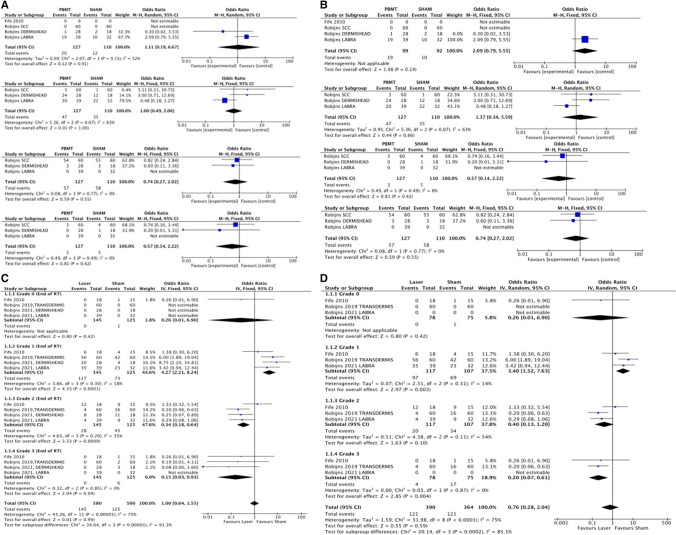
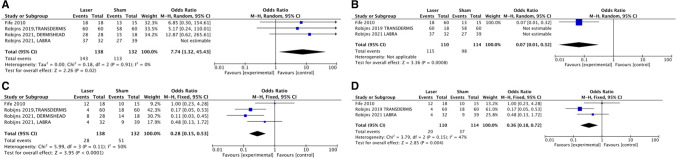
Results: Five papers were identified: four in breast and one in head and neck cancer patients. Patients receiving PBMT experienced less severe RD than the control groups after 40 Gray (Gy) of RT (grade 3 toxicity: Odds Ratio (OR): 0.57, 95% CI 0.14-2.22, p = 0.42) and at the end of RT (grade 0 + 1 vs. 2 + 3 toxicity: OR: 0.28, 95% CI 0.15-0.53, p < 0.0001). RT interruptions due to RD severity were more frequent in the control group (OR: 0.81, 95% CI 0.10-6.58, p = 0.85).
Conclusion: Preventive PBMT may be protective against the development of severe grades of RD and reduce the frequency of RT interruptions. Larger sample sizes and other cancer sites at-risk of RD should be evaluated in future studies to confirm the true efficacy of PBMT, also in preventing the onset of RD and to finalize a standardized protocol to optimize the technique. At present, starting PBMT when RT starts is recommendable, as well as performing 2 to 3 laser sessions weekly.
Keywords: Acute radiation dermatitis; Laser therapy; Photobiomodulation therapy; Prevention; Radiotherapy.
© 2023. The Author(s), under exclusive licence to Springer-Verlag GmbH Germany, part of Springer Nature.
Conflict of interest statement
The authors declare no competing interests.
The authors declare that they have no conflict of interest.
Figures
References
-
- Deng G, Cassileth BR. Skin injury: acute dermatitis and chronic skin changes supportive care and quality of life. 5. Philadelphia: Lippincott Williams & Wilkins; 2008.
Publication types
MeSH terms
LinkOut - more resources
Full Text Sources
Medical
Miscellaneous
