


Chlorhexidine bathing in a tertiary care neonatal intensive care unit: A pilot study
- PMID: 36952477
- PMCID: PMC10035923
- DOI: 10.1371/journal.pone.0283132
Chlorhexidine bathing in a tertiary care neonatal intensive care unit: A pilot study
Abstract
Background: Concerns regarding potential risk of dermal irritation have led to the exclusion of NICU patients from the recommendation regarding the use of 2% chlorhexidine gluconate (CHG) wash for daily skin cleansing to reduce bloodstream infections. Our aim was to assess the safety of 2% CHG bathing in NICU patients.
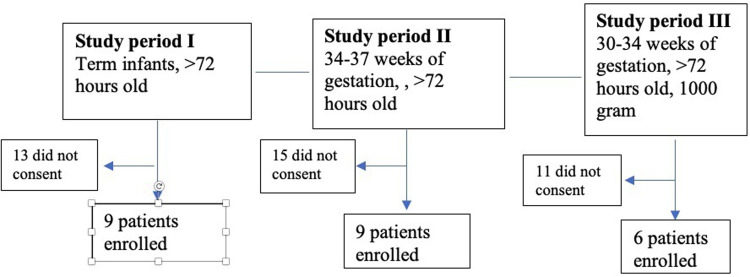
Methods: The regulator required a stepwise study enrollment to three successive groups: term infants, followed by near-term and pre-term infants. For comparison, we used a cohort of matched controls. A propensity score-adjusted regression model was used to compare the groups.
Intervention: Infants were bathed thrice-weekly with 2% CHG-impregnated washcloths. Participant's skin was examined daily.
Results: Over a total of 661 days of treatment: 384,129, and 148 days for the term, near-term and pre-term groups, respectively, no skin reactions were observed. The intervention group was generally sicker, however, bloodstream infections were similar between the groups.
Conclusion: For infants >30 weeks and >3 days old, 2% CHG bathing was safe. Large multicenter studies are urgently needed to establish the effectiveness of this practice in the NICU.
Copyright: © 2023 Bar-Meir et al. This is an open access article distributed under the terms of the Creative Commons Attribution License, which permits unrestricted use, distribution, and reproduction in any medium, provided the original author and source are credited.
Conflict of interest statement
The authors have declared that no competing interests exist.
References
-
- Quach C, Milstone AM, Perpete C, Bonenfant M, Moore DL, Perreault T. Chlorhexidine bathing in a tertiary care neonatal intensive care unit: impact on central line-associated bloodstream infections. Infect Control Hosp Epidemiol. 2014;35(2):158–63. Epub 2014/01/21. doi: 10.1086/674862 . - DOI - PubMed
Publication types
MeSH terms
Substances
LinkOut - more resources
Full Text Sources
Medical
