


Prevalence of diabetes in the USA from the perspective of demographic characteristics, physical indicators and living habits based on NHANES 2009-2018
- PMID: 36960397
- PMCID: PMC10028205
- DOI: 10.3389/fendo.2023.1088882
Prevalence of diabetes in the USA from the perspective of demographic characteristics, physical indicators and living habits based on NHANES 2009-2018
Abstract
Objective: To determine differences in DM in the U.S. population according to demographic characteristics, physical indicators and living habits.
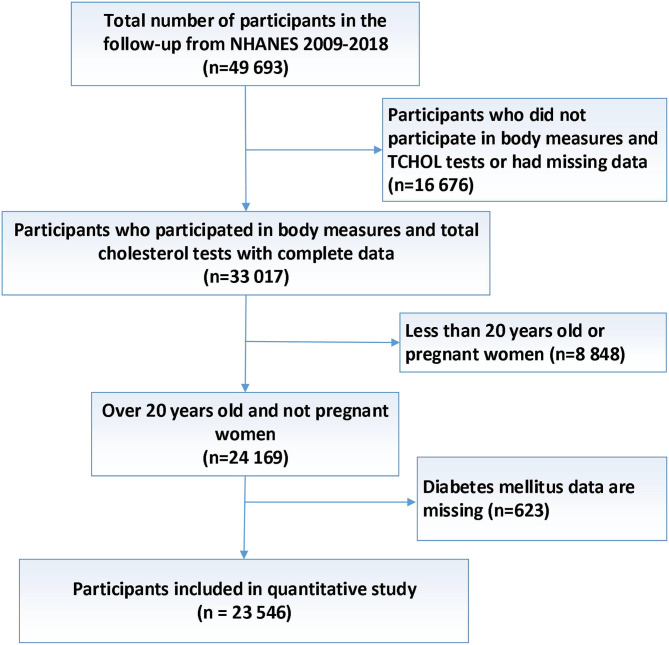
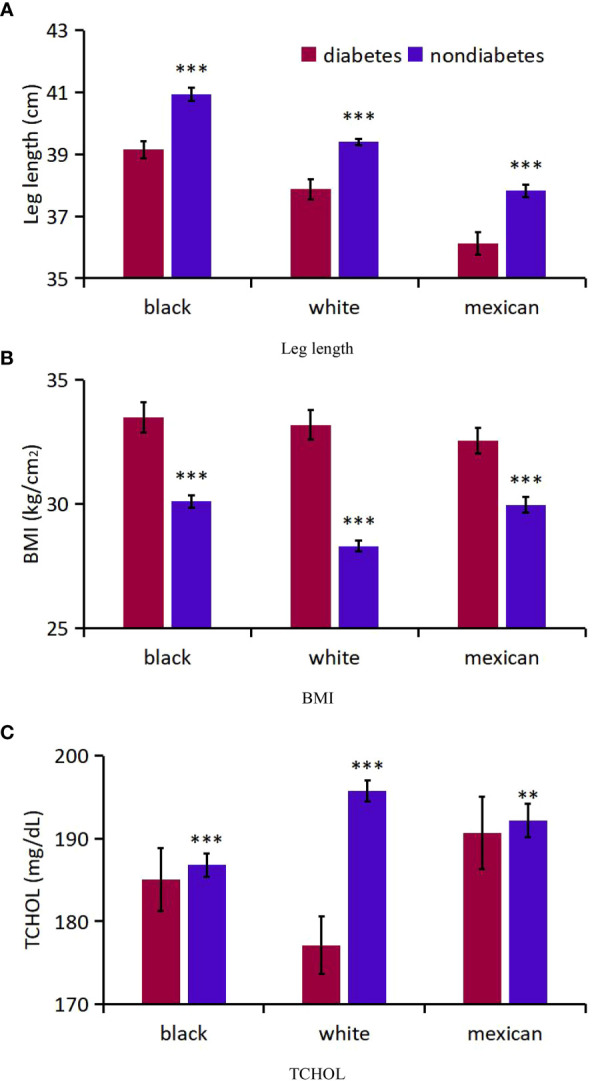
Methods: 23 546 participants in the 2009 to 2018 National Health and Nutrition Examination Survey (NHANES) who were 20 year of age or older and not pregnant. All analyses used weighted samples and considered the stratification and clustering of the design. Specific indicators include length of leg (cm), BMI (kg/cm2), TCHOL (mg/dL), fasting plasma glucose (mg/dL) and comparison of means and the proportion of participants with DM.
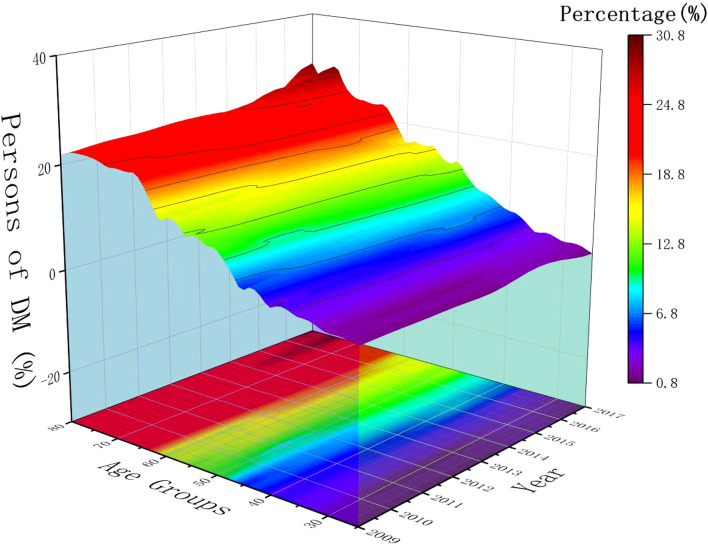
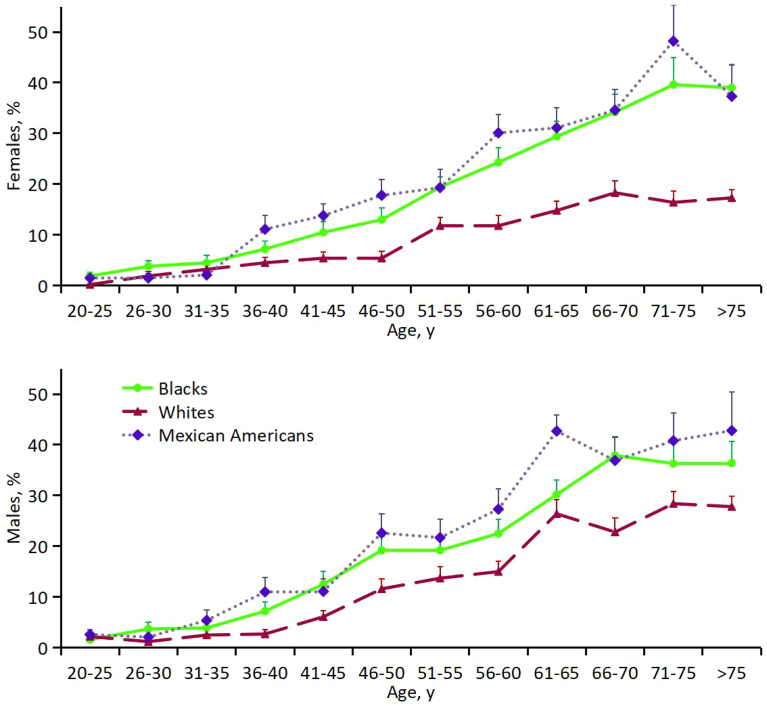
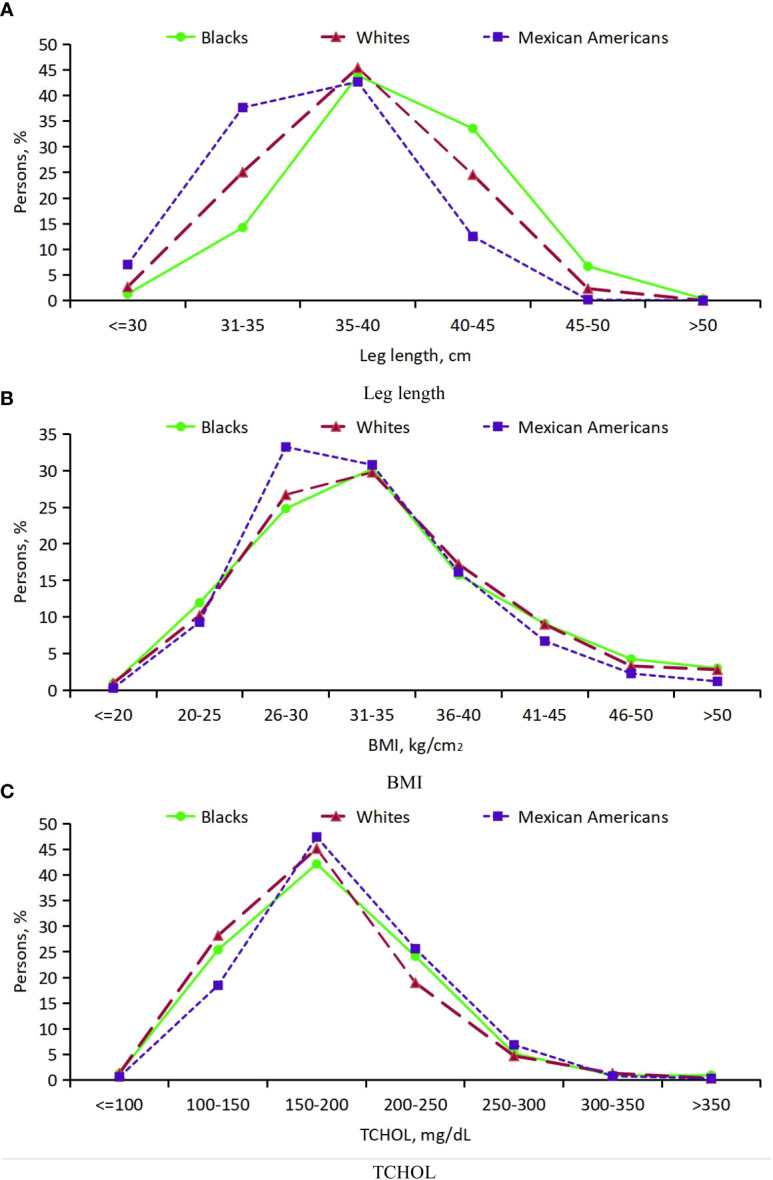
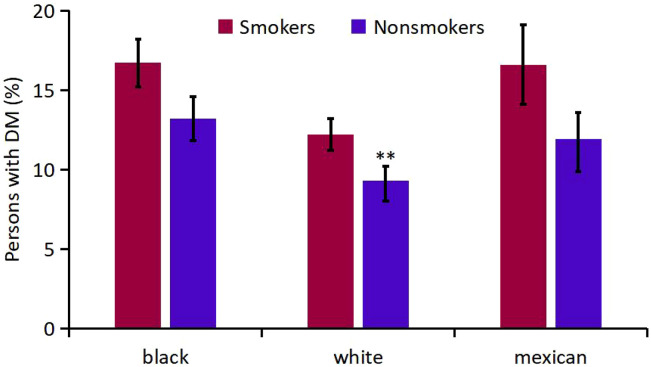
Results: The prevalence of DM in the USA has been rising modestly in the past decade, and were consistent and robust for the observed differences in age, sex, and ethnicity. Compared with white participants, black participants and Mexican-American were both more likely (P<0.001) to have diabetes: 14.6% (CI, 13.6% to 15.6%) among black participants, 10.6% (CI, 9.9% to 11.3%) among white participants, and 13.5% (CI, 11.9% to 15.2%) among Mexican-American participants. The prevalence of diabetes is increasing with age, males peaked around the 60s, and women around the 70s. The overall mean leg length and TCHOL was lower in diabetics than in non-diabetics (1.07 cm, 18.67 mg/dL, respectively), while mean BMI were higher in diabetics than in non-diabetics (4.27 kg/cm2). DM had the greatest effect on decline of TCHOL in white participants (23.6 mg/dL), less of an effect in black participants (9.67 mg/dL), and the least effect in Mexican-American participants (8.25 mg/dL). Notably, smoking had great effect on percent increment of DM in whites (0.2%), and have little effect on black and Mexican-Americans.
Conclusions: DM is more common in the general population than might be clinically recognized, and the prevalence of DM was associated to varying degrees with many indicators of demographic characteristics, physical indicators, and living habits. These indicators should be linked with medical resource allocation and scientific treatment methods to comprehensively implement the treatment of DM.
Keywords: BMI; NHANES; diabetes; leg length; living habits; total cholesterol.
Copyright © 2023 Fang, Sheng, Tan and Zhang.
Conflict of interest statement
The authors declare that the research was conducted in the absence of any commercial or financial relationships that could be construed as a potential conflict of interest.
Figures
References
-
- Fang L, Zhang Q. Research progress in improving insulin resistance of type 2 diabetes mellitus with traditional Chinese medicine. Lishizhen Med Materia Med Res Q24 (2017) 28(12):2974–6. doi: 10.3969/j.issn.1008-0805.2017.12.056 - DOI
-
- Bavuma C, Sahabandu D, Musafiri S, Danquah I, McQuillan R, Wild S, et al. Atypical forms of diabetes mellitus in africans and other non-European ethnic populations in low- and middle-income countries: a systematic literature review. Edinburgh Univ Global Health Soc (2019) 9(2). doi: 10.7189/jogh.09.020401 - DOI - PMC - PubMed
-
- Sarvar KN, Cliff P, Saravanan P, Khunti K, Nirantharakumar K, Narendran P, et al. Comorbidities, complications and mortality in people of south Asian ethnicity with type 1 diabetes compared with other ethnic groups: a systematic review. BMJ (2017) 7:e015005. doi: 10.1136/bmjopen-2016-015005 - DOI - PMC - PubMed
Publication types
MeSH terms
LinkOut - more resources
Full Text Sources
Medical
Miscellaneous
