


Economic impact of dengue in Singapore from 2010 to 2020 and the cost-effectiveness of Wolbachia interventions
- PMID: 36962069
- PMCID: PMC10021432
- DOI: 10.1371/journal.pgph.0000024
Economic impact of dengue in Singapore from 2010 to 2020 and the cost-effectiveness of Wolbachia interventions
Abstract
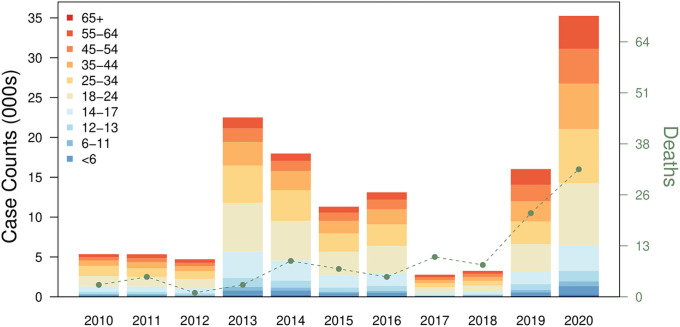
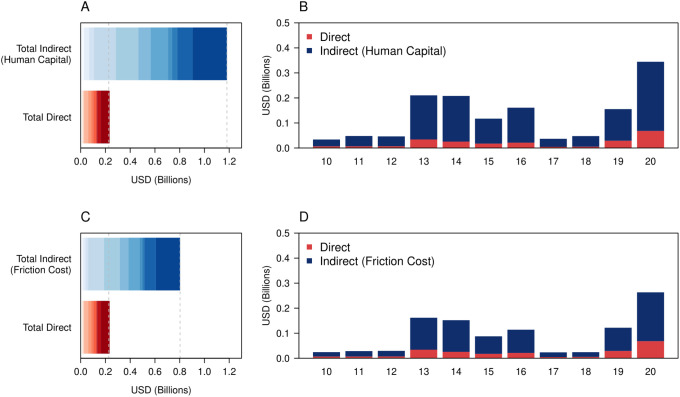
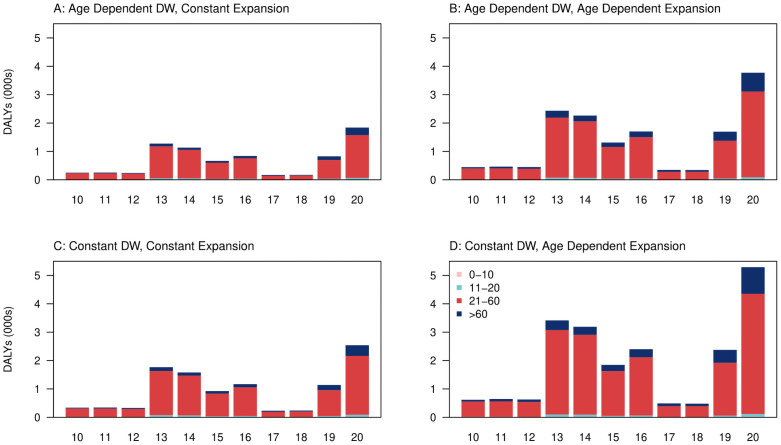
The release of Wolbachia-infected mosquitoes is a promising disease intervention strategy that aims to control dengue and other arboviral infections. While early field trials and modelling studies suggest promising epidemiological and entomological outcomes, the overall cost effectiveness of the technology is not well studied in a resource rich setting nor under the suppression approach that aims to suppress the wild-type mosquito population through the release of Wolbachia-infected males. We used economical and epidemiological data from 2010 to 2020 to first ascertain the economic and health costs of dengue in Singapore, a high income nation where dengue is hyper-endemic. The hypothetical cost effectiveness of a national Wolbachia suppression program was then evaluated historically from 2010 to 2020. We estimated that the average economic impact of dengue in Singapore from 2010 to 2020 in constant 2010US$ ranged from $1.014 to $2.265 Billion. Using empirically derived disability weights, we estimated a disease burden of 7,645-21,262 DALYs from 2010-2020. Under an assumed steady-state running cost of a national Wolbachia suppression program in Singapore, we conservatively estimate that Wolbachia would cost an estimated $50,453-$100,907 per DALYs averted and would lead to an estimated $329.40 Million saved in economic costs over 2010 to 2020 under 40% intervention efficacy. Wolbachia releases in Singapore are expected to be highly cost-effective and its rollout must be prioritised to reduce the onward spread of dengue.
Copyright: © 2021 Soh et al. This is an open access article distributed under the terms of the Creative Commons Attribution License, which permits unrestricted use, distribution, and reproduction in any medium, provided the original author and source are credited.
Conflict of interest statement
The authors have declared that no competing interests exist.
Figures
References
LinkOut - more resources
Full Text Sources