


Majority of pediatric dengue virus infections in Kenya do not meet 2009 WHO criteria for dengue diagnosis
- PMID: 36962138
- PMCID: PMC10021889
- DOI: 10.1371/journal.pgph.0000175
Majority of pediatric dengue virus infections in Kenya do not meet 2009 WHO criteria for dengue diagnosis
Abstract
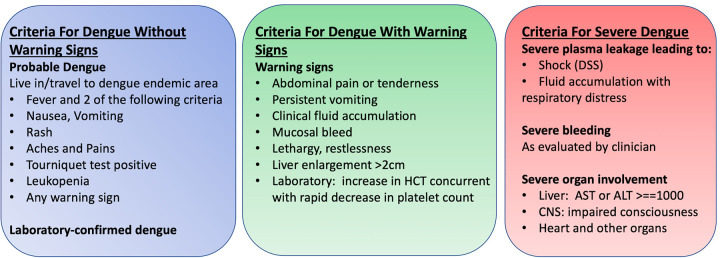
From 1975-2009, the WHO guidelines classified symptomatic dengue virus infections as dengue fever, dengue hemorrhagic fever, and dengue shock syndrome. In 2009 the case definition was changed to a clinical classification after concern the original criteria was challenging to apply in resource-limited settings and not inclusive of a substantial proportion of severe dengue cases. Our goal was to examine how well the current WHO definition identified new dengue cases at our febrile surveillance sites in Kenya. Between 2014 and 2019 as part of a child cohort study of febrile illness in our four clinical study sites (Ukunda, Kisumu, Msambweni, Chulaimbo) we identified 369 dengue PCR positive symptomatic cases and characterized whether they met the 2009 revised WHO diagnostic criteria for dengue with and without warning signs and severe dengue. We found 62% of our PCR-confirmed dengue cases did not meet criteria per the guidelines. Our findings also correlate with our experience that dengue disease in children in Kenya is less severe as reported in other parts of the world. Although the 2009 clinical classification has recently been criticized for being overly inclusive and non-specific, our findings suggest the 2009 WHO dengue case definition may miss more than 50% of symptomatic infections in Kenya and may require further modification to include the African experience.
Copyright: © 2022 Khan et al. This is an open access article distributed under the terms of the Creative Commons Attribution License, which permits unrestricted use, distribution, and reproduction in any medium, provided the original author and source are credited.
Conflict of interest statement
The authors have declared that no competing interests exist.
Figures
References
LinkOut - more resources
Full Text Sources
Miscellaneous