


Individual, health facility and wider health system factors contributing to maternal deaths in Africa: A scoping review
- PMID: 36962364
- PMCID: PMC10021542
- DOI: 10.1371/journal.pgph.0000385
Individual, health facility and wider health system factors contributing to maternal deaths in Africa: A scoping review
Erratum in
-
Correction: Individual, health facility and wider health system factors contributing to maternal deaths in Africa: A scoping review.PLOS Glob Public Health. 2024 Jul 2;4(7):e0003477. doi: 10.1371/journal.pgph.0003477. eCollection 2024. PLOS Glob Public Health. 2024. PMID: 38954681 Free PMC article.
Abstract
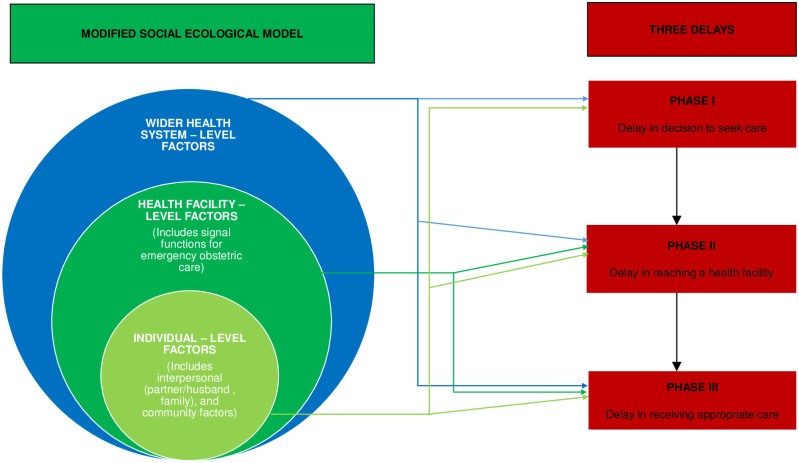
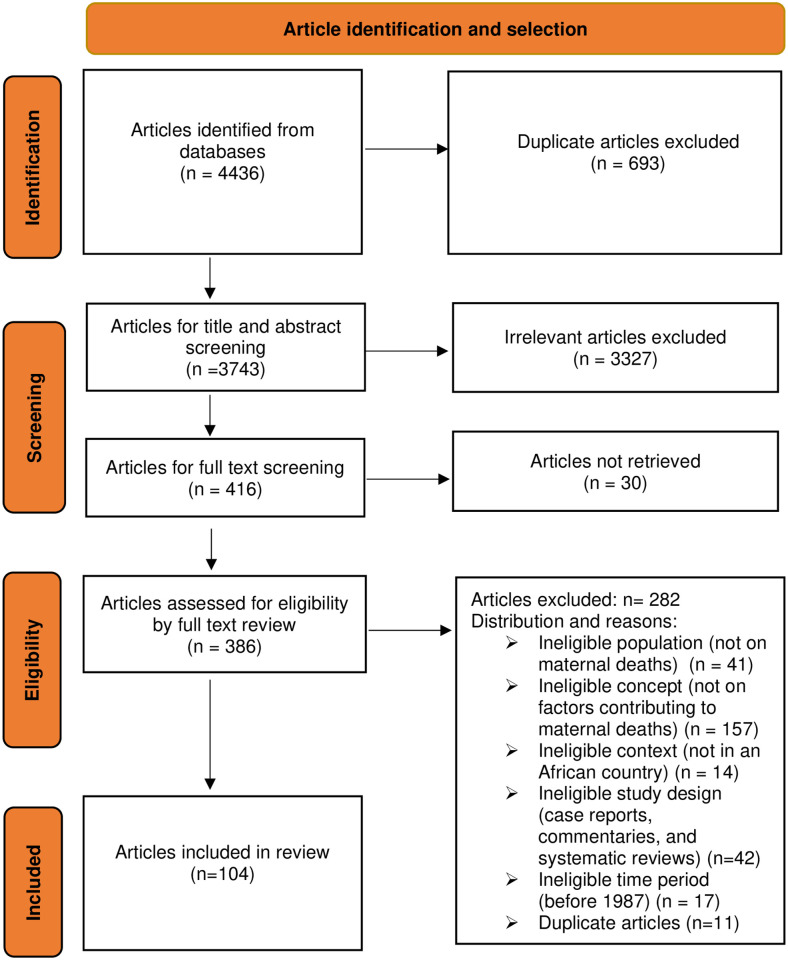
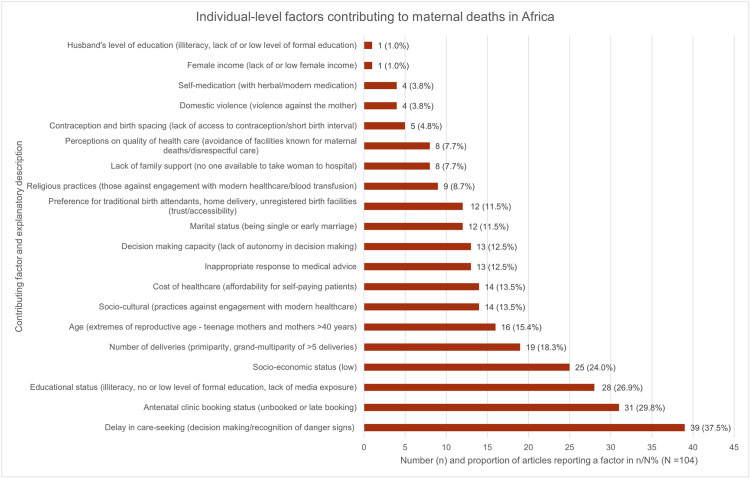
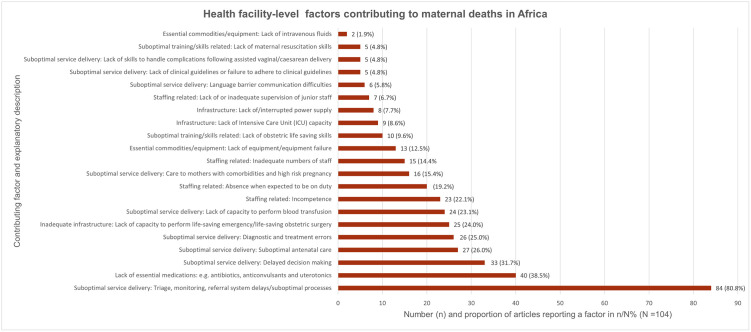
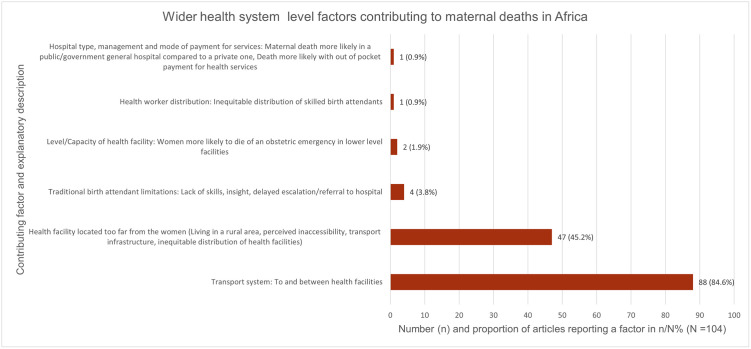
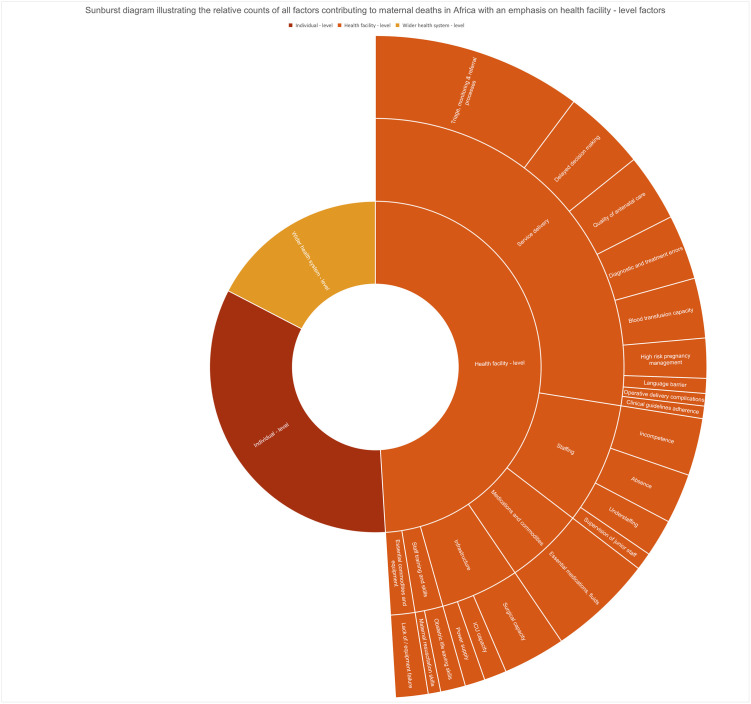
The number of women dying during pregnancy and after childbirth remains unacceptably high, with African countries showing the slowest decline. The leading causes of maternal deaths in Africa are preventable direct obstetric causes such as haemorrhage, infection, hypertension, unsafe abortion, and obstructed labour. There is an information gap on factors contributing to maternal deaths in Africa. Our objective was to identify these contributing factors and assess the frequency of their reporting in published literature. We followed the Arksey and O'Malley methodological framework for scoping reviews. We searched six electronic bibliographic databases: MEDLINE, SCOPUS, African Index Medicus, African Journals Online (AJOL), French humanities and social sciences databases, and Web of Science. We included articles published between 1987 and 2021 without language restriction. Our conceptual framework was informed by a combination of the socio-ecological model, the three delays conceptual framework for analysing the determinants of maternal mortality and the signal functions of emergency obstetric care. We included 104 articles from 27 African countries. The most frequently reported contributory factors by level were: (1) Individual-level: Delay in deciding to seek help and in recognition of danger signs (37.5% of articles), (2) Health facility-level: Suboptimal service delivery relating to triage, monitoring, and referral (80.8% of articles) and (3) Wider health system-level: Transport to and between health facilities (84.6% of articles). Our findings indicate that health facility-level factors were the most frequently reported contributing factors to maternal deaths in Africa. There is a lack of data from some African countries, especially those countries with armed conflict currently or in the recent past. Information gaps exist in the following areas: Statistical significance of each contributing factor and whether contributing factors alone adequately explain the variations in maternal mortality ratios (MMR) seen between countries and at sub-national levels.
Copyright: © 2022 Muriithi et al. This is an open access article distributed under the terms of the Creative Commons Attribution License, which permits unrestricted use, distribution, and reproduction in any medium, provided the original author and source are credited.
Conflict of interest statement
The authors have declared that no competing interests exist.
Figures
References
-
- World Health Organization. Maternal mortality WHO website 2019 [cited 2021 17/05/2021]. https://www.who.int/news-room/fact-sheets/detail/maternal-mortality.
-
- World Health Organization. (2019). Trends in maternal mortality 2000 to 2017: estimates by WHO, UNICEF, UNFPA, World Bank Group and the United Nations Population Division: executive summary. World Health Organization. https://apps.who.int/iris/handle/10665/327596. License: CC BY-NC-SA 3.0 IGO.
-
- Bazuaye A, Okonofua FE. Tackling maternal mortality in Africa after 2015: what should the priorities be? Afr J Reprod Health. 2013;17(2):9–17. . - PubMed
Publication types
LinkOut - more resources
Full Text Sources
Miscellaneous