


High seroprevalence of antibodies against SARS-CoV-2 among healthcare workers 8 months after the first wave in Aden, Yemen
- PMID: 36962647
- PMCID: PMC10022234
- DOI: 10.1371/journal.pgph.0000767
High seroprevalence of antibodies against SARS-CoV-2 among healthcare workers 8 months after the first wave in Aden, Yemen
Erratum in
-
Correction: High seroprevalence of antibodies against SARS-CoV-2 among healthcare workers 8 months after the first wave in Aden, Yemen.PLOS Glob Public Health. 2024 Feb 13;4(2):e0002963. doi: 10.1371/journal.pgph.0002963. eCollection 2024. PLOS Glob Public Health. 2024. PMID: 38349919 Free PMC article.
Abstract
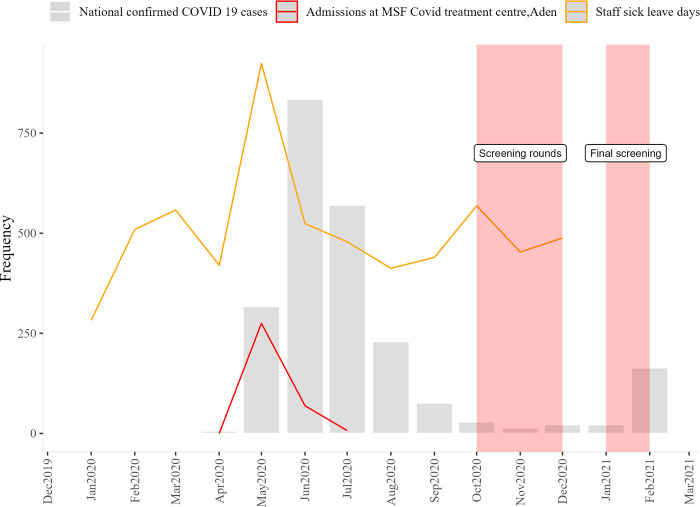
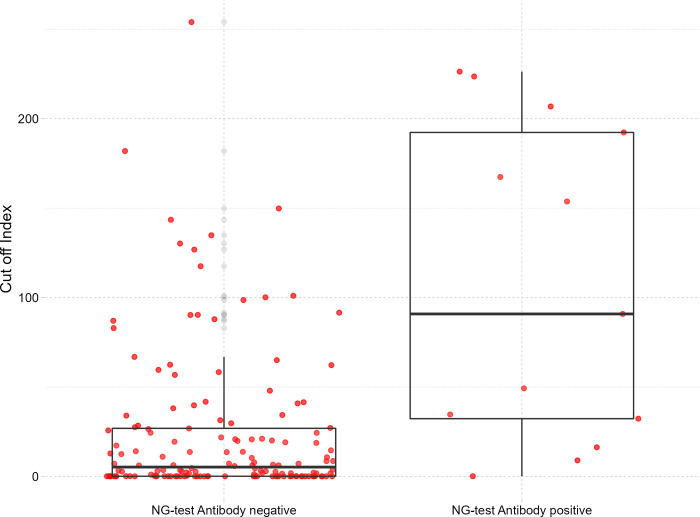
The true burden of COVID-19 in Yemen is underestimated. The healthcare system is dysfunctional and there is a high shortage of health care workers in the country. Testing for SARS-CoV-2 remains limited and official surveillance data is restricted to those who are severe or highly suspected. In this study, Médecins Sans Frontières (MSF) aimed to conduct serological screening using rapid tests for asymptomatic staff at the MSF Aden Trauma Center to determine the SARS-CoV-2 antibody seropositivity. Four months after the peak of the first wave, we offered all the staff at the MSF Aden Trauma Center PCR if symptomatic, and a baseline SARS-CoV-2 serology screening followed by follow-up screenings. A final round was scheduled four months after the baseline. A rapid serology lateral flow test, NG-Test IgM-IgG was used in all rounds and in the final round, an electrochemiluminescence immunoassay (ECLIA) (Elecsys Anti-SARS-CoV-2 assay). Univariate and multivariate analyses were used to identify risk factors for seropositivity. The level of agreement between the different serology assays used was investigated. Overall 69 out of 356 participants (19.4%, 95% CI 17.9-20.8) tested positive by NG-Test between September and November 2020. A sub-sample of 161 staff members were retested in January 2021. Of these, the NG-Test detected only 13 positive cases, whereas the ECLIA detected 109 positive cases. The adjusted seroprevalence by ECLIA was 59% (95%CI 52.2-65.9). The non-medical staff had significantly lower odds of seropositivity compared to the medical staff (AOR 0.43, 95% CI 0.15-0.7, p<0.001). The positive percent agreement between the two tests was very low (11%). Our results suggest a very high SARS-CoV-2 seroprevalence in healthcare workers in Yemen, highlighting the need for regular testing and rapid vaccination of all healthcare workers in the country.
Copyright: © 2022 Malaeb et al. This is an open access article distributed under the terms of the Creative Commons Attribution License, which permits unrestricted use, distribution, and reproduction in any medium, provided the original author and source are credited.
Conflict of interest statement
The authors have declared that no competing interests exist.
Figures
References
-
- Yemen and COVID-19: The pandemic exacts its devastating toll n.d. https://www.brookings.edu/blog/future-development/2020/06/15/yemen-and-c... (accessed April 17, 2021).
-
- Coronavirus will “delete Yemen from maps all over the world” | World News | Sky News n.d. https://news.sky.com/story/coronavirus-will-delete-yemen-from-maps-all-o... (accessed April 17, 2021).
-
- Fallon K, Moran A, Dunia A. A tipping point for Yemen’s Health System: The Impact of COVID-19 in a Fragile State. https://medglobal.org/wp-content/uploads/2020/07/A-Tipping-Point-for-Yem... (accessed April 17, 2021).
-
- Yemen: WHO Coronavirus Disease (COVID-19) Dashboard With Vaccination Data | WHO Coronavirus (COVID-19) Dashboard With Vaccination Data n.d. https://covid19.who.int/region/emro/country/ye (accessed April 17, 2021).
LinkOut - more resources
Full Text Sources
Miscellaneous