


40 years of actigraphy in sleep medicine and current state of the art algorithms
- PMID: 36964203
- PMCID: PMC10039037
- DOI: 10.1038/s41746-023-00802-1
40 years of actigraphy in sleep medicine and current state of the art algorithms
Abstract
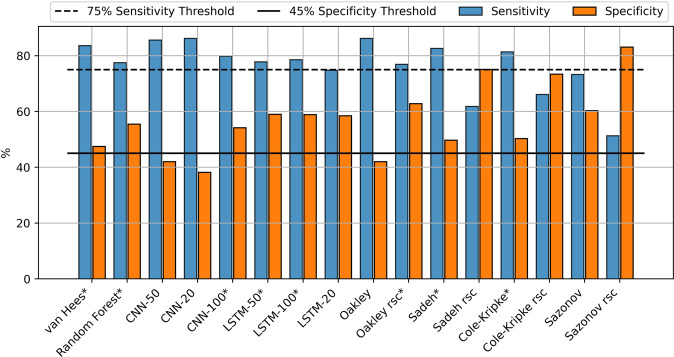
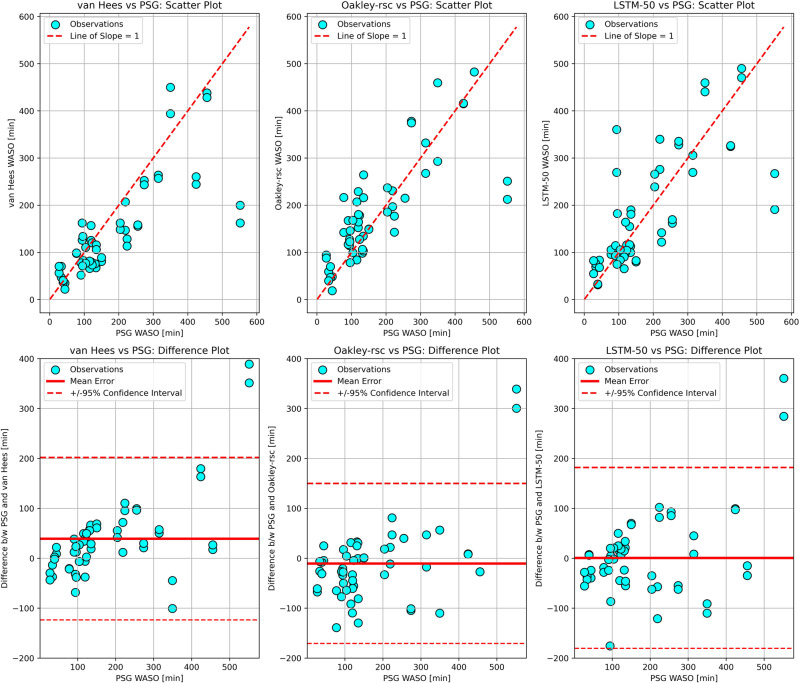
For the last 40 years, actigraphy or wearable accelerometry has provided an objective, low-burden and ecologically valid approach to assess real-world sleep and circadian patterns, contributing valuable data to epidemiological and clinical insights on sleep and sleep disorders. The proper use of wearable technology in sleep research requires validated algorithms that can derive sleep outcomes from the sensor data. Since the publication of the first automated scoring algorithm by Webster in 1982, a variety of sleep algorithms have been developed and contributed to sleep research, including many recent ones that leverage machine learning and / or deep learning approaches. However, it remains unclear how these algorithms compare to each other on the same data set and if these modern data science approaches improve the analytical validity of sleep outcomes based on wrist-worn acceleration data. This work provides a systematic evaluation across 8 state-of-the-art sleep algorithms on a common sleep data set with polysomnography (PSG) as ground truth. Despite the inclusion of recently published complex algorithms, simple regression-based and heuristic algorithms demonstrated slightly superior performance in sleep-wake classification and sleep outcome estimation. The performance of complex machine learning and deep learning models seem to suffer from poor generalization. This independent and systematic analytical validation of sleep algorithms provides key evidence on the use of wearable digital health technologies for sleep research and care.
© 2023. The Author(s).
Conflict of interest statement
M.R.P., A.S.N., D.G., R.P., T.G., A.N. and C.G. declare no Competing Non-Financial interests, but the following Competing Financial Interest; all authors completed this work as employees of ActiGraph.
Figures
References
-
- Iranzo, A. & Santamaria, J. Sleep in neurodegenerative diseases. Sleep Medicine: A Comprehensive Guide to Its Development, Clinical Milestones, and Advances in Treatment. 271–283 (2015).
LinkOut - more resources
Full Text Sources
