Occurrence of extended-spectrum β-lactamase-producing Enterobacteriaceae in raw milk from cows with subclinical mastitis in northeast Brazil
- PMID: 36964326
- PMCID: PMC10235308
- DOI: 10.1007/s42770-023-00955-x
Occurrence of extended-spectrum β-lactamase-producing Enterobacteriaceae in raw milk from cows with subclinical mastitis in northeast Brazil
Abstract
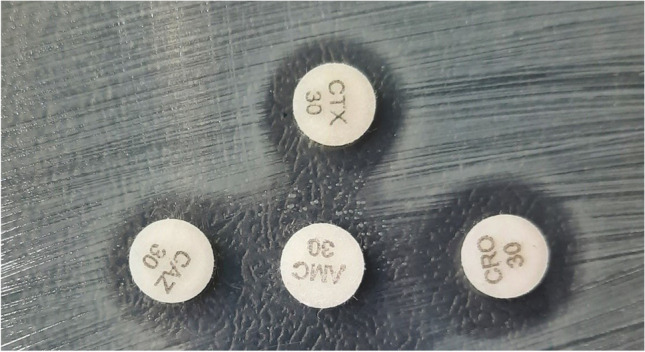
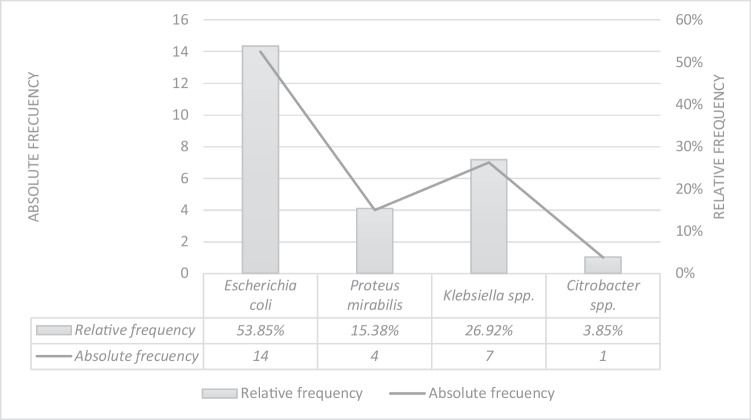
Extended-spectrum β-lactamase (ESBL)-producing Gram negative bacteria are becoming increasingly important in veterinary and human medicine because they can hydrolyze the third generation β-lactams, penicillins, and monobactams. The aim of this study was to identify ESBL-producing Enterobacteriaceae in raw cow milk samples from northeast Brazil. Twenty-six bacterial isolates belonging to the Enterobacteriaceae family were obtained from milk samples from 257 cows with subclinical mastitis. Using microbiological tests, 53.85% (14/26) were identified as Escherichia coli, 15.38% (4/26) as Proteus mirabilis, 26.92% (7/26) as Klebsiella spp., and 3.85% (1/26) as Citrobacter spp. Of all the isolates, 61.54% (16/26) were positive in the ESBL screening test, of which 12.5% (2/16) were positive in the double-disc synergy test using three types of cephalosporins and amoxicillin/clavulanic acid. The two isolates were identified as Klebsiella spp. Among all the isolates, 53.85% (14/26) were positive for one or both ESBL-encoding genes, blaSHV and blaTEM; among these, 71.43% (10/14) were identified as E. coli. This study demonstrates that ESBL-producing bacteria can be found in raw cow milk from northeast Brazil. Cows with subclinical mastitis should be recognized as reservoirs of these strains, which can propagate to humans.
Keywords: Antimicrobials; Bacterial resistance; Food safety; Subclinical mastitis.
© 2023. The Author(s) under exclusive licence to Sociedade Brasileira de Microbiologia.
Conflict of interest statement
The authors declare no competing interests.
Figures
References
-
- WHO. WHO. Global priority list of antibiotic-resistant batceria to guide research, discovery, and development of new antibiotics. Published 2017. https://www.who.int/news/item/27-02-2017-who-publishes-list-of-bacteria-...
MeSH terms
Substances
LinkOut - more resources
Full Text Sources
Miscellaneous