


Guidelines for Neuroprognostication in Adults with Guillain-Barré Syndrome
- PMID: 36964442
- PMCID: PMC10241707
- DOI: 10.1007/s12028-023-01707-3
Guidelines for Neuroprognostication in Adults with Guillain-Barré Syndrome
Erratum in
-
Correction to: Guidelines for Neuroprognostication in Adults with Guillain-Barré Syndrome.Neurocrit Care. 2023 Jun;38(3):832. doi: 10.1007/s12028-023-01726-0. Neurocrit Care. 2023. PMID: 37100978 Free PMC article. No abstract available.
-
Author Correction: Guidelines for Neuroprognostication in Adults with Guillain-Barré Syndrome.Neurocrit Care. 2023 Dec;39(3):752. doi: 10.1007/s12028-023-01830-1. Neurocrit Care. 2023. PMID: 37726550 Free PMC article. No abstract available.
Abstract
Background: Guillain-Barré syndrome (GBS) often carries a favorable prognosis. Of adult patients with GBS, 10-30% require mechanical ventilation during the acute phase of the disease. After the acute phase, the focus shifts to restoration of motor strength, ambulation, and neurological function, with variable speed and degree of recovery. The objective of these guidelines is to provide recommendations on the reliability of select clinical predictors that serve as the basis of neuroprognostication and provide guidance to clinicians counseling adult patients with GBS and/or their surrogates.
Methods: A narrative systematic review was completed using Grading of Recommendations Assessment, Development and Evaluation (GRADE) methodology. Candidate predictors, including clinical variables and prediction models, were selected based on clinical relevance and presence of appropriate body of evidence. The Population/Intervention/Comparator/Outcome/Time frame/Setting (PICOTS) question was framed as follows: "When counseling patients or surrogates of critically ill patients with Guillain-Barré syndrome, should [predictor, with time of assessment if appropriate] be considered a reliable predictor of [outcome, with time frame of assessment]?" Additional full-text screening criteria were used to exclude small and lower quality studies. Following construction of an evidence profile and summary of findings, recommendations were based on four GRADE criteria: quality of evidence, balance of desirable and undesirable consequences, values and preferences, and resource use. In addition, good practice recommendations addressed essential principles of neuroprognostication that could not be framed in PICOTS format.
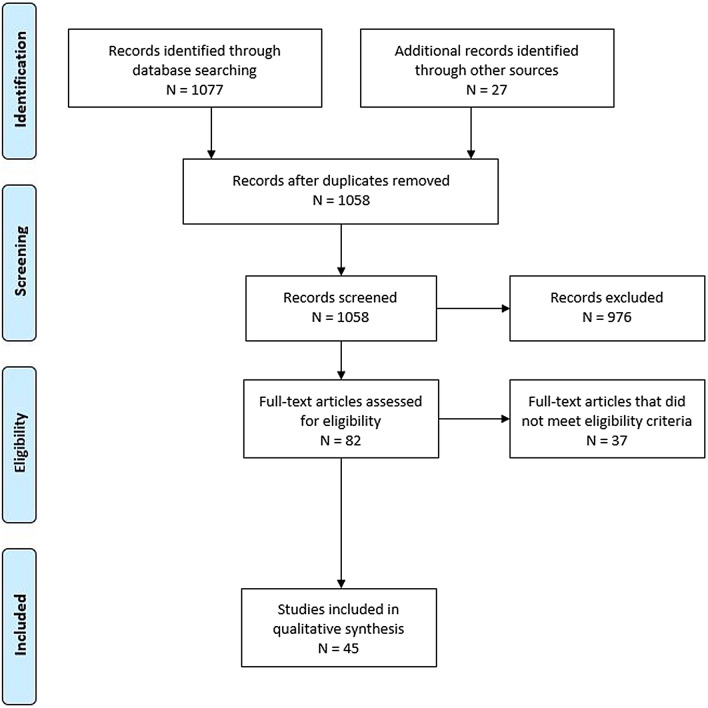
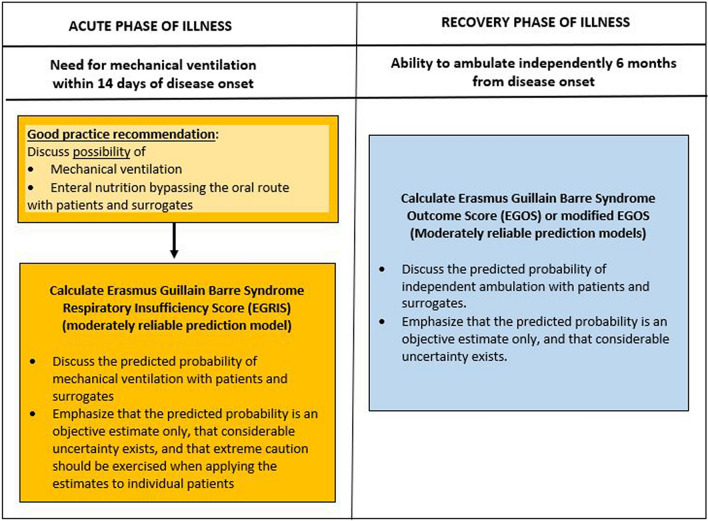
Results: Eight candidate clinical variables and six prediction models were selected. A total of 45 articles met our eligibility criteria to guide recommendations. We recommend bulbar weakness (the degree of motor weakness at disease nadir) and the Erasmus GBS Respiratory Insufficiency Score as moderately reliable for prediction of the need for mechanical ventilation. The Erasmus GBS Outcome Score (EGOS) and modified EGOS were identified as moderately reliable predictors of independent ambulation at 3 months and beyond. Good practice recommendations include consideration of both acute and recovery phases of the disease during prognostication, discussion of the possible need for mechanical ventilation and enteral nutrition during counseling, and consideration of the complete clinical condition as opposed to a single variable during prognostication.
Conclusions: These guidelines provide recommendations on the reliability of predictors of the need for mechanical ventilation, poor functional outcome, and independent ambulation following GBS in the context of counseling patients and/or surrogates and suggest broad principles of neuroprognostication. Few predictors were considered moderately reliable based on the available body of evidence, and higher quality data are needed.
Keywords: Guillain–Barré syndrome; Outcome; Polyradiculoneuropathy; Prognosis.
© 2023. The Author(s).
Conflict of interest statement
K. M. Busl reports consulting fees from Techspert and Guidepoint Global and honoraria by the American Academy of Neurology for speaking, editing, and course directorship.
Figures
References
Publication types
MeSH terms
LinkOut - more resources
Full Text Sources
Medical
Miscellaneous
