


Improving quality of life in patients with rare autoimmune liver diseases by structured peer-delivered support (Q.RARE.LI): study protocol for a transnational effectiveness-implementation hybrid trial
- PMID: 36964518
- PMCID: PMC10039546
- DOI: 10.1186/s12888-023-04669-0
Improving quality of life in patients with rare autoimmune liver diseases by structured peer-delivered support (Q.RARE.LI): study protocol for a transnational effectiveness-implementation hybrid trial
Abstract
Background: Psychosocial support is a crucial component of adequate rare disease care, but to date psychosocial support needs of this patient population are insufficiently met. Within Q.RARE.LI, we strive to evaluate the effectiveness of a structured, transdiagnostic, and location-independent psychosocial support intervention in routine care of patients with rare autoimmune liver diseases in five countries and prepare its implementation.
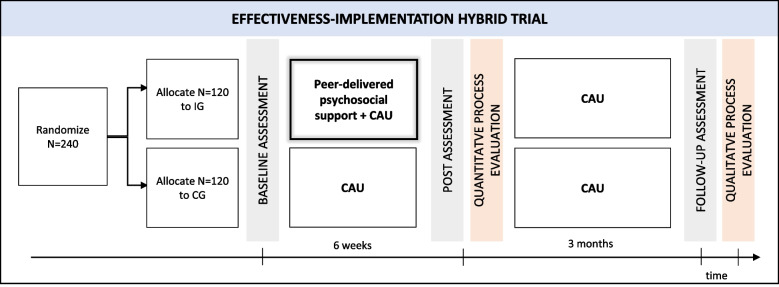
Methods: Within an effectiveness-implementation hybrid trial, we aim to a) investigate the effectiveness of the intervention in routine care in five diverse healthcare systems and b) assess implementation outcomes, examine and prepare the implementation context, and develop country-specific implementation strategies. To assess effectiveness, we will include N = 240 patients with rare autoimmune liver diseases. Within a two-armed randomized controlled trial (allocation ratio 1:1), we will compare structured and peer-delivered psychosocial support in addition to care-as-usual (CAU) with CAU alone. Outcomes will be assessed via electronic database entry prior to intervention, directly after, and at a three-month follow-up. Our primary effectiveness outcome will be mental health-related quality of life at post-assessment. Secondary outcomes include depression and anxiety severity, perceived social support, helplessness, and disease acceptance. Implementation outcomes will be assessed within a mixed-methods process evaluation. In a quantitative cross-sectional survey, we will examine perceived acceptability and feasibility in patients, peer-counselors, and healthcare providers involved in delivery of the intervention. In qualitative focus groups, we will analyze the implementation context and determine barriers and facilitators for implementation with different stakeholders (patients and/or representatives, peer-counselors, healthcare providers, health insurers). Based on these results, we will derive country-specific implementation strategies and develop a concrete implementation plan for each country.
Discussion: The intervention is expected to help patients adjust to their disease and improve their mental quality of life. The transdiagnostic and location-independent program has the potential to reach patients for psychosocial support who are usually hard to reach. By preparing the implementation in five countries, the project can help to make low-threshold psychosocial support available to many patients with rare diseases and improve comprehensive healthcare for an often neglected group.
Trial registration: ISRCTN15030282.
Keywords: Effectiveness-implementation hybrid trial; Liver diseases; Peer-support; Psychosocial support; Psychosomatic medicine; Quality of life; Rare diseases.
© 2023. The Author(s).
Conflict of interest statement
The authors declare that they have no competing interests.
Figures
References
-
- EURORDIS. What is a rare disease? Available from: https://www.eurordis.org/informationsupport/what-is-a-rare-disease/. Accessed 21 Mar 2023.
-
- Uhlenbusch N, Swaydan J, Höller A, Löwe B, Depping M. Affective and anxiety disorders in patients with different rare chronic diseases: a systematic review and meta-analysis. Psychol Med. 2021:1–11. - PubMed
Publication types
MeSH terms
LinkOut - more resources
Full Text Sources
Miscellaneous
