


What is really 'Long COVID'?
- PMID: 36964860
- PMCID: PMC10039447
- DOI: 10.1007/s10787-023-01194-0
What is really 'Long COVID'?
Abstract
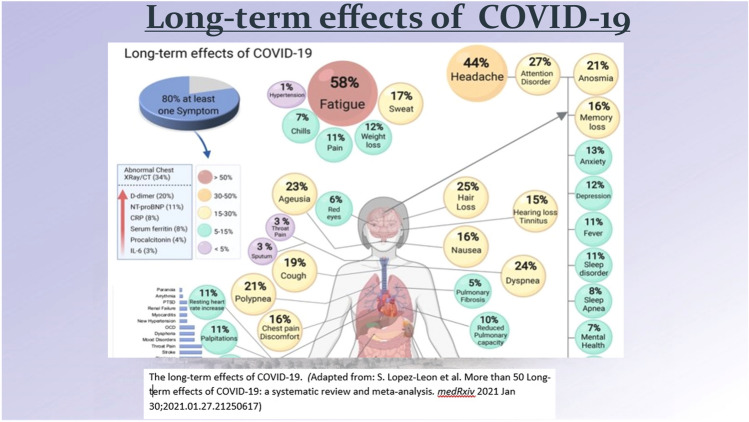
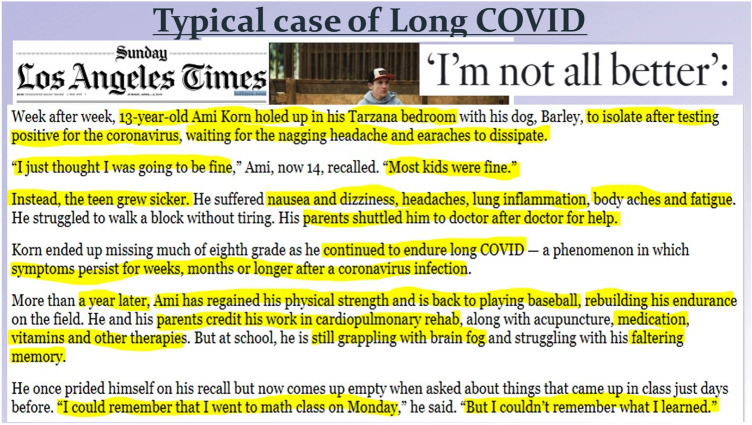
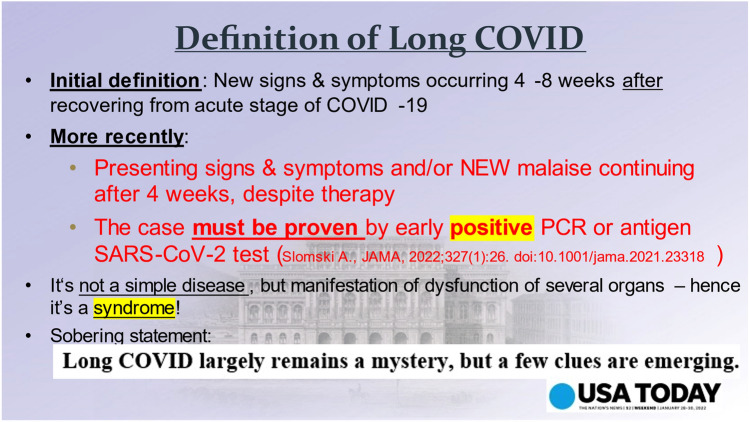
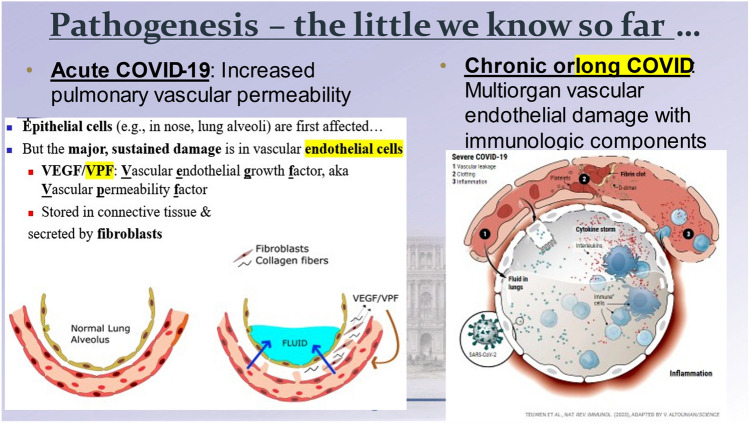
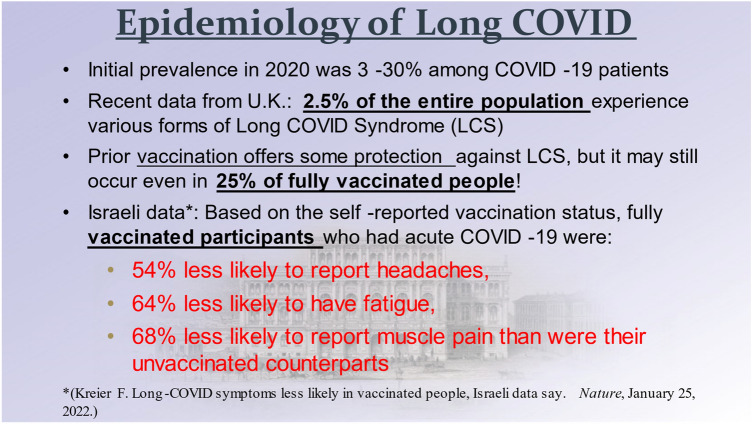
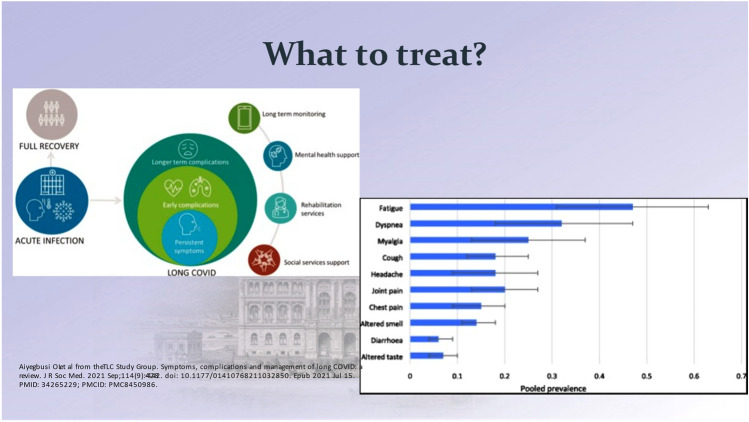
The previous acute respiratory diseases caused by viruses originating from China or the middle east (e.g., SARS, MERS) remained fast developing short diseases without major sequalae or any long-lasting complications. The new COVID-19, on the other hand, not only that it rapidly spread over the world, but some patients never fully recovered or even if they did, a few weeks later started to complain not only of shortness of breath, if any, but general weakness, muscle pains and 'brain fog', i.e., fuzzy memories. Thus, these signs and symptoms were eventually labelled 'long COVID', for which the most widely used definition is 'new signs and symptoms occurring 4-8 weeks after recovering from acute stage of COVID-19'. The other most frequent manifestations associated with long COVID include headache, loss of memory, smell and of hair, nausea, and vomiting. Thus, long COVID is not a simple disease, but complex disorder of several organ systems malfunctioning; hence, it is probably more appropriate to call this a syndrome. The pathogenesis of long COVID syndrome is poorly understood, but initial and persistent vascular endothelial injury that often triggers the formation of microthrombi that if dislodged as emboli, damage several organs, especially in the brain, heart and kidney, by creating microinfarcts. The other major contributory mechanistic factor is the persistent cytokine storm that may last longer in long COVID patients than in others, probably triggered by aggregates of SARS-Co-2 discovered recently in the adrenal cortex, kidney and brain. The prevalence of long COVID is relatively high, e.g., initially varied 3-30%, and recent data indicate that 2.5% of UK population suffers from this syndrome, while in the US 14.7% of acute COVID-19 patients continued to have symptoms longer than 2 months. Thus, the long COVID syndrome deserves to be further investigated, both from clinical and basic research perspectives.
Keywords: COVID-19; Clinical manifestations; Definitions; Long COVID; Pathogenesis.
© 2023. The Author(s), under exclusive licence to Springer Nature Switzerland AG.
Conflict of interest statement
There is no conflict of interest.
Figures
References
-
- Dvorak HF, Detmar M, Claffey KP, Nagy JA, Van der Water L, Senger DL (1995) Vascular permeability factor/vascular endothelial growth actor: an important mediator pf angiogenesis in malignancy and inflammation. Int Arch Allergy Immunol 107:233–235 - PubMed
-
- Kreier F (2022) Long-COVID symptoms less likely in vaccinated people, Israeli data say. Nature. 10.1038/d41586-022-00177-5 - PubMed
-
- Ochoa S (2022) How patients wrote ‘the first textbook’ on long COVID. Los Angeles Times, Nov. 16
Publication types
MeSH terms
LinkOut - more resources
Full Text Sources
Medical
Miscellaneous