


Exercise improves depression through positive modulation of brain-derived neurotrophic factor (BDNF). A review based on 100 manuscripts over 20 years
- PMID: 36969600
- PMCID: PMC10030936
- DOI: 10.3389/fphys.2023.1102526
Exercise improves depression through positive modulation of brain-derived neurotrophic factor (BDNF). A review based on 100 manuscripts over 20 years
Abstract
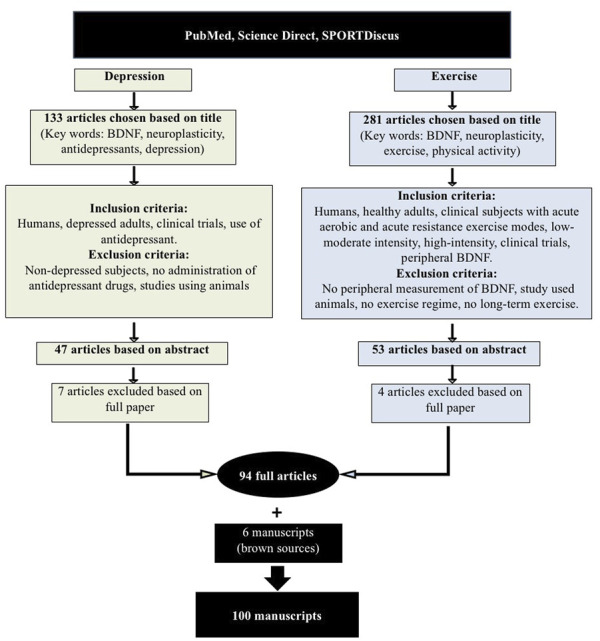
The aim of this review was to explore the relevant neurobiology and the association between peripheral levels of brain-derived neurotrophic factor (BDNF) and acute and short to long-term exercise regimes, as well as its relation to depression and antidepressant treatment. A 20-year literature search was conducted. The screening process resulted in 100 manuscripts. Antidepressants as well as acute exercise, particularly high-intensity, elevates BDNF in healthy humans and clinical populations, as evidenced from aerobic and resistance-based studies. Although exercise is increasingly recognised in the management of depression, acute and short-term exercise studies have failed to establish a relationship between the severity of depression and changes in peripheral BDNF. The latter rapidly returns to baseline, possibly indicating a quick re-uptake by the brain, aiding its neuroplasticity functions. The timescale of administration needed for the antidepressants to stimulate biochemical changes is longer than similar increases with acute exercise.
Keywords: BDNF expression; depression treatment; exercise mode; neuroplasticity; physical activity intervention.
Copyright © 2023 Jemni, Zaman, Carrick, Clarke, Marina, Bottoms, Matharoo, Ramsbottom, Hoffman, Groves, Gu and Konukman.
Conflict of interest statement
The authors declare that the research was conducted in the absence of any commercial or financial relationships that could be construed as a potential conflict of interest.
Figures
References
Publication types
LinkOut - more resources
Full Text Sources
