Oncogenic Merkel Cell Polyomavirus T Antigen Truncating Mutations are Mediated by APOBEC3 Activity in Merkel Cell Carcinoma
- PMID: 36970060
- PMCID: PMC10035372
- DOI: 10.1158/2767-9764.CRC-22-0211
Oncogenic Merkel Cell Polyomavirus T Antigen Truncating Mutations are Mediated by APOBEC3 Activity in Merkel Cell Carcinoma
Abstract
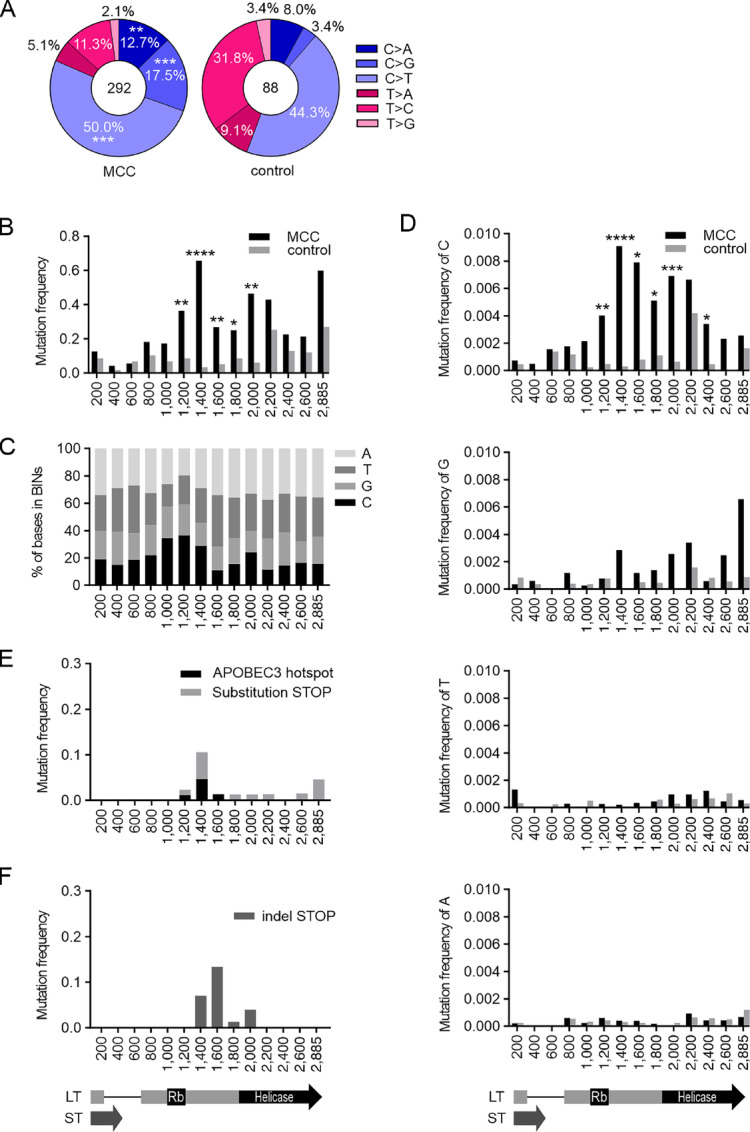
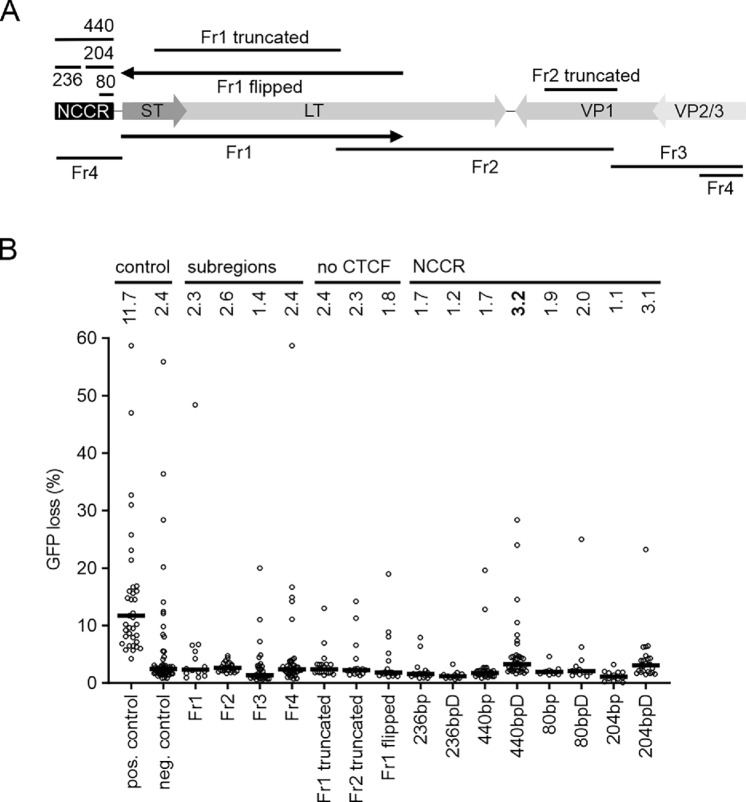
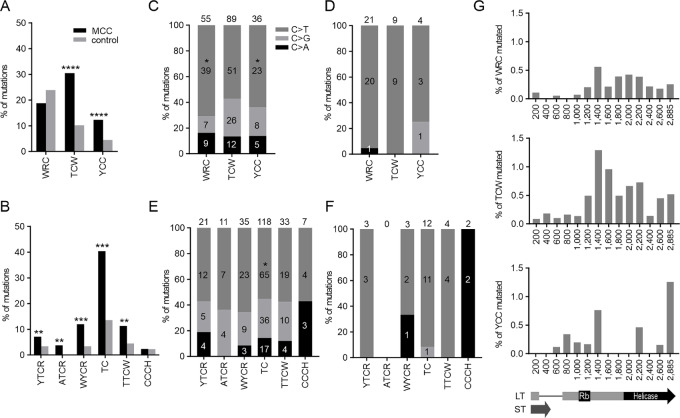
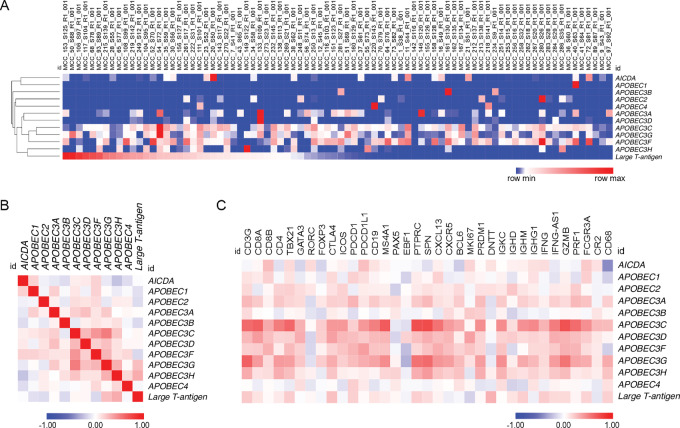
Merkel cell carcinoma (MCC) is an aggressive skin cancer, which is frequently caused by Merkel cell polyomavirus (MCPyV). Mutations of MCPyV tumor (T) antigens are major pathologic events of virus-positive (MCPyV+) MCCs, but their source is unclear. Activation-induced cytidine deaminase (AID)/APOBEC family cytidine deaminases contribute to antiviral immunity by mutating viral genomes and are potential carcinogenic mutators. We studied the contribution of AID/APOBEC cytidine deaminases to MCPyV large T (LT) truncation events. The MCPyV LT area in MCCs was enriched with cytosine-targeting mutations, and a strong APOBEC3 mutation signature was observed in MCC sequences. AICDA and APOBEC3 expression were detected in the Finnish MCC sample cohort, and LT expression correlated with APOBEC3H and APOBEC3G. Marginal but statistically significant somatic hypermutation targeting activity was detected in the MCPyV regulatory region. Our results suggest that APOBEC3 cytidine deaminases are a plausible cause of the LT truncating mutations in MCPyV+ MCC, while the role of AID in MCC carcinogenesis is unlikely.
Significance: We uncover APOBEC3 mutation signature in MCPyV LT that reveals the likely cause of mutations underlying MCPyV+ MCC. We further reveal an expression pattern of APOBECs in a large Finnish MCC sample cohort. Thus, the findings presented here suggest a molecular mechanism underlying an aggressive carcinoma with poor prognosis.
© 2022 The Authors; Published by the American Association for Cancer Research.
Conflict of interest statement
A.I. Soikkeli reports grants from Sigrid Juselius Foundation, The Finnish Cultural Foundation-The Kymenlaakso Regional Fund, Turku University Foundation, and The Maud Kuistila Memorial Foundation during the conduct of the study. J. Alinikula reports grants from Sigrid Juselius Foundation, Cancer Society of South-West Finland. The Emil Aaltonen Foundation, and Jane and Aatos Erkko Foundation during the conduct of the study. No disclosures were reported by other authors.
Figures
References
-
- Becker JC, Houben R, Ugurel S, Trefzer U, Pföhler C, Schrama D. MC polyomavirus is frequently present in Merkel cell carcinoma of European patients. J Invest Dermatol 2009;129:248–50. - PubMed
-
- Kassem A, Schöpflin A, Diaz C, Weyers W, Stickeler E, Werner M, et al. . Frequent detection of merkel cell polyomavirus in human merkel cell carcinomas and identification of a unique deletion in the VP1 gene. Cancer Res 2008;68:5009–13. - PubMed
-
- Foulongne V, Dereure O, Kluger N, Molès JP, Guillot B, Segondy M. Merkel cell polyomavirus DNA detection in lesional and nonlesional skin from patients with Merkel cell carcinoma or other skin diseases. Br J Dermatol 2010;162:59–63. - PubMed
-
- Kervarrec T, Tallet A, Miquelestorena-Standley E, Houben R, Schrama D, Gambichler T, et al. . Morphologic and immunophenotypical features distinguishing Merkel cell polyomavirus-positive and negative Merkel cell carcinoma. Mod Pathol 2019;32:1605–16. - PubMed
Publication types
MeSH terms
Substances
LinkOut - more resources
Full Text Sources
Medical