


Delphi survey on the most promising areas and methods to improve systematic reviews' production and updating
- PMID: 36973729
- PMCID: PMC10042663
- DOI: 10.1186/s13643-023-02223-3
Delphi survey on the most promising areas and methods to improve systematic reviews' production and updating
Abstract
Background: Systematic reviews (SRs) are invaluable evidence syntheses, widely used in biomedicine and other scientific areas. Tremendous resources are being spent on the production and updating of SRs. There is a continuous need to automatize the process and use the workforce and resources to make it faster and more efficient.
Methods: Information gathered by previous EVBRES research was used to construct a questionnaire for round 1 which was partly quantitative, partly qualitative. Fifty five experienced SR authors were invited to participate in a Delphi study (DS) designed to identify the most promising areas and methods to improve the efficient production and updating of SRs. Topic questions focused on which areas of SRs are most time/effort/resource intensive and should be prioritized in further research. Data were analysed using NVivo 12 plus, Microsoft Excel 2013 and SPSS. Thematic analysis findings were used on the topics on which agreement was not reached in round 1 in order to prepare the questionnaire for round 2.
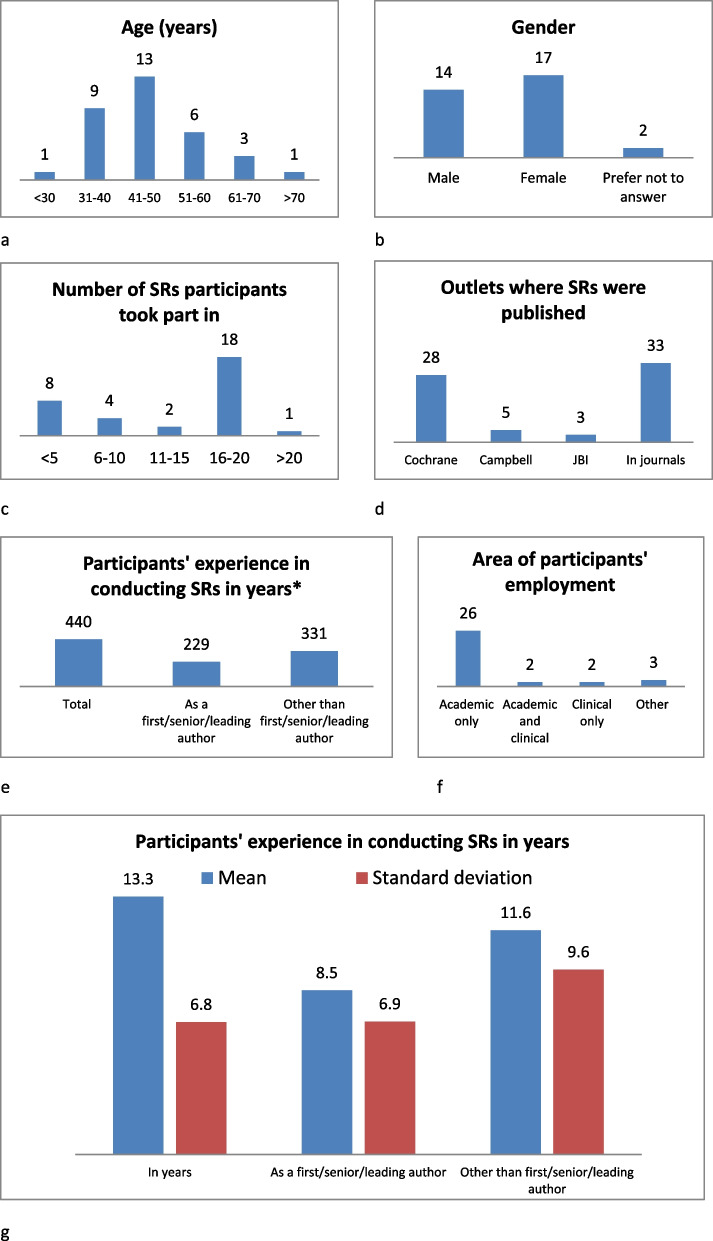
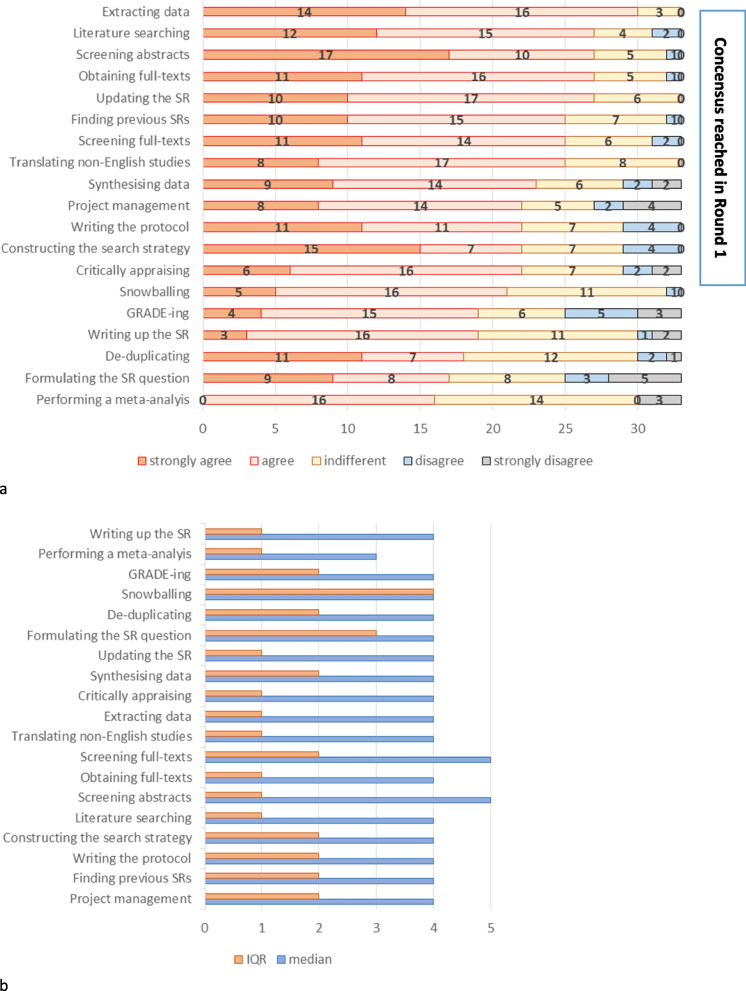
Results: Sixty percent (33/55) of the invited participants completed round 1; 44% (24/55) completed round 2. Participants reported average of 13.3 years of experience in conducting SRs (SD 6.8). More than two thirds of the respondents agreed/strongly agreed the following topics should be prioritized: extracting data, literature searching, screening abstracts, obtaining and screening full texts, updating SRs, finding previous SRs, translating non-English studies, synthesizing data, project management, writing the protocol, constructing the search strategy and critically appraising. Participants have not considered following areas as priority: snowballing, GRADE-ing, writing SR, deduplication, formulating SR question, performing meta-analysis.
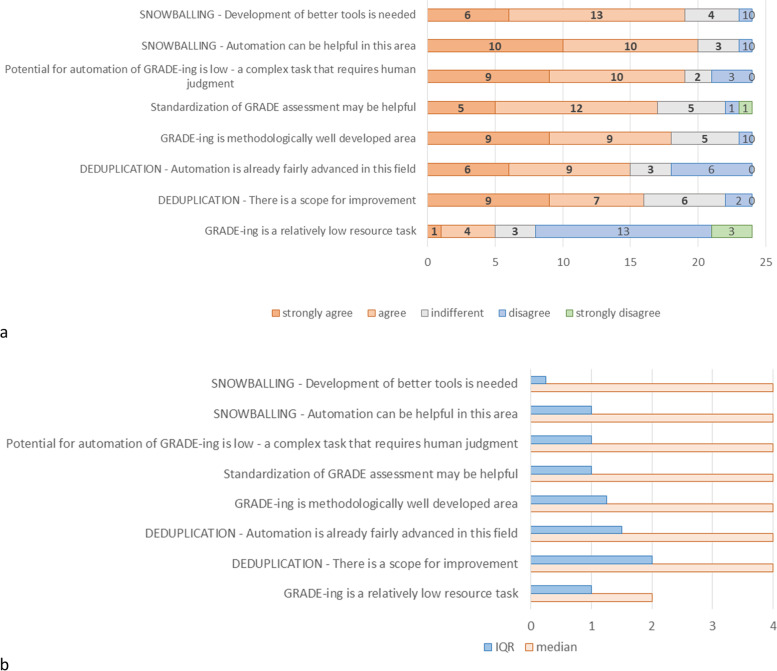
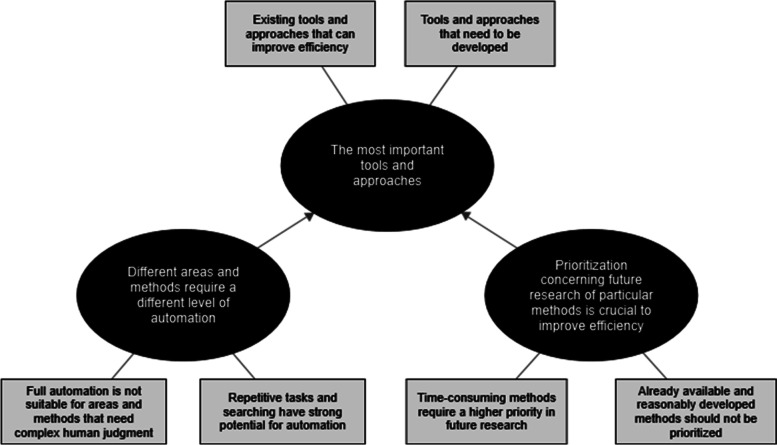
Conclusions: Data extraction was prioritized by the majority of participants as an area that needs more research/methods development. Quality of available language translating tools has dramatically increased over the years (Google translate, DeepL). The promising new tool for snowballing emerged (Citation Chaser). Automation cannot substitute human judgement where complex decisions are needed (GRADE-ing).
Trial registration: Study protocol was registered at https://osf.io/bp2hu/ .
Keywords: Automation tools; Evidence syntesis; Prioritization.
© 2023. The Author(s).
Conflict of interest statement
None of the authors report any financial conflicts of interest with respect to the topic of this manuscript. All authors have a general interest in evidence synthesis methods. Some authors are associated with groups, conferences, and tools focusing on evidence synthesis methods: Barbara Nussbaumer-Streit is co-convenor of the Cochrane Rapid Reviews Methods Group. Raluca Sfetcu is a member of the JBI method group for “Systematic reviews of etiology and risk”. Ana Marušić is funded by the Croatian Science Foundation under Grant agreement No. IP-2019–04-4882.
Figures
References
-
- Brunton G, Stansfield C, Caird J, Thomas J. Finding relevant studies. In: Gough D, Oliver S, Thomas J, editors. An introduction to systematic reviews. 2nd ed. London: Sage Publications Inc; 2017.
-
- Thane P. A critical woman. Barbara Wootton, social science and public policy in the twentieth century. Vol. 23. By Ann Oakley. Twentieth Century British History; 2012.
Publication types
MeSH terms
LinkOut - more resources
Full Text Sources
Research Materials
