


Protein corona and exosomes: new challenges and prospects
- PMID: 36973780
- PMCID: PMC10041507
- DOI: 10.1186/s12964-023-01089-1
Protein corona and exosomes: new challenges and prospects
Abstract
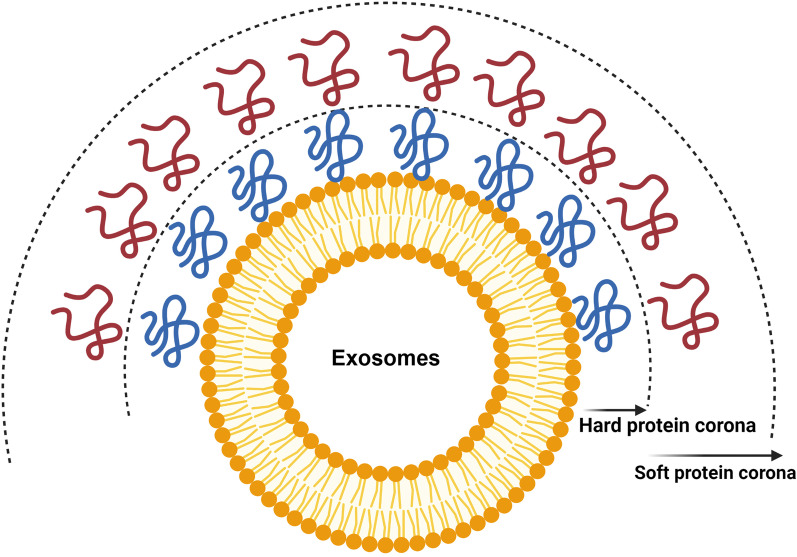
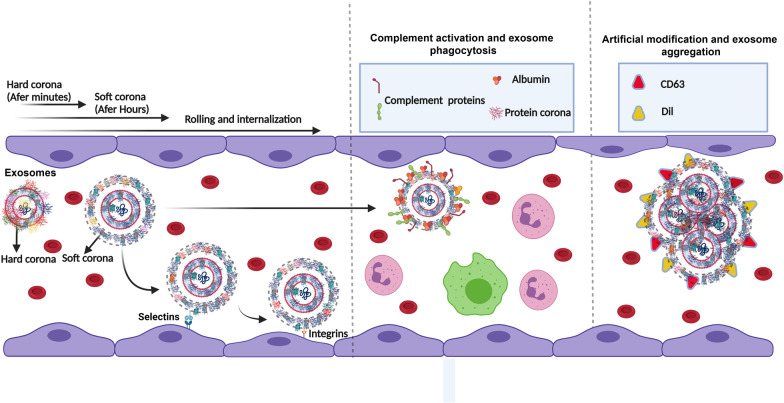
Recent advances in extracellular vesicle (EVs) detection and isolation methods have led to the development of novel therapeutic modalities. Among different types of EVs, exosomes (Exos) can transfer different signaling biomolecules and exhibit several superior features compared to whole-cell-based therapies. Therapeutic factors are normally loaded into the Exo lumen or attached to their surface for improving the on-target delivery rate and regenerative outcomes. Despite these advantages, there are several limitations in the application of Exos in in vivo conditions. It was suggested that a set of proteins and other biological compounds are adsorbed around Exos in aqueous phases and constitute an external layer named protein corona (PC). Studies have shown that PC can affect the physicochemical properties of synthetic and natural nanoparticles (NPs) after introduction in biofluids. Likewise, PC is generated around EVs, especially Exos in in vivo conditions. This review article is a preliminary attempt to address the interfering effects of PC on Exo bioactivity and therapeutic effects. Video Abstract.
Keywords: Biodistribution; Exosomes; Physicochemical properties; Protein corona.
© 2023. The Author(s).
Conflict of interest statement
The authors declare that they have no competing interests.
Figures

References
-
- Cheng WC, Liao TT, Lin CC, Yuan LTE, Lan HY, Lin HH, Teng HW, Chang HC, Lin CH, Yang CY. RAB27B-activated secretion of stem-like tumor exosomes delivers the biomarker microRNA-146a-5p, which promotes tumorigenesis and associates with an immunosuppressive tumor microenvironment in colorectal cancer. Int J Cancer. 2019;145(8):2209–2224. doi: 10.1002/ijc.32338. - DOI - PubMed
Publication types
MeSH terms
Substances
LinkOut - more resources
Full Text Sources
Other Literature Sources
