


A retrospective study of 1064-nm Q-switched Nd:YAG laser therapy for acquired bilateral nevus of Ota-like macules
- PMID: 36973977
- PMCID: PMC10155852
- DOI: 10.1111/srt.13298
A retrospective study of 1064-nm Q-switched Nd:YAG laser therapy for acquired bilateral nevus of Ota-like macules
Abstract
Background: The therapeutic efficacy of laser treatments for acquired bilateral nevus of Ota-like macules (ABNOM) varies among studies, and few studies have evaluated the factors affecting therapeutic effects.
Aims: To evaluate the efficacy and safety of 1064-nm Q-switched Nd:YAG laser (QSNYL) therapy for ABNOM and to identify the factors influencing the outcome.
Methods: A total of 110 patients with ABNOM were retrospectively evaluated and received two-to-nine treatment sessions. The effects of different factors on the therapeutic effect were analyzed on the basis of the number of treatments, age at first treatment, skin type, lesion color, affected area, number of lesion sites, and presence of concomitant melasma.
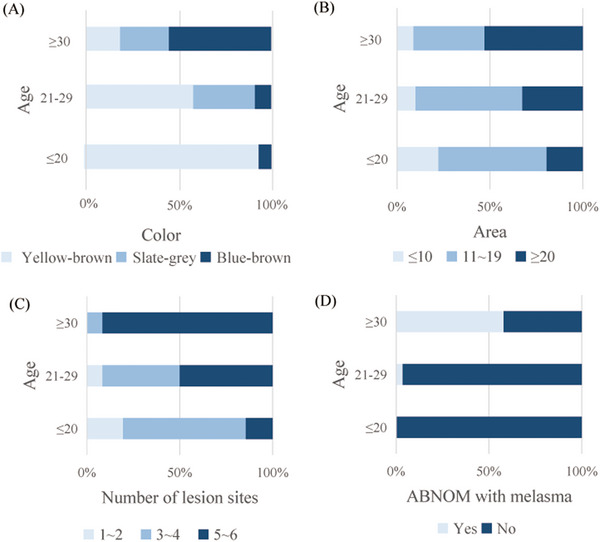
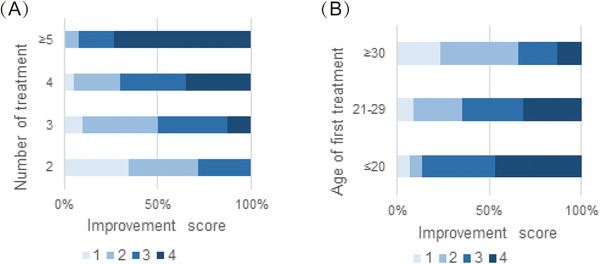
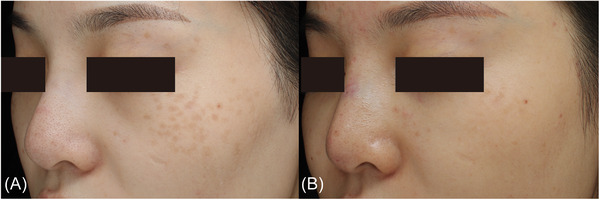
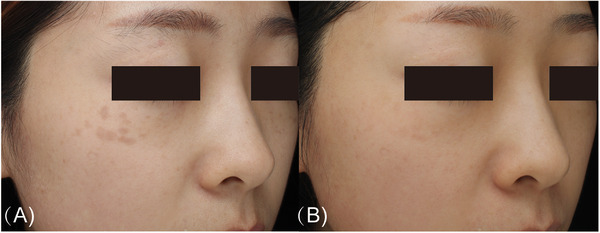
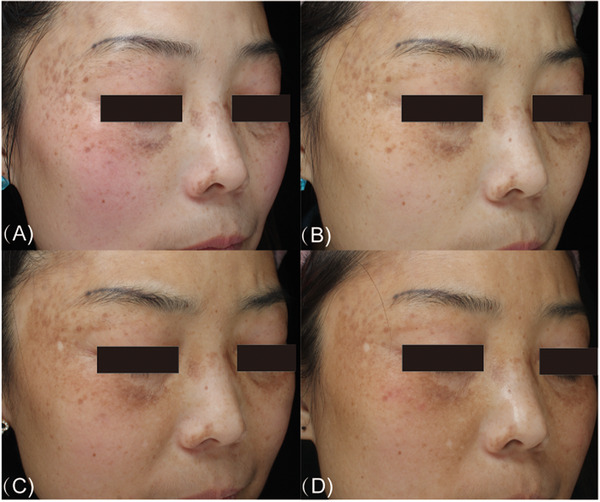
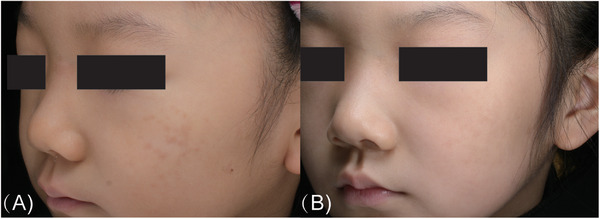
Results: The curative effect was positively correlated with the treatment time and negatively correlated with the increasing age at first treatment (p < 0.05). The curative effect was better in patients with skin type III than those with type IV ( p < 0.05) and in patients with a lesion area of less than 10 cm2 than those with a larger affected area (p < 0.05). Additionally, the treatment effect was poorer in patients with concomitant melasma (p < 0.05). The treatment effect was not significantly correlated with the lesion color or number of affected sites (p > 0.05). Eleven patients (10%) developed postinflammatory hyperpigmentation (PIH).
Conclusions: Early and repeated QSNYL therapy achieved satisfactory results for ABNOM. The risk of PIH after laser treatment is highest among patients with older age, darker lesion color, and darker skin color. For patients with ABNOM with concurrent melasma, low-energy laser therapy is recommended to reduce the risk of melasma aggravation.
Keywords: 1064-nm Q-switched Nd:YAG laser; acquired bilateral nevus of Ota-like macules; melasma; postinflammatory hyperpigmentation; related factors.
© 2023 The Authors. Skin Research and Technology published by John Wiley & Sons Ltd.
Conflict of interest statement
The authors have no relevant financial or nonfinancial interests to disclose.
Figures
References
-
- Hori Y, Kawashima M, Oohara K, Kukita A. Acquired, bilateral nevus of Ota‐like macules. J Am Acad Dermatol. 1984;10(6):961‐964. - PubMed
-
- Sun C, Lü YC, Lee EF, Nakagawa H. Naevus fusco‐caeruleus zygomaticus. Br J Dermatol. 1987;117(5):545‐553. - PubMed
-
- Long T, Liu L, He Li, et al. Androgen, estrogen and progesterone receptors in acquired bilateral nevus of Ota‐like macules. Pigment Cell Melanoma Res. 2010;23(1):144‐146. - PubMed
-
- Kunachak S, Leelaudomlipi P, Sirikulchayanonta V. Q‐Switched ruby laser therapy of acquired bilateral nevus of Ota‐like macules. Dermatol Surg. 1999;25(12):938‐941. - PubMed
-
- Lam AY, Wong DS, Lam LK, Ho WS, Chan HH. A retrospective study on the efficacy and complications of Q‐switched alexandrite laser in the treatment of acquired bilateral nevus of Ota‐like macules. Dermatol Surg. 2001;27(11):937‐941. discussion 941–2. - PubMed
MeSH terms
LinkOut - more resources
Full Text Sources
Medical
