


Omics in the Red Palm Weevil Rhynchophorus ferrugineus (Olivier) (Coleoptera: Curculionidae): A Bridge to the Pest
- PMID: 36975940
- PMCID: PMC10054242
- DOI: 10.3390/insects14030255
Omics in the Red Palm Weevil Rhynchophorus ferrugineus (Olivier) (Coleoptera: Curculionidae): A Bridge to the Pest
Abstract
The red palm weevil (RPW), Rhynchophorus ferrugineus (Coleoptera: Curculionidae), is the most devastating pest of palm trees worldwide. Mitigation of the economic and biodiversity impact it causes is an international priority that could be greatly aided by a better understanding of its biology and genetics. Despite its relevance, the biology of the RPW remains poorly understood, and research on management strategies often focuses on outdated empirical methods that produce sub-optimal results. With the development of omics approaches in genetic research, new avenues for pest control are becoming increasingly feasible. For example, genetic engineering approaches become available once a species's target genes are well characterized in terms of their sequence, but also population variability, epistatic interactions, and more. In the last few years alone, there have been major advances in omics studies of the RPW. Multiple draft genomes are currently available, along with short and long-read transcriptomes, and metagenomes, which have facilitated the identification of genes of interest to the RPW scientific community. This review describes omics approaches previously applied to RPW research, highlights findings that could be impactful for pest management, and emphasizes future opportunities and challenges in this area of research.
Keywords: draft genome; insect pests; metagenomics; red palm weevil; transcriptomics.
Conflict of interest statement
The authors declare no conflict of interest.
Figures
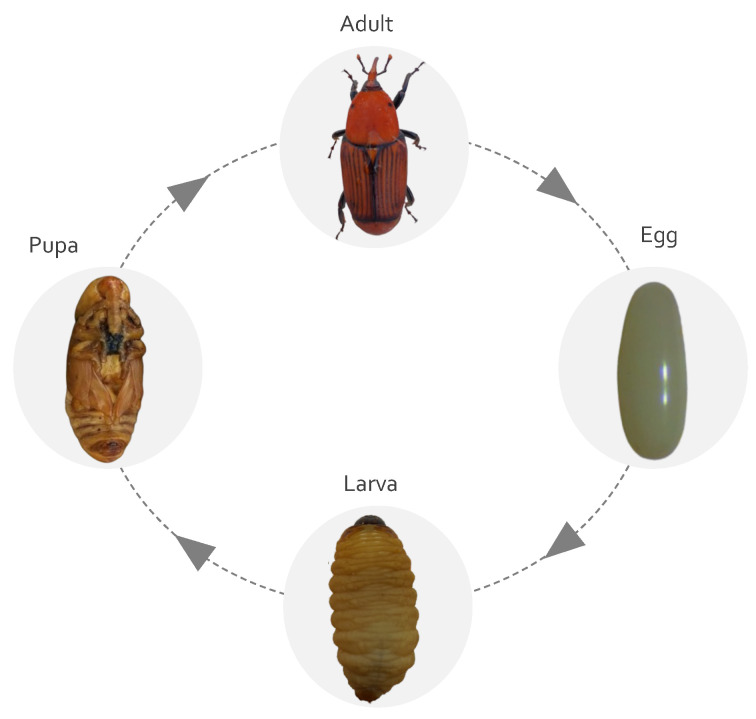
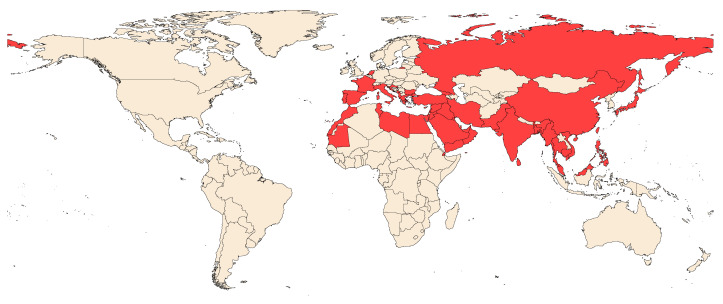
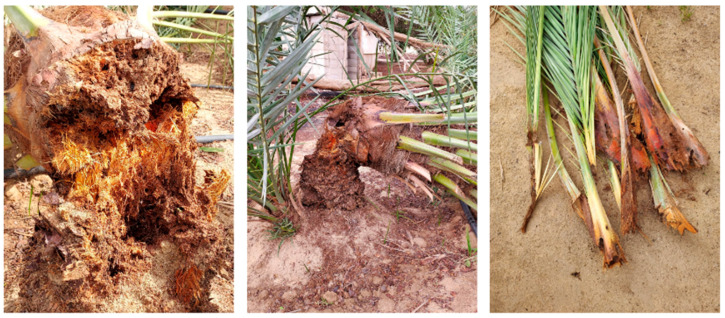
References
-
- Chao C.T., Krueger R.R. The date palm (Phoenix dactylifera L.): Overview of biology, uses, and cultivation. HortScience. 2007;42:1077–1082. doi: 10.21273/HORTSCI.42.5.1077. - DOI
-
- Rugman-Jones P.F., Hoddle C.D., Hoddle M.S., Stouthamer R. The lesser of two weevils: Molecular-genetics of pest palm weevil populations confirm Rhynchophorus vulneratus (Panzer 1798) as a valid species distinct from R. ferrugineus (Olivier 1790), and reveal the global extent of both. PLoS ONE. 2013;8:e78379. doi: 10.1371/journal.pone.0078379. - DOI - PMC - PubMed
-
- El-Shafie H.A.F., Faleiro J.R. Invasive Species-Introduction Pathways, Economic Impact, and Possible Management Options. IntechOpen; London, UK: 2020. Red palm weevil Rhynchophorus ferrugineus (Coleoptera: Curculionidae): Global invasion, current management options, challenges and future prospects.
-
- Faleiro J.R., Ferry M., Yaseen T., Al-Dobai S. Research Paper (Integrated Management: Insects) Overview of the gaps, challenges and prospects of red palm weevil management. Arab. J. Plant Prot. 2019;37:170. doi: 10.22268/AJPP-037.2.170177. - DOI
-
- Kassem H.S., Alotaibi B.A., Ahmed A., Aldosri F.O. Sustainable management of the red palm weevil: The nexus between farmers’ adoption of integrated pest management and their knowledge of symptoms. Sustainability. 2020;12:9647. doi: 10.3390/su12229647. - DOI
Publication types
Grants and funding
LinkOut - more resources
Full Text Sources
