


Effect of Passive Administration of Monoclonal Antibodies Recognizing Simian Immunodeficiency Virus (SIV) V2 in CH59-Like Coil/Helical or β-Sheet Conformations on Time of SIVmac251 Acquisition
- PMID: 36976017
- PMCID: PMC10134845
- DOI: 10.1128/jvi.01864-22
Effect of Passive Administration of Monoclonal Antibodies Recognizing Simian Immunodeficiency Virus (SIV) V2 in CH59-Like Coil/Helical or β-Sheet Conformations on Time of SIVmac251 Acquisition
Abstract
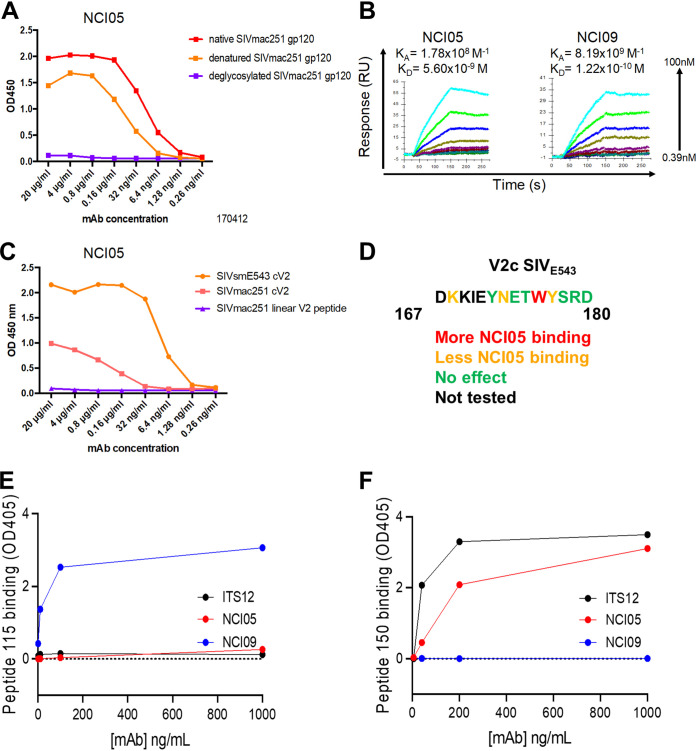
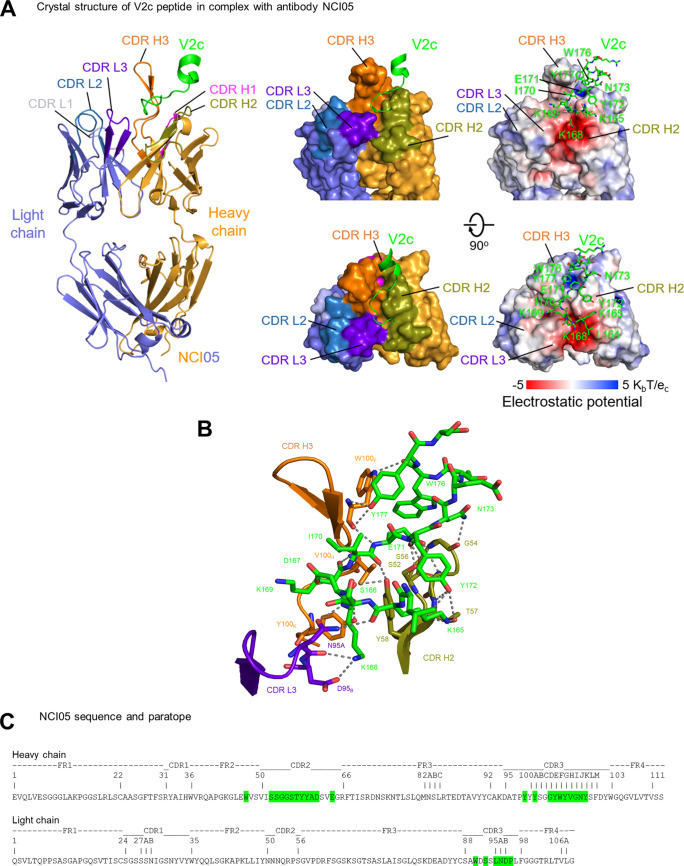
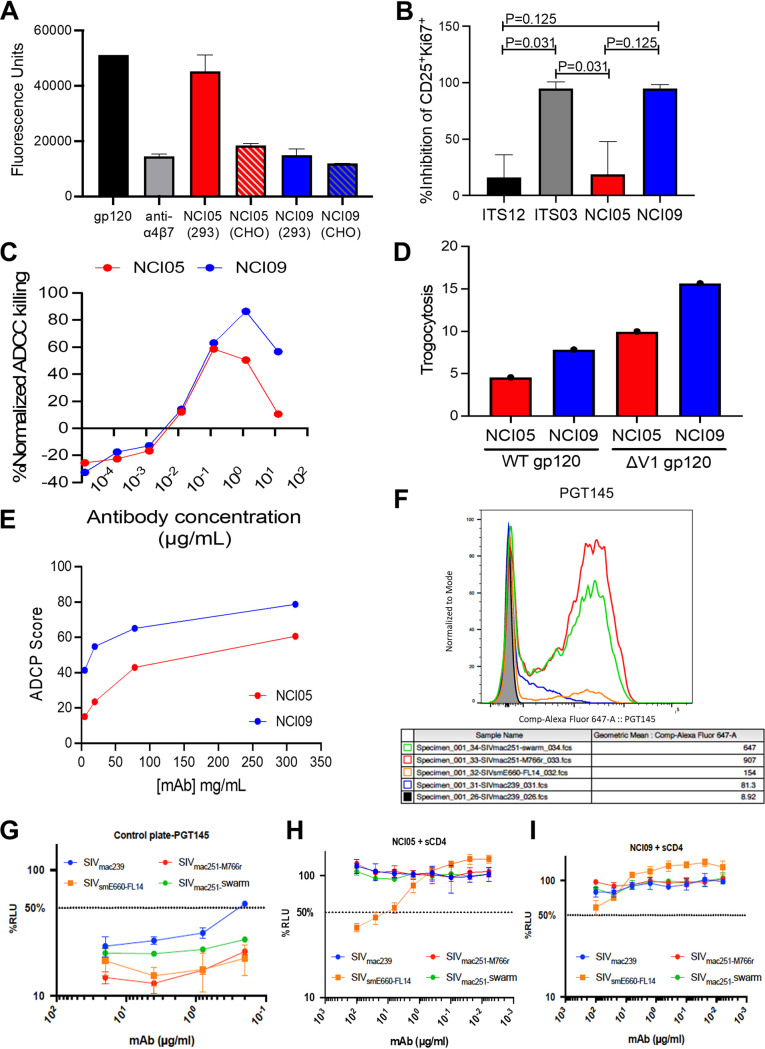
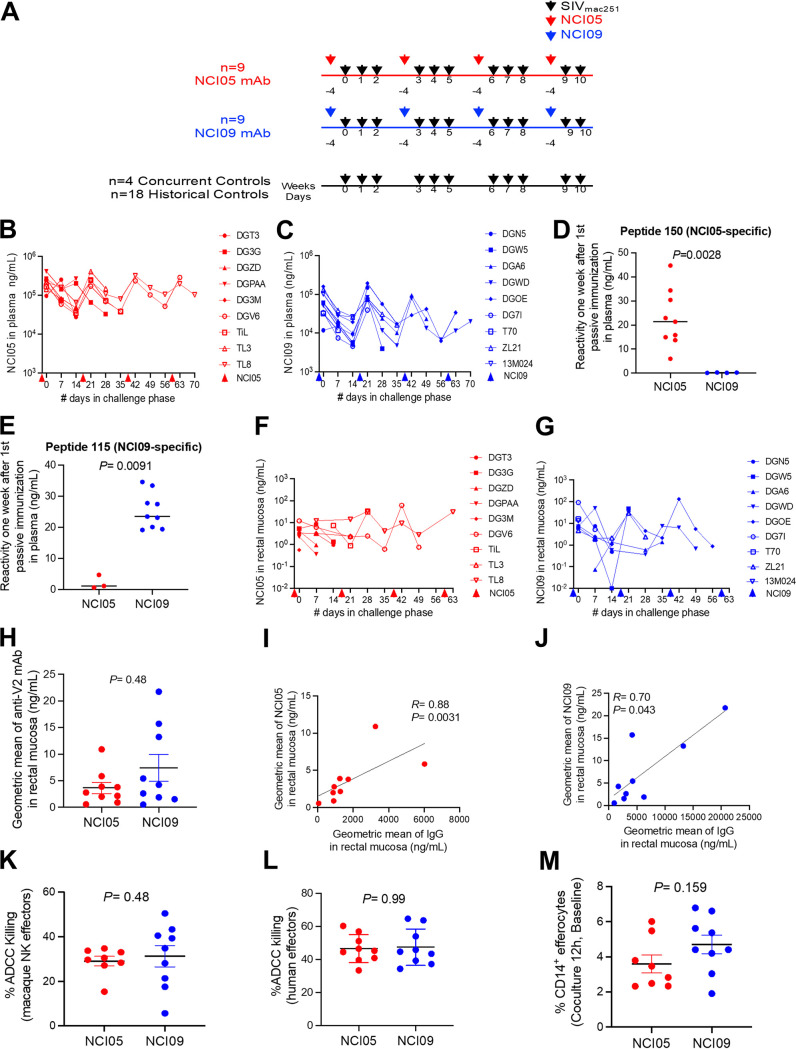
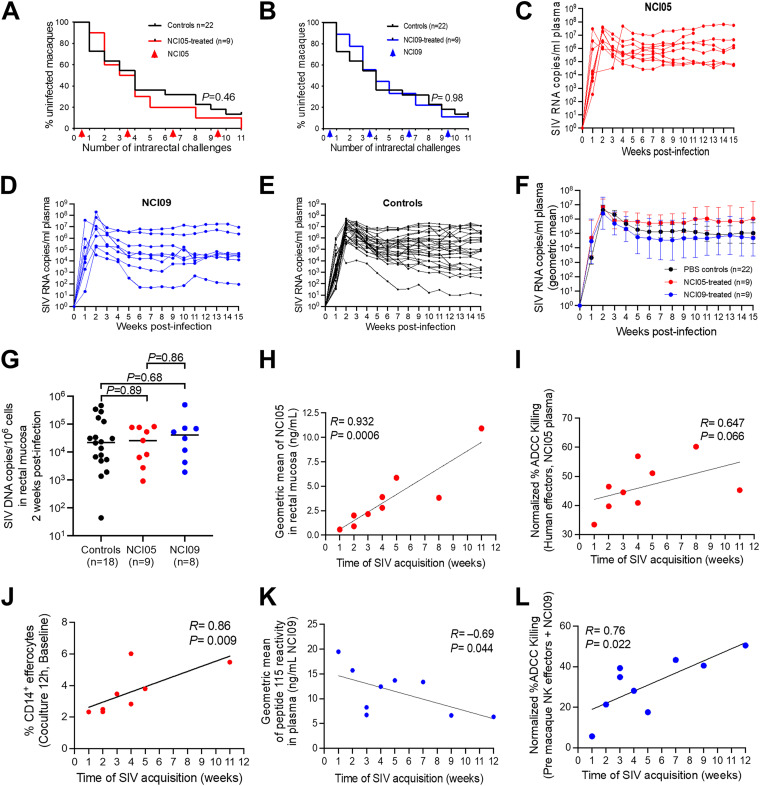
The monoclonal antibodies (MAbs) NCI05 and NCI09, isolated from a vaccinated macaque that was protected from multiple simian immunodeficiency virus (SIV) challenges, both target an overlapping, conformationally dynamic epitope in SIV envelope variable region 2 (V2). Here, we show that NCI05 recognizes a CH59-like coil/helical epitope, whereas NCI09 recognizes a β-hairpin linear epitope. In vitro, NCI05 and, to a lesser extent, NCI09 mediate the killing of SIV-infected cells in a CD4-dependent manner. Compared to NCI05, NCI09 mediates higher titers of antibody-dependent cellular cytotoxicity (ADCC) to gp120-coated cells, as well as higher levels of trogocytosis, a monocyte function that contributes to immune evasion. We also found that passive administration of NCI05 or NCI09 to macaques did not affect the risk of SIVmac251 acquisition compared to controls, demonstrating that these anti-V2 antibodies alone are not protective. However, NCI05 but not NCI09 mucosal levels strongly correlated with delayed SIVmac251 acquisition, and functional and structural data suggest that NCI05 targets a transient state of the viral spike apex that is partially opened, compared to its prefusion-closed conformation. IMPORTANCE Studies suggest that the protection against SIV/simian-human immunodeficiency virus (SHIV) acquisition afforded by the SIV/HIV V1 deletion-containing envelope immunogens, delivered by the DNA/ALVAC vaccine platform, requires multiple innate and adaptive host responses. Anti-inflammatory macrophages and tolerogenic dendritic cells (DC-10), together with CD14+ efferocytes, are consistently found to correlate with a vaccine-induced decrease in the risk of SIV/SHIV acquisition. Similarly, V2-specific antibody responses mediating ADCC, Th1 and Th2 cells expressing no or low levels of CCR5, and envelope-specific NKp44+ cells producing interleukin 17 (IL-17) also are reproducible correlates of decreased risk of virus acquisition. We focused on the function and the antiviral potential of two monoclonal antibodies (NCI05 and NCI09) isolated from vaccinated animals that differ in antiviral function in vitro and recognize V2 in a linear (NCI09) or coil/helical (NCI05) conformation. We demonstrate that NCI05, but not NCI09, delays SIVmac251 acquisition, highlighting the complexity of antibody responses to V2.
Keywords: CH59; NCI05; NCI09; V2; monoclonal antibodies; simian immunodeficiency virus; trogocytosis.
Conflict of interest statement
The authors declare no conflict of interest.
Figures
References
-
- Rerks-Ngarm S, Pitisuttithum P, Nitayaphan S, Kaewkungwal J, Chiu J, Paris R, Premsri N, Namwat C, de Souza M, Adams E, Benenson M, Gurunathan S, Tartaglia J, McNeil JG, Francis DP, Stablein D, Birx DL, Chunsuttiwat S, Khamboonruang C, Thongcharoen P, Robb ML, Michael NL, Kunasol P, Kim JH. MOPH-TAVEG Investigators. 2009. Vaccination with ALVAC and AIDSVAX to prevent HIV-1 infection in Thailand. N Engl J Med 361:2209–2220. 10.1056/NEJMoa0908492. - DOI - PubMed
-
- Robb ML, Rerks-Ngarm S, Nitayaphan S, Pitisuttithum P, Kaewkungwal J, Kunasol P, Khamboonruang C, Thongcharoen P, Morgan P, Benenson M, Paris RM, Chiu J, Adams E, Francis D, Gurunathan S, Tartaglia J, Gilbert P, Stablein D, Michael NL, Kim JH. 2012. Risk behaviour and time as covariates for efficacy of the HIV vaccine regimen ALVAC-HIV (vCP1521) and AIDSVAX B/E: a post-hoc analysis of the Thai phase 3 efficacy trial RV 144. Lancet Infect Dis 12:531–537. 10.1016/S1473-3099(12)70088-9. - DOI - PMC - PubMed
-
- Haynes BF, Gilbert PB, McElrath MJ, Zolla-Pazner S, Tomaras GD, Alam SM, Evans DT, Montefiori DC, Karnasuta C, Sutthent R, Liao HX, DeVico AL, Lewis GK, Williams C, Pinter A, Fong Y, Janes H, DeCamp A, Huang Y, Rao M, Billings E, Karasavvas N, Robb ML, Ngauy V, de Souza MS, Paris R, Ferrari G, Bailer RT, Soderberg KA, Andrews C, Berman PW, Frahm N, De Rosa SC, Alpert MD, Yates NL, Shen X, Koup RA, Pitisuttithum P, Kaewkungwal J, Nitayaphan S, Rerks-Ngarm S, Michael NL, Kim JH. 2012. Immune-correlates analysis of an HIV-1 vaccine efficacy trial. N Engl J Med 366:1275–1286. 10.1056/NEJMoa1113425. - DOI - PMC - PubMed
-
- Lin L, Finak G, Ushey K, Seshadri C, Hawn TR, Frahm N, Scriba TJ, Mahomed H, Hanekom W, Bart P-A, Pantaleo G, Tomaras GD, Rerks-Ngarm S, Kaewkungwal J, Nitayaphan S, Pitisuttithum P, Michael NL, Kim JH, Robb ML, O'Connell RJ, Karasavvas N, Gilbert P, C De Rosa S, McElrath MJ, Gottardo R. 2015. COMPASS identifies T-cell subsets correlated with clinical outcomes. Nat Biotechnol 33:610–616. 10.1038/nbt.3187. - DOI - PMC - PubMed
-
- Gottardo R, Bailer RT, Korber BT, Gnanakaran S, Phillips J, Shen X, Tomaras GD, Turk E, Imholte G, Eckler L, Wenschuh H, Zerweck J, Greene K, Gao H, Berman PW, Francis D, Sinangil F, Lee C, Nitayaphan S, Rerks-Ngarm S, Kaewkungwal J, Pitisuttithum P, Tartaglia J, Robb ML, Michael NL, Kim JH, Zolla-Pazner S, Haynes BF, Mascola JR, Self S, Gilbert P, Montefiori DC. 2013. Plasma IgG to linear epitopes in the V2 and V3 regions of HIV-1 gp120 correlate with a reduced risk of infection in the RV144 vaccine efficacy trial. PLoS One 8:e75665. 10.1371/journal.pone.0075665. - DOI - PMC - PubMed
Publication types
MeSH terms
Substances
Grants and funding
LinkOut - more resources
Full Text Sources
Research Materials
Miscellaneous
