


Sleep apnea pathophysiology
- PMID: 36976413
- PMCID: PMC10656321
- DOI: 10.1007/s11325-023-02783-7
Sleep apnea pathophysiology
Abstract
Objective: The purpose of this study is to examine the pathophysiology underlying sleep apnea (SA).
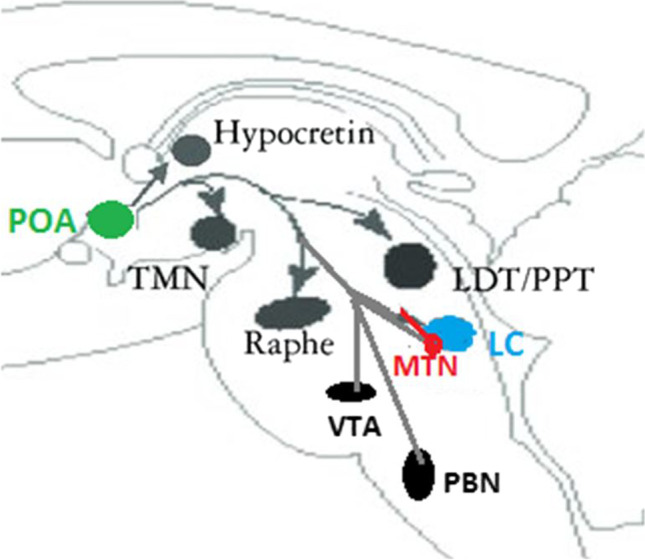
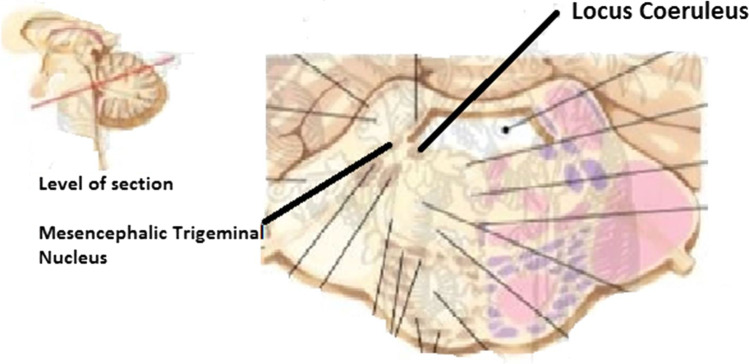
Background: We consider several critical features of SA including the roles played by the ascending reticular activating system (ARAS) that controls vegetative functions and electroencephalographic findings associated with both SA and normal sleep. We evaluate this knowledge together with our current understanding of the anatomy, histology, and physiology of the mesencephalic trigeminal nucleus (MTN) and mechanisms that contribute directly to normal and disordered sleep. MTN neurons express γ-aminobutyric acid (GABA) receptors which activate them (make chlorine come out of the cells) and that can be activated by GABA released from the hypothalamic preoptic area.
Method: We reviewed the published literature focused on sleep apnea (SA) reported in Google Scholar, Scopus, and PubMed databases.
Results: The MTN neurons respond to the hypothalamic GABA release by releasing glutamate that activates neurons in the ARAS. Based on these findings, we conclude that a dysfunctional MTN may be incapable of activating neurons in the ARAS, notably those in the parabrachial nucleus, and that this will ultimately lead to SA. Despite its name, obstructive sleep apnea (OSA) is not caused by an airway obstruction that prevents breathing.
Conclusions: While obstruction may contribute to the overall pathology, the primary factor involved in this scenario is the lack of neurotransmitters.
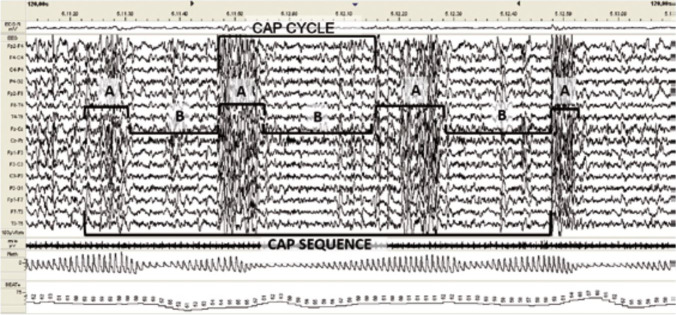
Keywords: Ascending reticular activating system; Cyclic alternating pattern; Mesencephalic trigeminal nucleus; Parabrachial nucleus; Sleep apnea.
© 2023. The Author(s).
Conflict of interest statement
The authors declare no competing interests.
Figures
References
-
- Lyons MM, Bhatt NY, Pack AI, Magalang UJ (2020) Global burden of sleep-disordered breathing and its implications. Respirology 25(7):690–702. 10.1111/resp.13838 - PubMed
-
- Luppi PH, Fort P (2018) Neuroanatomical and Neurochemical Bases of Vigilance States. Handb Exp Pharmacol. 10.1007/164_2017_84 - PubMed
-
- Szymusiak R, Steininger T, Alam N, McGinty D. Preoptic area sleep-regulating mechanisms. Arch Ital Biol. 2001;139(1–2):77–92. - PubMed
Publication types
MeSH terms
Substances
LinkOut - more resources
Full Text Sources
Medical
