Review
. 2023 Mar 28;24(1):95.
doi: 10.1186/s12931-023-02399-1.

Modulation of pulmonary immune function by inhaled cannabis products and consequences for lung disease

Affiliations
Review

Modulation of pulmonary immune function by inhaled cannabis products and consequences for lung disease

Matthew Preteroti et al. Respir Res. .

Abstract

The lungs, in addition to participating in gas exchange, represent the first line of defense against inhaled pathogens and respiratory toxicants. Cells lining the airways and alveoli include epithelial cells and alveolar macrophages, the latter being resident innate immune cells important in surfactant recycling, protection against bacterial invasion and modulation of lung immune homeostasis. Environmental exposure to toxicants found in cigarette smoke, air pollution and cannabis can alter the number and function of immune cells in the lungs. Cannabis (marijuana) is a plant-derived product that is typically inhaled in the form of smoke from a joint. However, alternative delivery methods such as vaping, which heats the plant without combustion, are becoming more common. Cannabis use has increased in recent years, coinciding with more countries legalizing cannabis for both recreational and medicinal purposes. Cannabis may have numerous health benefits owing to the presence of cannabinoids that dampen immune function and therefore tame inflammation that is associated with chronic diseases such as arthritis. The health effects that could come with cannabis use remain poorly understood, particularly inhaled cannabis products that may directly impact the pulmonary immune system. Herein, we first describe the bioactive phytochemicals present in cannabis, with an emphasis on cannabinoids and their ability to interact with the endocannabinoid system. We also review the current state-of-knowledge as to how inhaled cannabis/cannabinoids can shape immune response in the lungs and discuss the potential consequences of altered pulmonary immunity. Overall, more research is needed to understand how cannabis inhalation shapes the pulmonary immune response to balance physiological and beneficial responses with potential deleterious consequences on the lungs.

Keywords: COPD; COVID-19; Cannabis; Endocannabinoids; Infection; Macrophages; Respiratory system; Vape.


Conflict of interest statement

That authors have no competing interests.

Figures
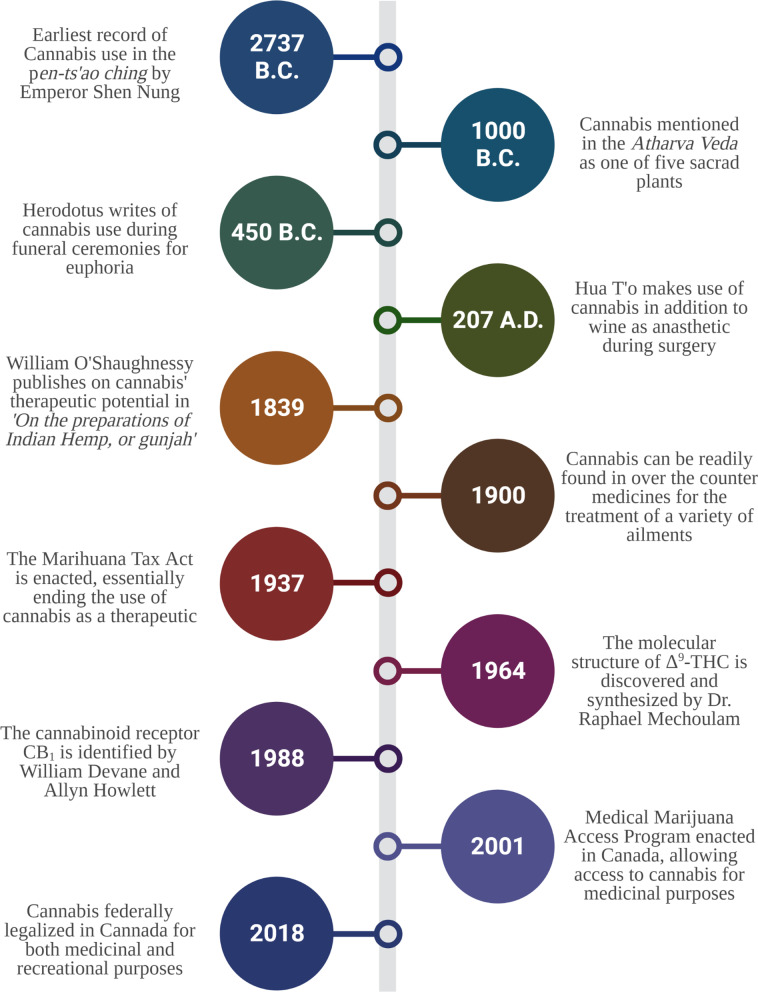
Fig. 1
Fig. 1
Timeline of cultural and medical milestones in cannabis. Summary of events beginning with the first recorded use of cannabis in 2737 B.C. up until the federal legalization of cannabis in Canada for both medicinal and recreational use
Fig. 2
Fig. 2
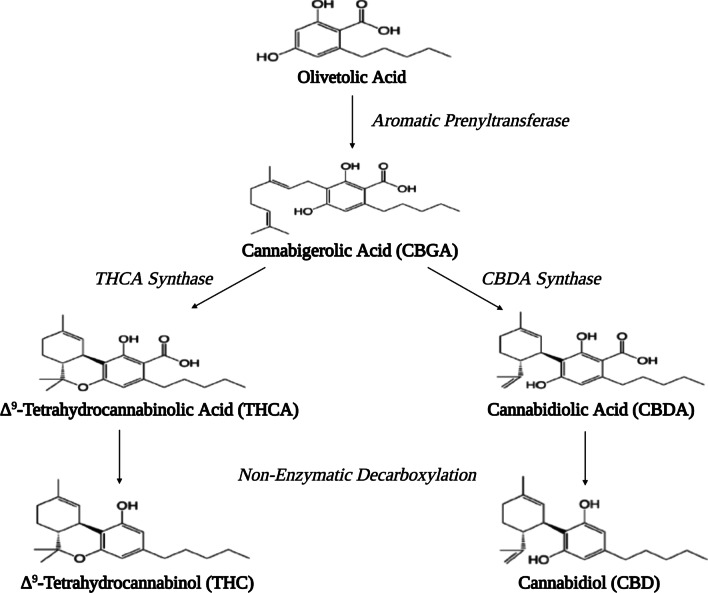
Biosynthesis of cannabinoids and structural differences between Δ9-THC and CBD. Conversion of olivetolic acid to cannabigerolic acid (CBGA) occurs through the use of aromatic prenyltransferase. CBGA acts as the point of differentiation from which cannabinoid-specific FAD-oxidases (THCA synthase & CBDA synthase) convert CBGA to precursor cannabinoid acids. Subsequent decarboxylation of cannabinoid acids results in active cannabinoids. Δ9-THC forms a cyclic ring whereas CBD has a hydroxy group resulting three-dimensional structural differences
Fig. 3
Fig. 3
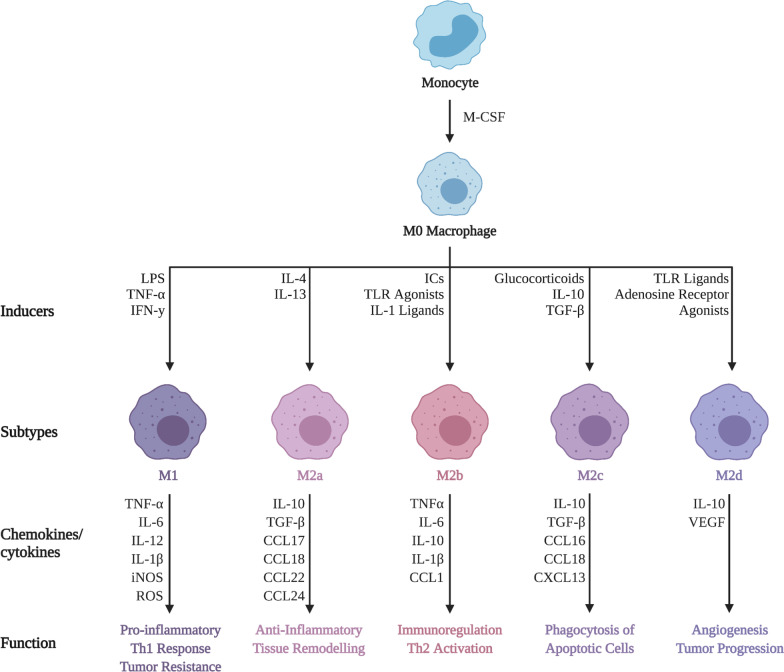
Differing biological and physiological features of macrophage subsets. Monocytes stimulated by macrophage-colony stimulating factor (M-CSF) differentiate into M0 macrophages. M0 macrophages subjected to certain stimuli promote a phenotype of either M1, M2a, M2b, M2c, or M2d. Each phenotype has characteristic cytokine/chemokine secretion profiles with respective cellular and molecular functions; adapted from [196]
Fig. 4
Fig. 4
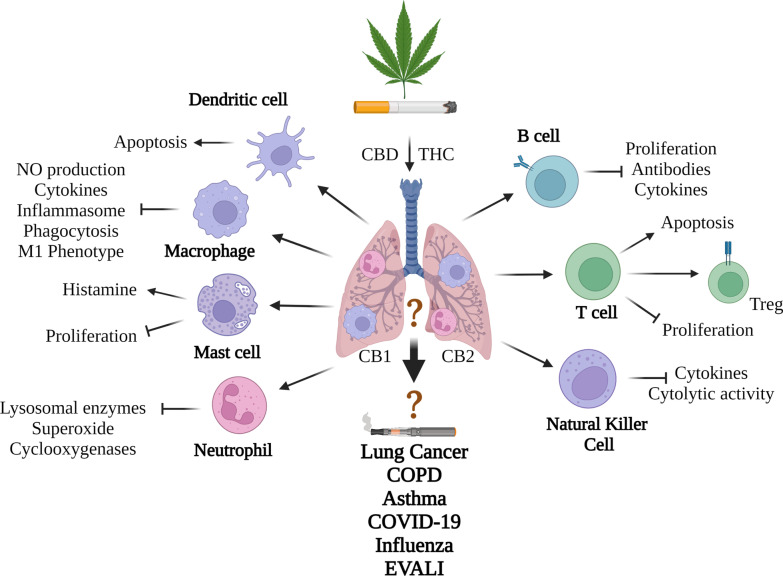
Summary of how cannabis products may impact the pulmonary immune system. Smoking cannabis increases inflammation in the lungs that is typified by increased neutrophils and macrophages. Mechanistically, the direct impact of the cannabinoids THC and CBD on various immune populations is shown although whether these are also impacted in the lungs from inhaled cannabis products is not known. Generally, cannabinoids are immunosuppressive, and prevent cytokine production, proliferation and cell-specific functions (e.g., phagocytosis, antibody production). In some cases, cellular differentiation to a more suppressive phenotype (e.g., Tregs) is observed. The functional consequence of these immunological changes is not known but is theorized to contribute to chronic lung disease development including lung cancer and COPD. The impact on respiratory infections is inconclusive. It is also not known the impact of vaporized cannabis products, including the inhalation of distillates using an e-cigarette. More research is needed to understand the evolving and complex interaction between inhaled cannabis products and the pulmonary immune system

References

    1. Small E. American law and the species problem in cannabis: science and semantics. Bull Narc. 1975;27(3):1–20. - PubMed
    1. Merlin MD. Archaeological evidence for the tradition of psychoactive plant use in the old world. Econ Bot. 2003;57:295–323. doi: 10.1663/0013-0001(2003)057[0295:AEFTTO]2.0.CO;2. - DOI
    1. Baron EP. Medicinal properties of cannabinoids, terpenes, and flavonoids in cannabis, and benefits in migraine, headache, and pain: an update on current evidence and cannabis science. Headache. 2018;58:1139–1186. doi: 10.1111/head.13345. - DOI - PubMed
    1. Li H, Liu Y, Tian D, Tian L, Ju X, Qi L, Wang Y, Liang C. Overview of cannabidiol (CBD) and its analogues: structures, biological activities, and neuroprotective mechanisms in epilepsy and Alzheimer’s disease. Eur J Med Chem. 2020;192:112163. doi: 10.1016/j.ejmech.2020.112163. - DOI - PubMed
    1. Brown JD. Potential adverse drug events with tetrahydrocannabinol (THC) due to drug–drug interactions. J Clin Med. 2020;9:919. doi: 10.3390/jcm9040919. - DOI - PMC - PubMed

Grants and funding