. 2023 Mar 20;12(3):616.
doi: 10.3390/antibiotics12030616.

Polyphosphate Ester-Type Transporters Improve Antimicrobial Properties of Oxytetracycline

Affiliations

Polyphosphate Ester-Type Transporters Improve Antimicrobial Properties of Oxytetracycline

Mariya Kozak et al. Antibiotics (Basel). .

Abstract

Prolonged use of antibiotics can cause toxicity in human and animal cells and lead to the development of antibiotic resistance. The development of drug delivery systems for enhanced antibacterial properties of antibiotics could reduce toxic effects and minimize the development of resistance. The aim of this study was to evaluate the effectiveness of oxytetracycline in complexes with new polyphosphate ester-type transporters and to investigate the antimicrobial effect of these complexes on Escherichia coli, Pseudomonas aeruginosa, and Staphylococcus aureus growth in vitro. Two polyphosphate ester-type transporters with different molecular weights were synthesized, and oxytetracycline was attached through the phosphorus groups. To determine the sensitivities of microorganisms, oxytetracycline hydrochloride and oxytetracycline complexes with polyphosphate ester-type transporters (P4 and P6) were added to liquid and solid media with E. coli, P. aeruginosa, and S. aureus in different doses. Oxytetracycline in complex with polyphosphate ester-type transporters at low doses (2.3 to 3.8 μg/disk or μg/mL) in both solid and liquid media inhibits the growth of S. aureus more effectively than oxytetracycline alone. The maximum influence on E. coli growth on solid media is observed at a dose of 8 μg/disk of oxytetracycline in combination with both P4 and P6 polyphosphate ester-type transporters. P. aeruginosa growth under the influence of oxytetracycline in combination with polyphosphate-ester type transporters in a liquid medium depends on the dose of antibiotic and the day of cultivation.

Keywords: antibiotic; microorganisms; oxytetracycline; oxytetracycline-polyphosphate ester-type transporter complex; poly(phosphoester)s.


Conflict of interest statement

The authors declare no conflict of interest.

Figures
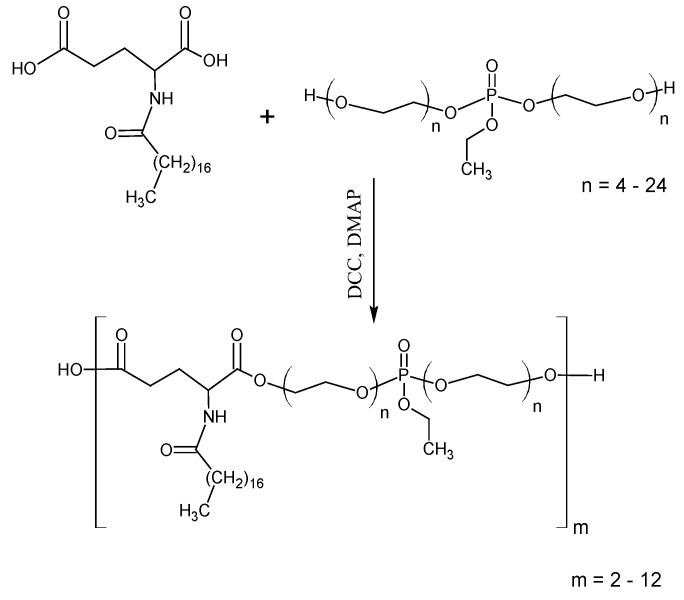
Figure 1
Figure 1
Synthesis of phosphorus-containing polyesters (PPE) with an ethyl phosphate group.
Figure 2
Figure 2
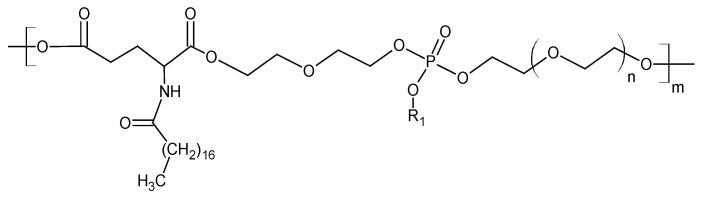
The structural formula of the polyphosphate ester.
Figure 3
Figure 3
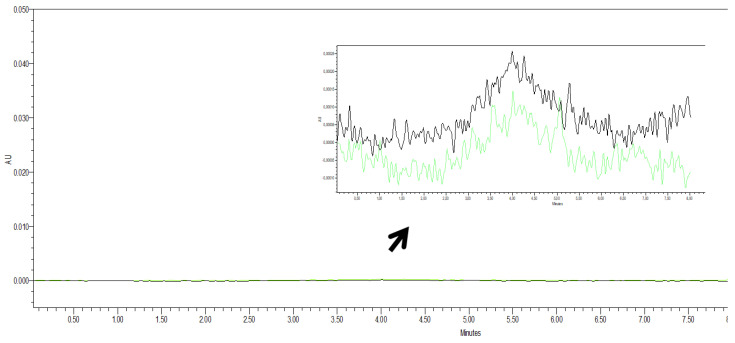
Chromatograms of polyphosphate ester-type transporters: P4 and P6. Note: P4 (green), P6 (black).
Figure 4
Figure 4
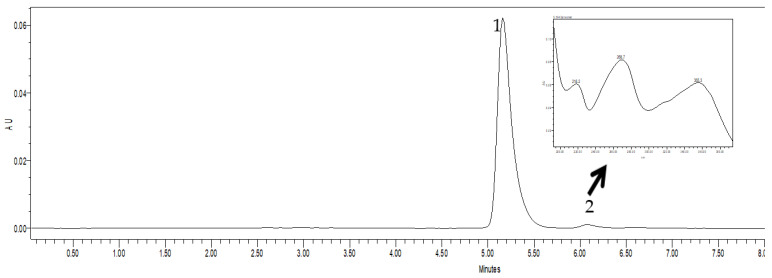
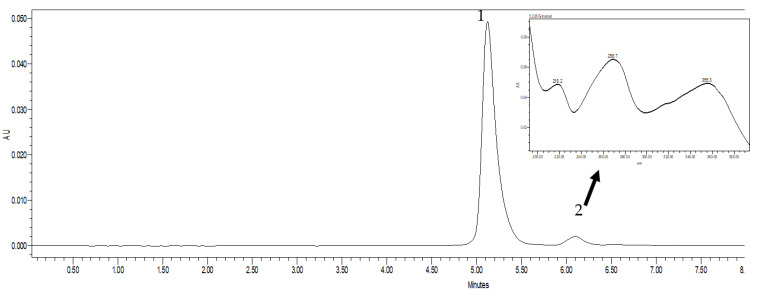
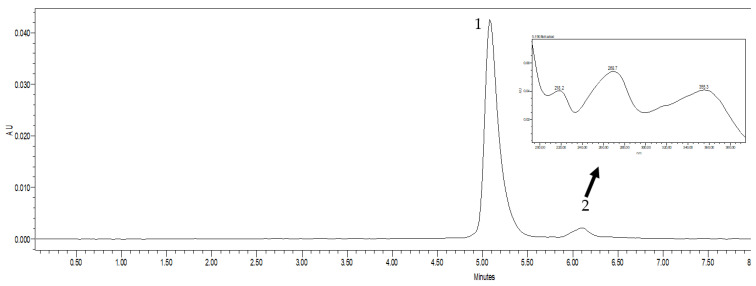
Chromatogram of a standard solution of oxytetracycline hydrochloride. Note: in this and the following figures: 1—the main peak of oxytetracycline; 2—concomitant components of the synthesis of the active substance.
Figure 5
Figure 5
Chromatogram of oxytetracycline in the polyphosphate ester-type P4 transporter.
Figure 6
Figure 6
Chromatogram of oxytetracycline in the polyphosphate ester-type P6 transporter.
Figure 7
Figure 7
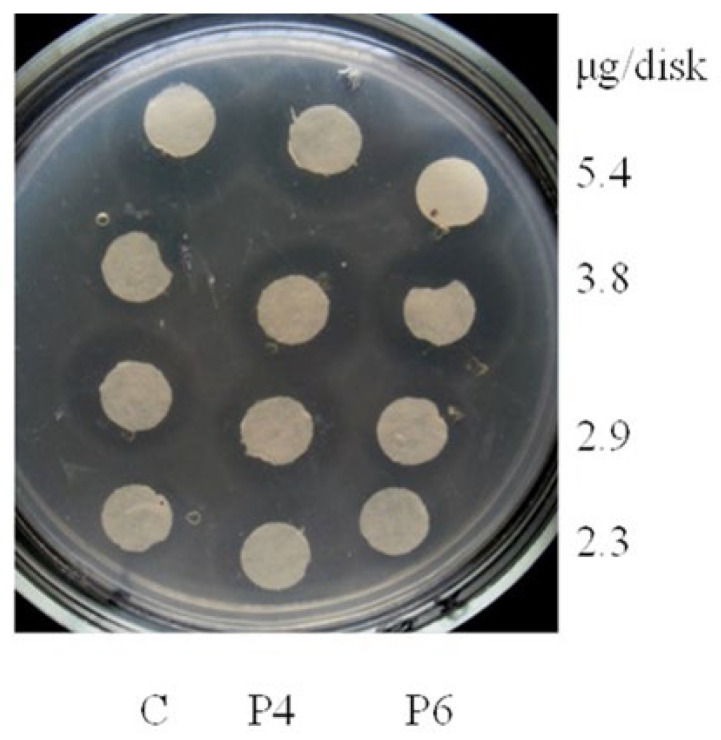
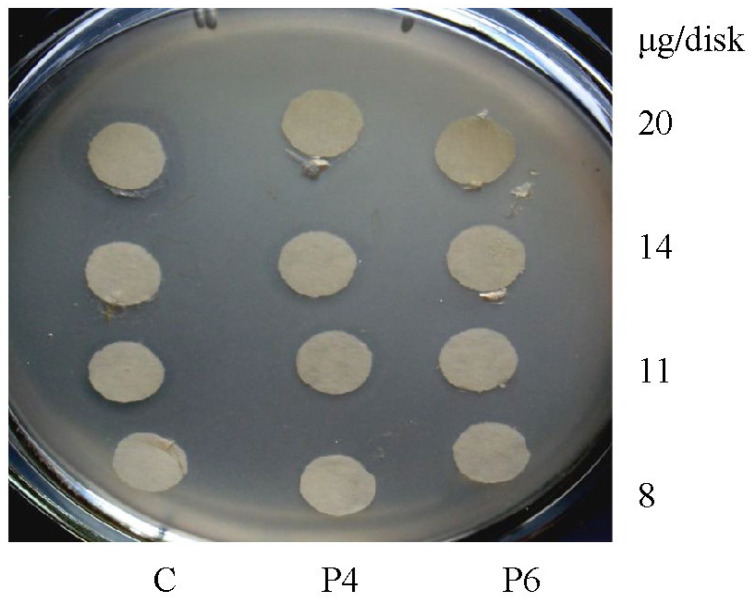
Growth inhibition of Staphylococcus aureus (S. aureus). In this and the following figures: C—control (oxytetracycline hydrochloride); P4 and P6—oxytetracycline in complex with polyphosphate ester-type transporters.
Figure 8
Figure 8
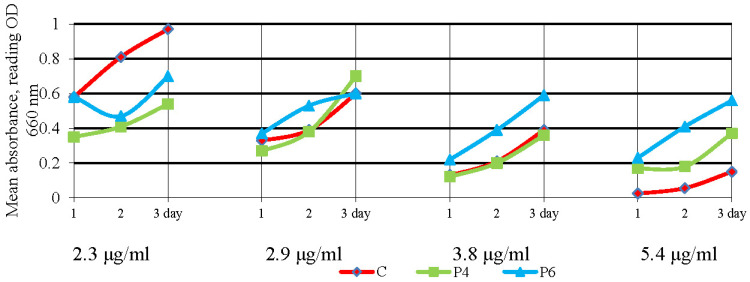
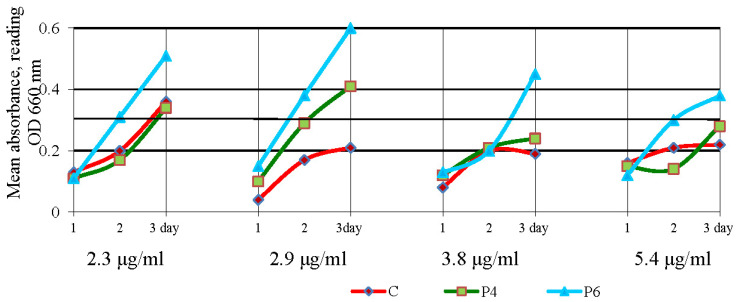
Growth of Staphylococcus aureus (S. aureus) under the action of oxytetracycline in complex with polyphosphate ester-type transporters during cultivation in a liquid medium for 3 days. Note. In this and the following figures: C—control (traditional form of antibiotic); P4 and P6 are oxytetracycline in complex with polyphosphate ester-type transporters.
Figure 9
Figure 9
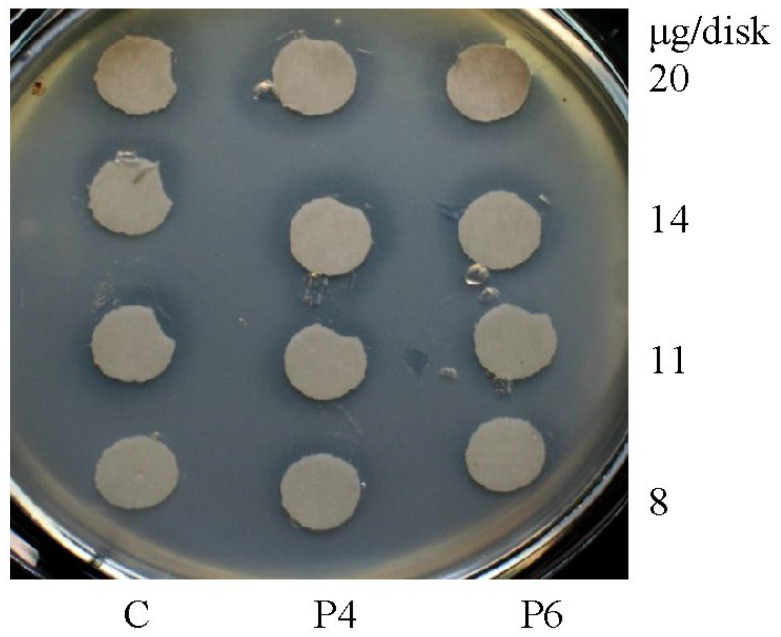
Growth inhibition of Escherichia coli.
Figure 10
Figure 10
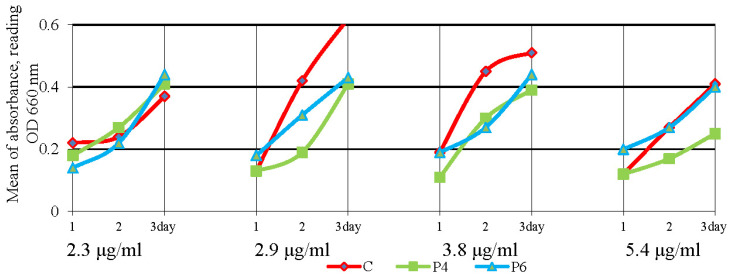
Growth of Escherichia coli (E. coli) under the action of oxytetracycline in complex with polyphosphate ester-type transporters during cultivation in a liquid medium for three days.
Figure 11
Figure 11
Growth inhibition of Pseudomonas aeruginosa.
Figure 12
Figure 12
Growth of Pseudomonas aeruginosa (P. aeruginosa) under the action of oxytetracycline in complex with polyphosphate ester-type transporters during cultivation in a liquid medium for three days.

References

    1. Pethick F.E., MacFadyen A.C., Tang Z., Sangal V., Liu T.-T., Chu J., Kosec G., Petkovic H., Guo M., Kirby R., et al. Draft genome sequence of the oxytetracycline-producing bacterium Streptomyces rimosus ATCC. Genome Announc. 2013;1:e00063-13. doi: 10.1128/genomeA.00063-13. - DOI - PMC - PubMed
    1. Petković H., Cullum J., Hranueli D., Hunter I.S., Perić-Concha N., Pigac J., Thamchaipenet A., Vujaklija D., Long P.F. Genetics of Streptomyces rimosus, the oxytetracycline producer. Microbiol. Mol. Biol. Rev. 2006;70:704–728. doi: 10.1128/MMBR.00004-06. - DOI - PMC - PubMed
    1. Petković H., Lukežič T., Šušković J. Biosynthesis of Oxytetracycline by Streptomyces rimosus: Past, Present and Future Directions in the Development of Tetracycline Antibiotics. Food Technol. Biotechnol. 2017;55:3–13. doi: 10.17113/ftb.55.01.17.4617. - DOI - PMC - PubMed
    1. Pickens L.B., Tang Y. Oxytetracycline biosynthesis. J. Biol. Chem. 2010;285:27509–27515. doi: 10.1074/jbc.R110.130419. - DOI - PMC - PubMed
    1. Chukwudi C.U. rRNA Binding Sites and the Molecular Mechanism of Action of the Tetracyclines. Antimicrob. Agents Chemother. 2016;60:4433–4441. doi: 10.1128/AAC.00594-16. - DOI - PMC - PubMed