Review
. 2023 Mar 3;12(3):630.
doi: 10.3390/antiox12030630.

The Chelating Ability of Plant Polyphenols Can Affect Iron Homeostasis and Gut Microbiota

Affiliations
Review

The Chelating Ability of Plant Polyphenols Can Affect Iron Homeostasis and Gut Microbiota

Aurelia Scarano et al. Antioxidants (Basel). .

Abstract

In the past decades, many studies have widely examined the effects of dietary polyphenols on human health. Polyphenols are well known for their antioxidant properties and for their chelating abilities, by which they can be potentially employed in cases of pathological conditions, such as iron overload. In this review, we have highlighted the chelating abilities of polyphenols, which are due to their structural specific sites, and the differences for each class of polyphenols. We have also explored how the dietary polyphenols and their iron-binding abilities can be important in inflammatory/immunomodulatory responses, with a special focus on the involvement of macrophages and dendritic cells, and how they might contribute to reshape the gut microbiota into a healthy profile. This review also provides evidence that the axes "polyphenol-iron metabolism-inflammatory responses" and "polyphenol-iron availability-gut microbiota" have not been very well explored so far, and the need for further investigation to exploit such a potential to prevent or counteract pathological conditions.

Keywords: gut microbiota; inflammation; iron metabolism; polyphenols.


Conflict of interest statement

The authors declare no conflict of interest.

Figures
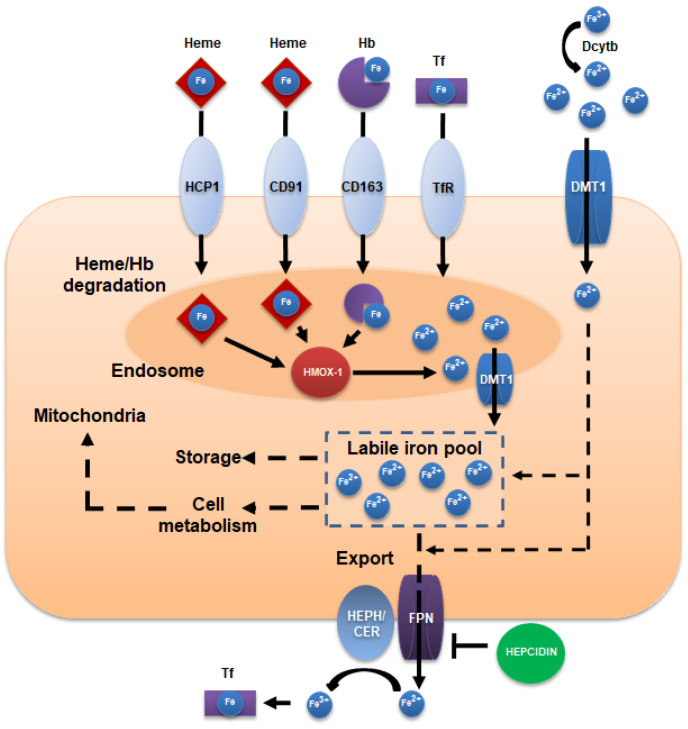
Figure 1
Figure 1
Schematic representation of cellular iron metabolism. Divalent metal transporter 1 (DMT1) mediates the cellular import of Fe2+ after its reduction from Fe3+ by the cytochrome-b-like ferrireductase (Dctyb). Transferrin receptor (TfR) binds transferrin–iron complexes before their internalization by receptor-mediated endocytosis. DMT1 function is also implicated in the iron transport from the endosome to the cytoplasm, following the Tf cycle. The hemoglobin scavenger receptor (CD163) and heme-hemopexin receptor (CD91) are implicated in hemoglobin uptake. Once inside the cell, iron joins the labile pool that is stored in ferritin or participates in cell metabolism processes. Ferroportin (FPN) mediates the iron efflux outside the cell, mostly under the regulation of hepcidin. Hephaestin (HEPH) or ceruloplasmin (CER) oxidize Fe2+ to Fe3+ for the binding of iron to transferrin.
Figure 2
Figure 2
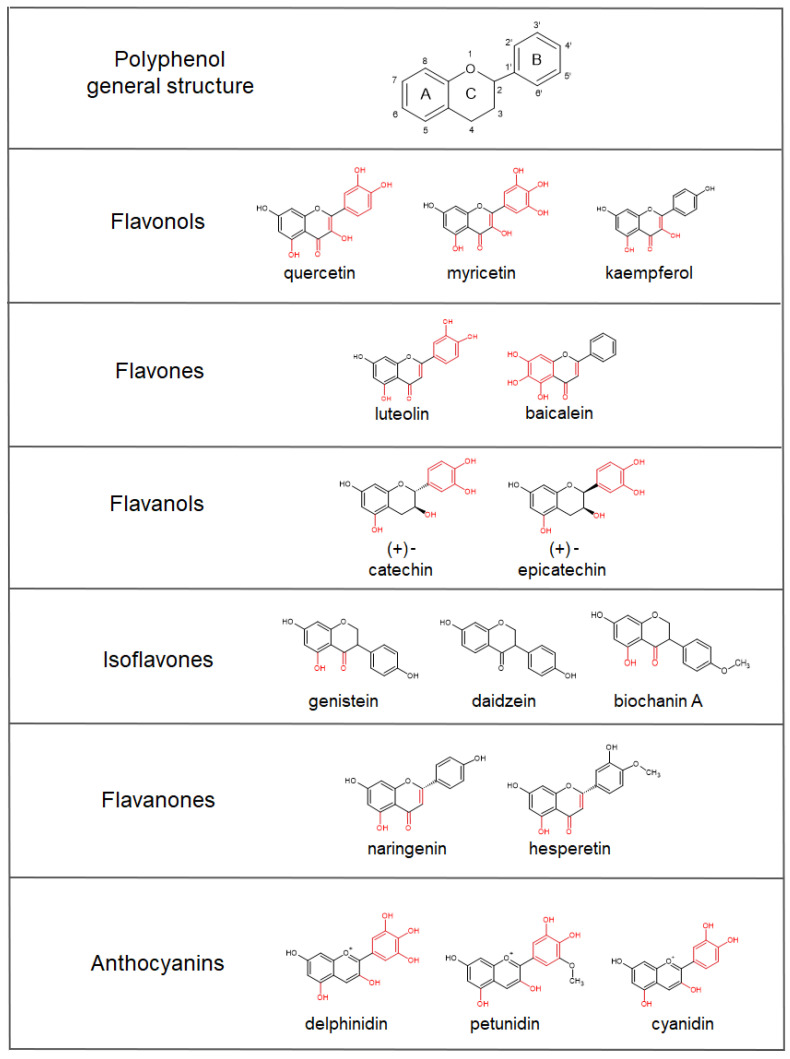
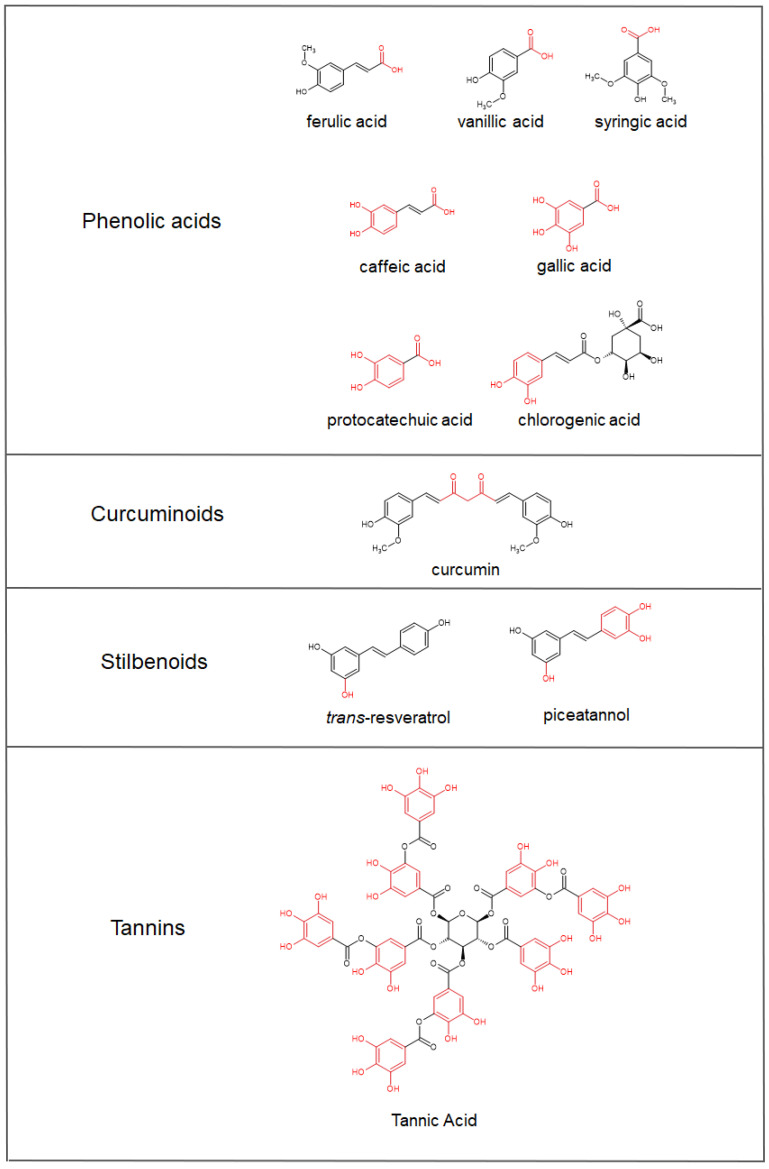
Representative classes of polyphenols and examples of compounds belonging to each group, showing different iron-chelating abilities. Polyphenol general structure is formed by two aromatic rings, indicated as A and B, linked together by three carbon atoms forming an oxygenated heterocycle, the C ring. The 6,7-dihydroxy structure, B-ring catechol, galloyl groups, 2,3-double bond, 3- and 5-hydroxylic groups, β-diketone group, and carboxylic groups associated with iron-binding properties are highlighted in red.
Figure 2
Figure 2
Representative classes of polyphenols and examples of compounds belonging to each group, showing different iron-chelating abilities. Polyphenol general structure is formed by two aromatic rings, indicated as A and B, linked together by three carbon atoms forming an oxygenated heterocycle, the C ring. The 6,7-dihydroxy structure, B-ring catechol, galloyl groups, 2,3-double bond, 3- and 5-hydroxylic groups, β-diketone group, and carboxylic groups associated with iron-binding properties are highlighted in red.
Figure 3
Figure 3
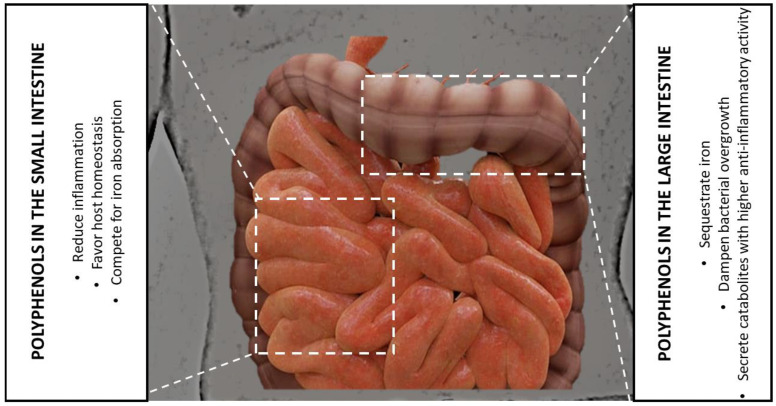
Schematic representation of the polyphenols’ role at the level of the small and large intestines, being important in the reduction in inflammation, iron metabolism, bacterial growth, and metabolite production with anti-inflammatory activities.

References

    1. Laddomada B., Colella G., Tufariello M., Durante M., Angiuli M., Salvetti G., Mita G. Application of a simplified calorimetric assay for the evaluation of extra virgin olive oil quality. Food Res. Int. 2013;54:2062–2068. doi: 10.1016/j.foodres.2013.05.035. - DOI
    1. Pasqualone A., Summo C., Laddomada B., Mudura E., Coldea T.E. Effect of processing variables on the physico-chemical characteristics and aroma of borş, a traditional beverage derived from wheat bran. Food Chem. 2018;265:242–252. doi: 10.1016/j.foodchem.2018.05.095. - DOI - PubMed
    1. Bonanno A., Di Grigoli A., Todaro M., Alabiso M., Vitale F., Di Trana A., Giorgio D., Settanni L., Gaglio R., Laddomada B., et al. Improvement of oxidative status, milk and cheese production, and food sustainability indexes by addition of durum wheat bran to dairy cows’ diet. Animals. 2019;9:698. doi: 10.3390/ani9090698. - DOI - PMC - PubMed
    1. Scarano A., Chieppa M., Santino A. Looking at flavonoid biodiversity in horticultural crops: A colored mine with nutritional benefits. Plants. 2018;7:98. doi: 10.3390/plants7040098. - DOI - PMC - PubMed
    1. Scarano A., Chieppa M., Santino A. Plant polyphenols-biofortified foods as a novel tool for the prevention of human gut diseases. Antioxidants. 2020;9:1225. doi: 10.3390/antiox9121225. - DOI - PMC - PubMed

LinkOut - more resources