


The Amyloid Cascade Hypothesis in Alzheimer's Disease: Should We Change Our Thinking?
- PMID: 36979388
- PMCID: PMC10046826
- DOI: 10.3390/biom13030453
The Amyloid Cascade Hypothesis in Alzheimer's Disease: Should We Change Our Thinking?
Abstract
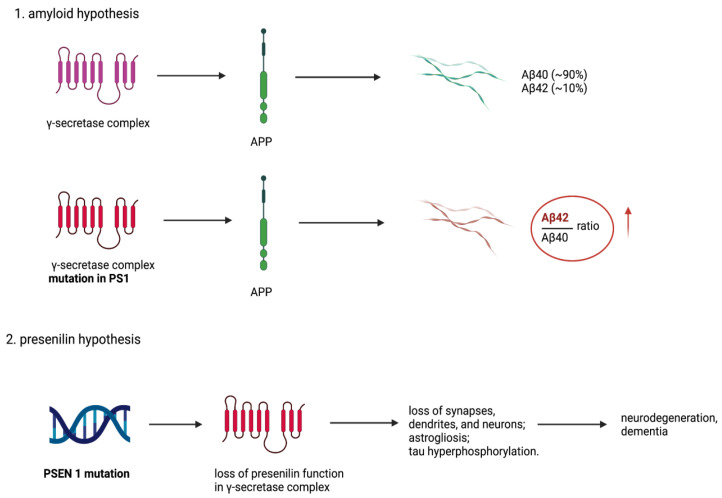
Old age increases the risk of Alzheimer's disease (AD), the most common neurodegenerative disease, a devastating disorder of the human mind and the leading cause of dementia. Worldwide, 50 million people have the disease, and it is estimated that there will be 150 million by 2050. Today, healthcare for AD patients consumes 1% of the global economy. According to the amyloid cascade hypothesis, AD begins in the brain by accumulating and aggregating Aβ peptides and forming β-amyloid fibrils (Aβ42). However, in clinical trials, reducing Aβ peptide production and amyloid formation in the brain did not slow cognitive decline or improve daily life in AD patients. Prevention studies in cognitively unimpaired people at high risk or genetically destined to develop AD also have not slowed cognitive decline. These observations argue against the amyloid hypothesis of AD etiology, its development, and disease mechanisms. Here, we look at other avenues in the research of AD, such as the presenilin hypothesis, synaptic glutamate signaling, and the role of astrocytes and the glutamate transporter EAAT2 in the development of AD.
Keywords: E280A; EAAT2; amyloid hypothesis; astrocyte; dementia; presenilin.
Conflict of interest statement
The authors declare no conflict of interest.
Figures
References
-
- Alzheimer A. Uber eine eigenartige Erkrankung der Hirnrinde. Zentralbl. Nervenh. Psych. 1907;18:177–179.
-
- Whitehouse P., George D. The Myth of Alzheimer’s. St. Martin’s Press; New York, NY, USA: 2008.
Publication types
MeSH terms
Substances
LinkOut - more resources
Full Text Sources
Medical
