Review
. 2023 Feb 25;11(3):707.
doi: 10.3390/biomedicines11030707.

Gut Microbiota, LADA, and Type 1 Diabetes Mellitus: An Evolving Relationship

Affiliations
Review

Gut Microbiota, LADA, and Type 1 Diabetes Mellitus: An Evolving Relationship

Andrea Piccioni et al. Biomedicines. .

Abstract

There is much evidence confirming the crucial role played by the gut microbiota in modulating the immune system in the onset of autoimmune diseases. In this article, we focus on the relationship between alterations in the microbiome and the onset of diabetes mellitus type 1 and LADA, in light of the latest evidence. We will then look at both how the role of the gut microbiota appears to be increasingly crucial in the pathogenesis of these disorders and how this aspect may be instrumental in the development of new potential therapeutic strategies that modulate the gut microbiota, such as probiotics, prebiotics, and fecal microbiota transplantation.

Keywords: LADA; gut microbiota; type 1 diabetes mellitus.


Conflict of interest statement

The authors declare no conflict of interest.

Figures
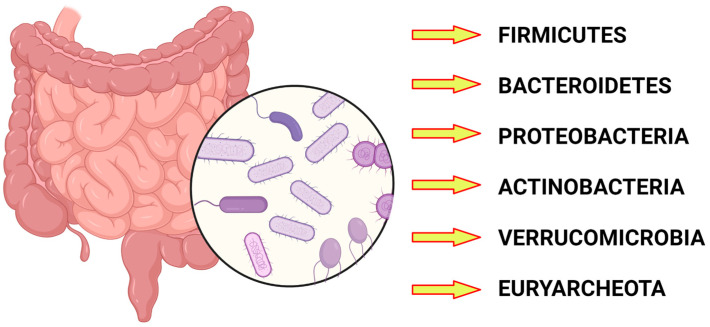
Figure 1
Figure 1
The main phyla constituting the gut microbiota. Created with BioRender.com.
Figure 2
Figure 2
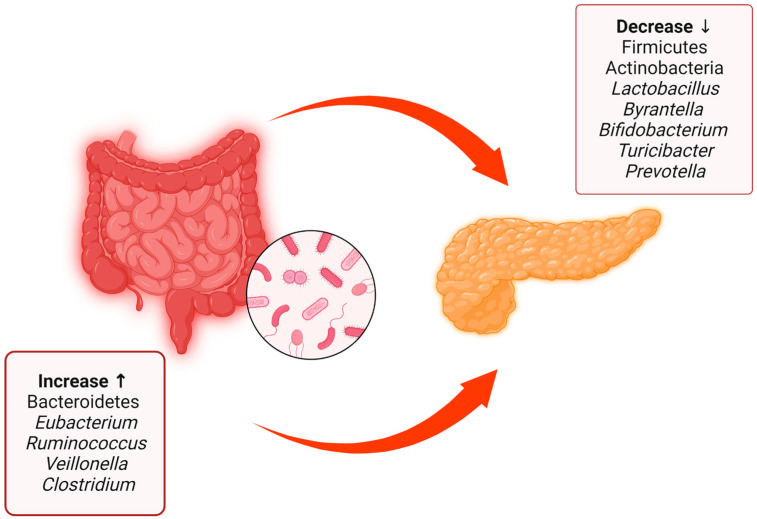
Summary of the main differences between the gut microbiota of patients with type 1 diabetes mellitus and healthy patients, with data obtained from both human patients and rats. There is a decrease in some bacterial species and phyla such as Firmicutes, Actinobacteria, Lactobacillus, Byrantella, Bifidobacterium, Turicibacter, and Prevotella accompanied by an increase in Bacteroidetes, Eubacterium, Ruminococcus, Veillonella, and Clostridium. Created with BioRender.com.

References

    1. Thursby E., Juge N. Introduction to the human gut microbiota. Biochem. J. 2017;474:1823–1836. doi: 10.1042/BCJ20160510. - DOI - PMC - PubMed
    1. Sender R., Fuchs S., Milo R. Revised Estimates for the Number of Human and Bacteria Cells in the Body. PLoS Biol. 2016;14:e1002533. doi: 10.1371/journal.pbio.1002533. - DOI - PMC - PubMed
    1. Fan Y., Pedersen O. Gut microbiota in human metabolic health and disease. Nat. Rev. Microbiol. 2021;19:55–71. doi: 10.1038/s41579-020-0433-9. - DOI - PubMed
    1. Lepage P., Leclerc M., Joossens M., Mondot S., Blottiere H., Raes J., Ehrlich D., Doré J. A metagenomic insight into our gut’s microbiome. Gut. 2012;62:146–158. doi: 10.1136/gutjnl-2011-301805. - DOI - PubMed
    1. Madhogaria B., Bhowmik P., Kundu A. Correlation between human gut microbiome and diseases. Infect. Med. 2022;1:180–191. doi: 10.1016/j.imj.2022.08.004. - DOI - PMC - PubMed

LinkOut - more resources