


Dilated Cardiomyopathy: A Comprehensive Approach to Diagnosis and Risk Stratification
- PMID: 36979813
- PMCID: PMC10044994
- DOI: 10.3390/biomedicines11030834
Dilated Cardiomyopathy: A Comprehensive Approach to Diagnosis and Risk Stratification
Abstract
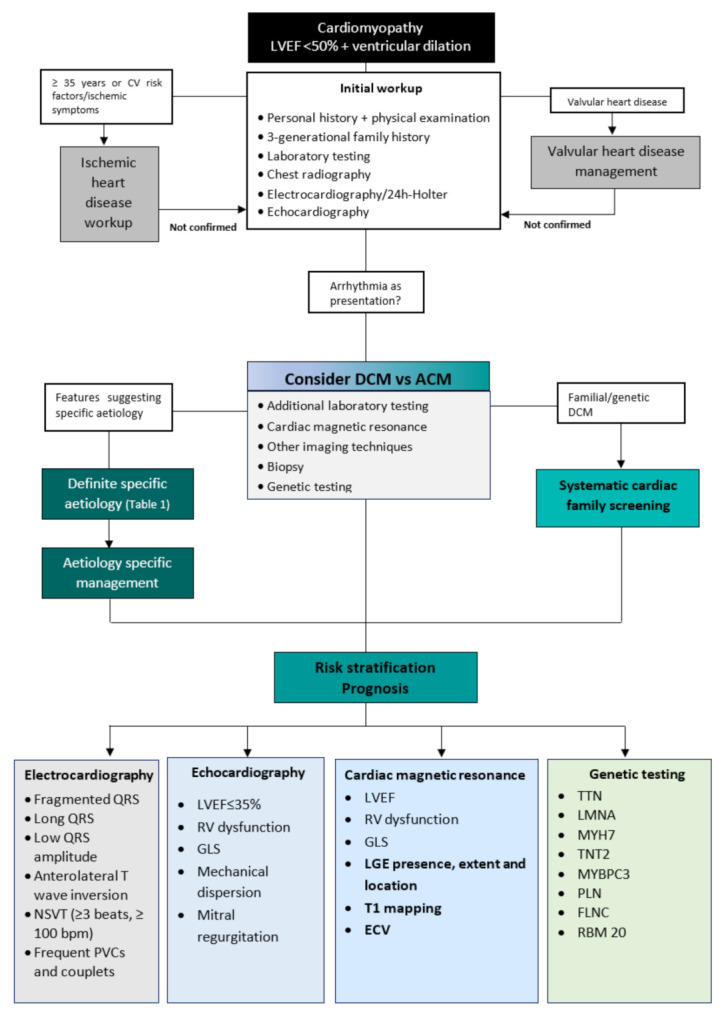
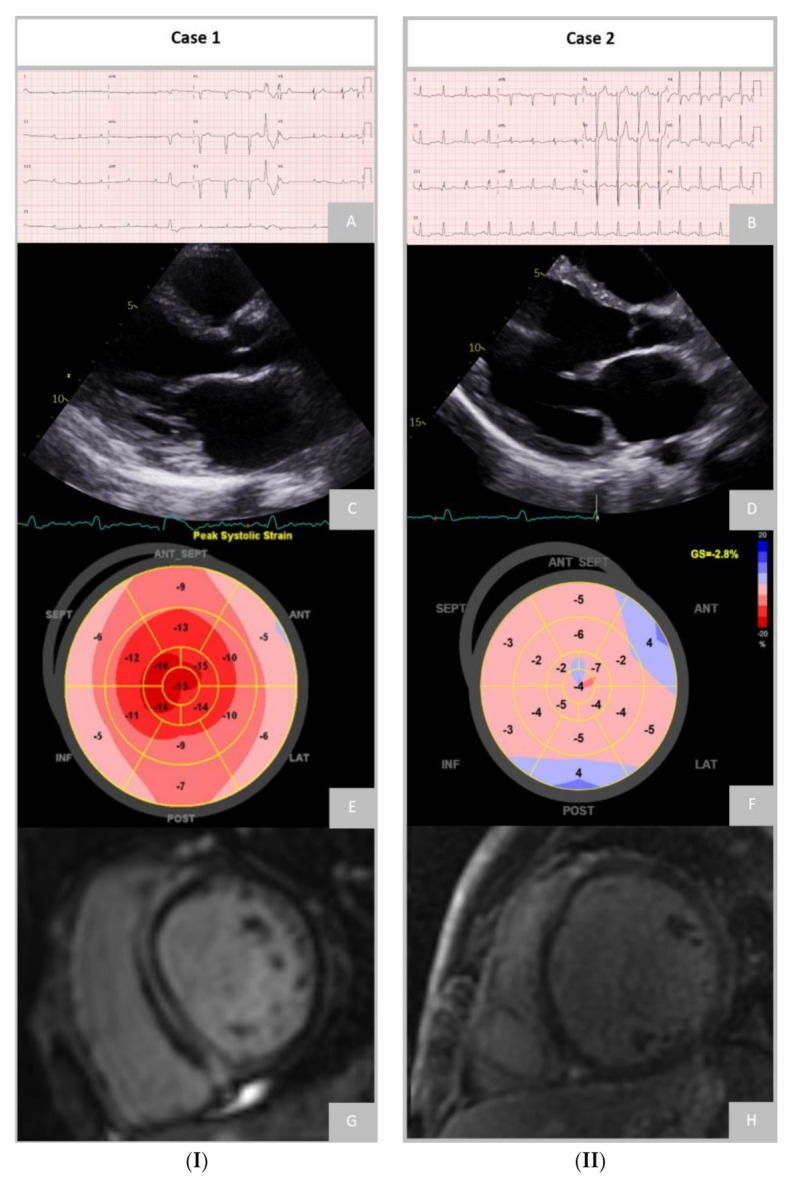
Dilated cardiomyopathy (DCM) represents one of the most common causes of non-ischemic heart failure, characterised by ventricular dilation alongside systolic dysfunction. Despite advances in therapy, DCM mortality rates remain high, and it is one of the leading causes of heart transplantation. It was recently recognised that many patients present minor structural cardiac abnormalities and express different arrhythmogenic phenotypes before overt heart-failure symptoms. This has raised several diagnostic and management challenges, including the differential diagnosis with other phenotypically similar conditions, the identification of patients at increased risk of malignant arrhythmias, and of those who will have a worse response to medical therapy. Recent developments in complementary diagnostic procedures, namely cardiac magnetic resonance and genetic testing, have shed new light on DCM understanding and management. The present review proposes a comprehensive and systematic approach to evaluating DCM, focusing on an improved diagnostic pathway and a structured stratification of arrhythmic risk that incorporates novel imaging modalities and genetic test results, which are critical for guiding clinical decision-making and improving outcomes.
Keywords: arrhythmogenic left ventricle cardiomyopathy; cardiovascular magnetic resonance; dilated cardiomyopathy; genetic testing; reverse remodelling; risk stratification.
Conflict of interest statement
The authors declare no conflicts of interest.
Figures
References
-
- Pinto Y.M., Elliott P.M., Arbustini E., Adler Y., Anastasakis A., Böhm M., Duboc D., Gimeno J., de Groote P., Imazio M., et al. Proposal for a revised definition of dilated cardiomyopathy, hypokinetic non-dilated cardiomyopathy, and its implications for clinical practice: A position statement of the ESC working group on myocardial and pericardial diseases. Eur. Heart J. 2016;37:1850–1858. doi: 10.1093/eurheartj/ehv727. - DOI - PubMed
-
- Lund L.H., Edwards L.B., Dipchand A.I., Goldfarb S., Kucheryavaya A.Y., Levvey B.J., Meiser B., Rossano J.W., Yusen R.D., Stehlik J. The Registry of the International Society for Heart and Lung Transplantation: Thirty-third Adult Heart Transplantation Report-2016; Focus Theme: Primary Diagnostic Indications for Transplant. J. Heart Lung Transplant. 2016;35:1158–1169. doi: 10.1016/j.healun.2016.08.017. - DOI - PubMed
-
- Halliday B.P., Gulati A., Ali A., Newsome S., Lota A., Tayal U., Vassiliou V.S., Arzanauskaite M., Izgi C., Krishnathasan K., et al. Sex- and age-based differences in the natural history and outcome of dilated cardiomyopathy. Eur. J. Heart Fail. 2018;20:1392–1400. doi: 10.1002/ejhf.1216. - DOI - PMC - PubMed
-
- Donal E., Delgado V., Bucciarelli-Ducci C., Galli E., Haugaa K.H., Charron P., Voigt J.U., Cardim N., Masci P.G., Galderisi M., et al. Multimodality imaging in the diagnosis, risk stratification, and management of patients with dilated cardiomyopathies: An expert consensus document from the European Association of Cardiovascular Imaging. Eur. Heart J. Cardiovasc. Imaging. 2019;20:1075–1093. doi: 10.1093/ehjci/jez178. - DOI - PubMed
Publication types
LinkOut - more resources
Full Text Sources
