


Systemic Inflammation and Lung Cancer: Is It a Real Paradigm? Prognostic Value of Inflammatory Indexes in Patients with Resected Non-Small-Cell Lung Cancer
- PMID: 36980740
- PMCID: PMC10046843
- DOI: 10.3390/cancers15061854
Systemic Inflammation and Lung Cancer: Is It a Real Paradigm? Prognostic Value of Inflammatory Indexes in Patients with Resected Non-Small-Cell Lung Cancer
Abstract
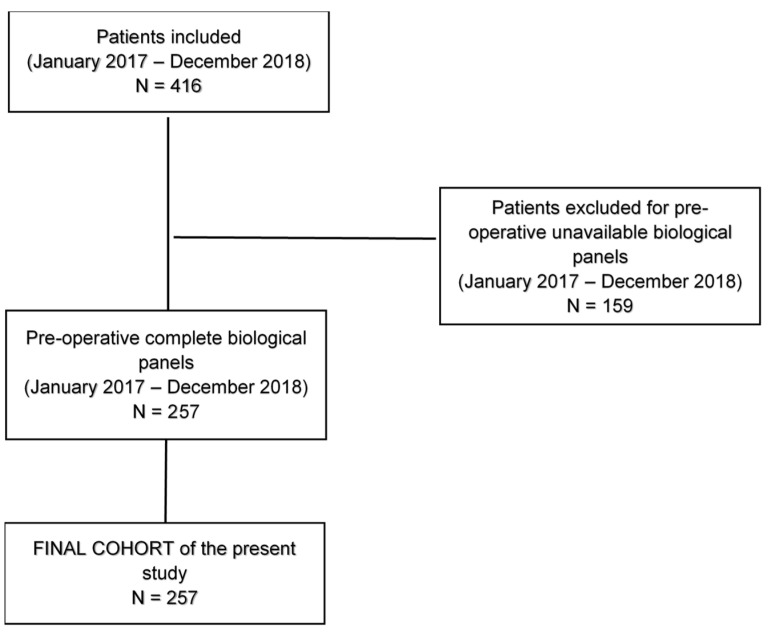
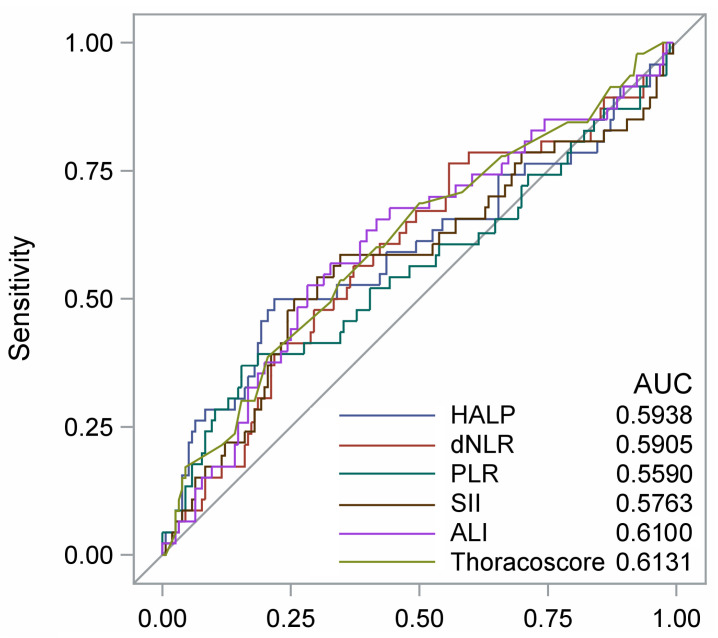
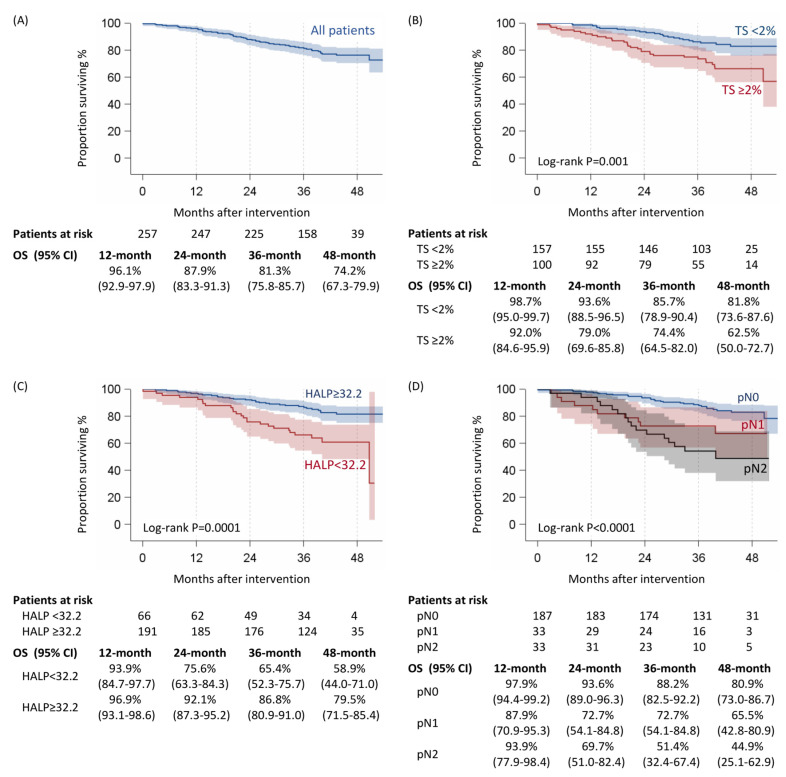
Background (1): Our goal was to investigate if and how pre-operative inflammatory status can influence the long-term prognosis of patients undergoing lung surgery for cancer. Materials and Methods (2): This prospective observational study includes the agreement of all operable patients to the study, who were referred to our department between 1 January 2017 and 30 December 2018. The inflammatory pre-operative status of the patients was investigated by calculating albumin, CPR (c-protein reactive), complete blood count (neutrophils, lymphocytes, platelets, hemoglobin), and some other indexes referring to inflammatory status, namely the HALP amalgamated index, platelet-to-lymphocyte ratio (PLR), neutrophil-to-lymphocytes ratio (NLR), systemic immune-inflammation index (SII), and advanced lung cancer inflammation Index (ALI). The follow-up ended in November 2021. Patient overall survival was assessed using the Kaplan-Meier method. The log-rank test was used to compare survival rates. Variables significantly associated with survival at univariate analysis were entered int Cox multivariate analysis (stepwise mode) to assess their independent character. Hazard ratios and their 95% confidence intervals were calculated. Variables associated with p < 0.05 were considered significative. Results (3): We enrolled 257 patients in our study. The overall survival of the cohort was as follows: 1 year, 96.1%; 3 year, 81.3%; and 4 year, 74.2%. Univariate analysis showed risk factors for overall survival as follows: Thoracoscore ≥ 2 (p = 0.002); histology (p = 0.002); HALP < 32.2 (p = 0.0002); SII ≥ 808.9 (p = 0.0004); ALI < 34.86 (p = 0.0005); NLr ≥ 2.29 (p = 0.01); hemoglobin < 13 g/dl (p = 0.01); PLR ≥ 196.1 (p = 0.005); pN+ (p < 0.0001); pleural invasion (p = 0.0002); and presence of vascular or lymphatic tumor emboli (p = 0.0002). Multivariate Cox analysis (stepwise model) identified Thoracoscore ≥ 2 (p = 0.02); histology, HALP < 32.2 (p = 0.004), and pN (p < 0.0001) as independent predictors of death. Conclusion (4): Pre-operative inflammatory status strongly influences long-term prognosis in patients affected by NSCLC and undergoing surgery.
Keywords: HALP; NSCLC; inflammation; inflammatory status; lung cancer.
Conflict of interest statement
No conflicts exist for any of the authors.
Figures
References
-
- Jagoe R.T., Redfern C.P.F., Roberts R.G., Gibson G.J., Goodship T.H.J. Skeletal muscle mRNA levels for cathepsin B, but not components of the ubiquitin-proteasome pathway, are increased in patients with lung cancer referred for thoracotomy. Clin. Sci. 2002;102:353. doi: 10.1042/cs1020353. - DOI - PubMed
LinkOut - more resources
Full Text Sources
Other Literature Sources
