


Exome-Wide Association Study of Competitive Performance in Elite Athletes
- PMID: 36980932
- PMCID: PMC10048216
- DOI: 10.3390/genes14030660
Exome-Wide Association Study of Competitive Performance in Elite Athletes
Abstract
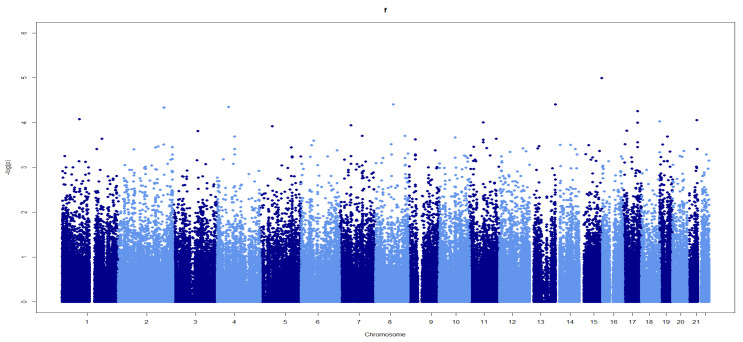
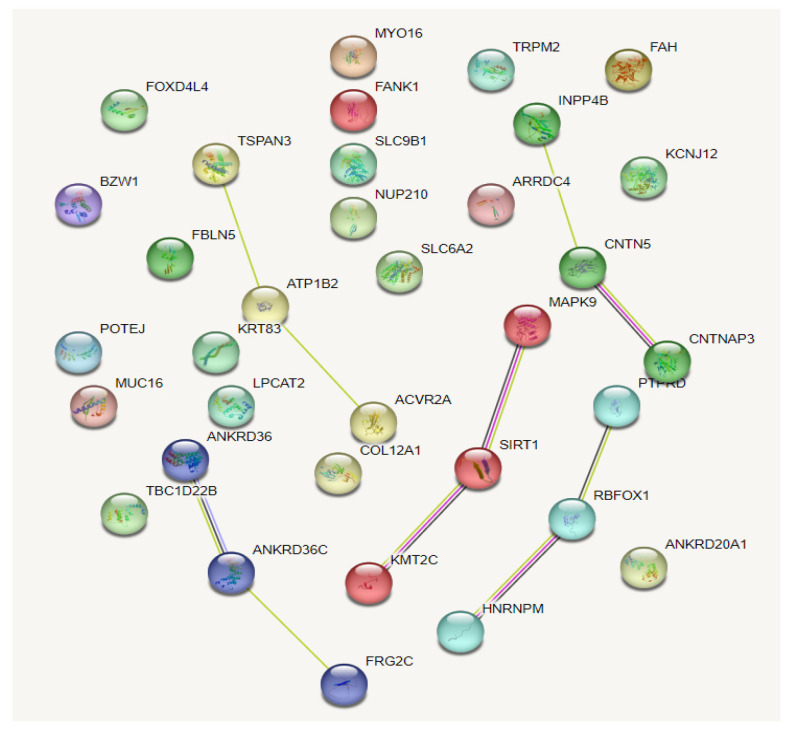
The aim of the study was to identify genetic variants associated with personal best scores in Turkish track and field athletes and to compare allelic frequencies between sprint/power and endurance athletes and controls using a whole-exome sequencing (WES) approach, followed by replication studies in independent cohorts. The discovery phase involved 60 elite Turkish athletes (31 sprint/power and 29 endurance) and 20 ethnically matched controls. The replication phase involved 1132 individuals (115 elite Russian sprinters, 373 elite Russian endurance athletes (of which 75 athletes were with VO2max measurements), 209 controls, 148 Russian and 287 Finnish individuals with muscle fiber composition and cross-sectional area (CSA) data). None of the single nucleotide polymorphisms (SNPs) reached an exome-wide significance level (p < 2.3 × 10⁻⁷) in genotype-phenotype and case-control studies of Turkish athletes. However, of the 53 nominally (p < 0.05) associated SNPs, four functional variants were replicated. The SIRT1 rs41299232 G allele was significantly over-represented in Turkish (p = 0.047) and Russian (p = 0.018) endurance athletes compared to sprint/power athletes and was associated with increased VO2max (p = 0.037) and a greater proportion of slow-twitch muscle fibers (p = 0.035). The NUP210 rs2280084 A allele was significantly over-represented in Turkish (p = 0.044) and Russian (p = 0.012) endurance athletes compared to sprint/power athletes. The TRPM2 rs1785440 G allele was significantly over-represented in Turkish endurance athletes compared to sprint/power athletes (p = 0.034) and was associated with increased VO2max (p = 0.008). The AGRN rs4074992 C allele was significantly over-represented in Turkish sprint/power athletes compared to endurance athletes (p = 0.037) and was associated with a greater CSA of fast-twitch muscle fibers (p = 0.024). In conclusion, we present the first WES study of athletes showing that this approach can be used to identify novel genetic markers associated with exercise- and sport-related phenotypes.
Keywords: EWAS; GWAS; WES; aerobic capacity; athletes; athletic performance; athletics; muscle hypertrophy; sports genetics; track and field.
Conflict of interest statement
The authors declare no conflict of interest.
Figures
References
-
- Varillas-Delgado D., Del Coso J., Gutiérrez-Hellín J., Aguilar-Navarro M., Muñoz A., Maestro A., Morencos E. Genetics and sports performance: The present and future in the identification of talent for sports based on DNA testing. Eur. J. Appl. Physiol. 2022;122:1811–1830. doi: 10.1007/s00421-022-04945-z. - DOI - PMC - PubMed
-
- Yıldırım D.S., Erdoğan M., Dalip M., Bulğay C., Cerit M. Evaluation of the soldier’s physical fitness test results (strength endurance) ın relation to genotype: Longitudinal study. Egypt. J. Med. Hum. Genet. 2022;23:114. doi: 10.1186/s43042-022-00325-6. - DOI
Publication types
MeSH terms
LinkOut - more resources
Full Text Sources
Research Materials
