


Tuberculosis: Pathogenesis, Current Treatment Regimens and New Drug Targets
- PMID: 36982277
- PMCID: PMC10049048
- DOI: 10.3390/ijms24065202
Tuberculosis: Pathogenesis, Current Treatment Regimens and New Drug Targets
Abstract
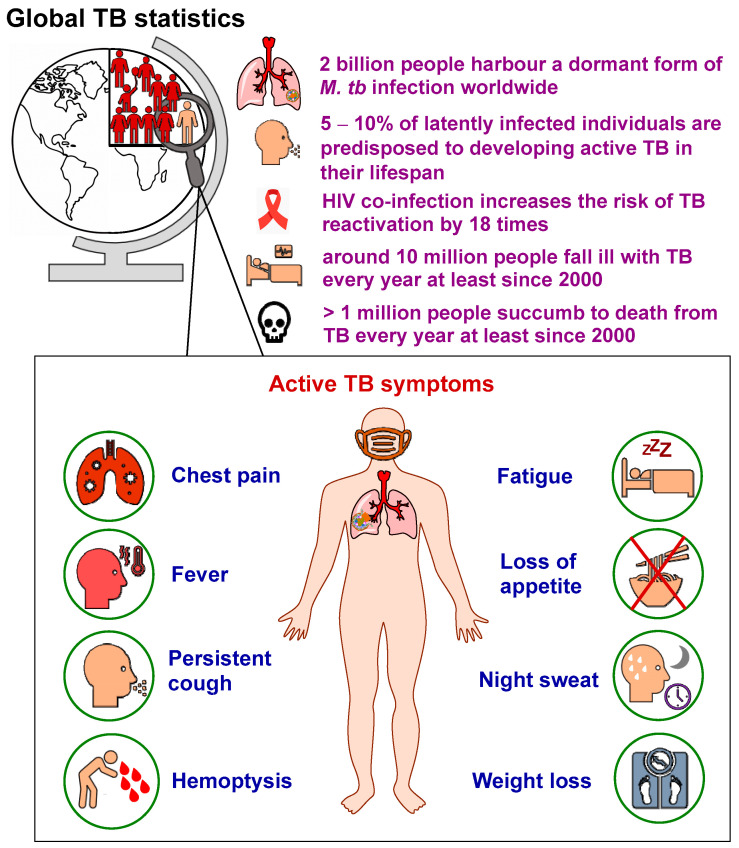
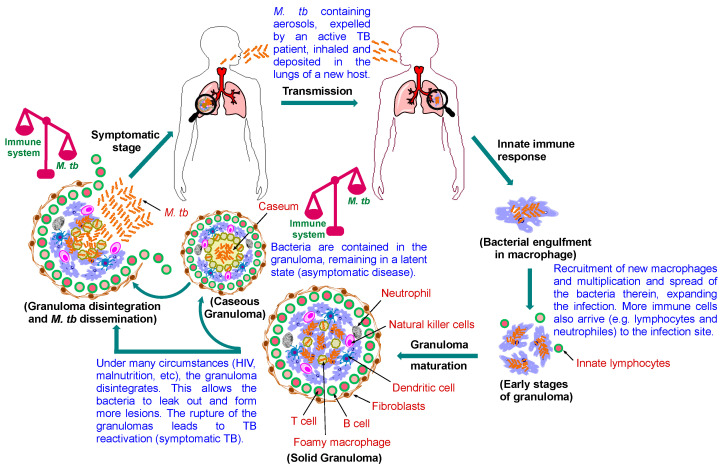
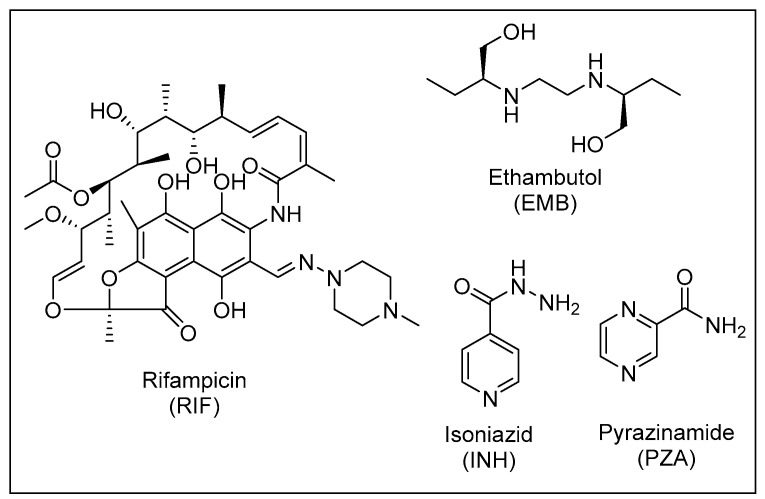
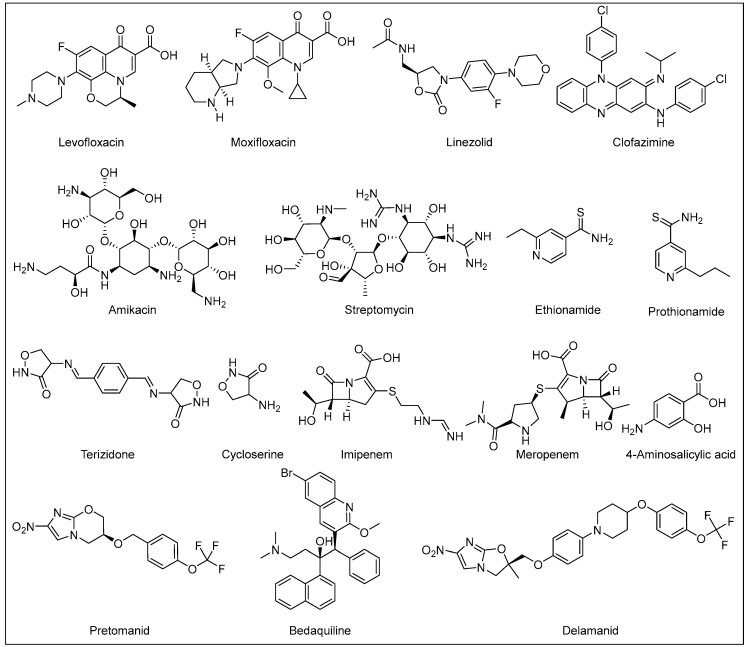
Mycobacterium tuberculosis (M. tb), the causative agent of TB, is a recalcitrant pathogen that is rife around the world, latently infecting approximately a quarter of the worldwide population. The asymptomatic status of the dormant bacteria escalates to the transmissible, active form when the host's immune system becomes debilitated. The current front-line treatment regimen for drug-sensitive (DS) M. tb strains is a 6-month protocol involving four different drugs that requires stringent adherence to avoid relapse and resistance. Poverty, difficulty to access proper treatment, and lack of patient compliance contributed to the emergence of more sinister drug-resistant (DR) strains, which demand a longer duration of treatment with more toxic and more expensive drugs compared to the first-line regimen. Only three new drugs, bedaquiline (BDQ) and the two nitroimidazole derivatives delamanid (DLM) and pretomanid (PMD) were approved in the last decade for treatment of TB-the first anti-TB drugs with novel mode of actions to be introduced to the market in more than 50 years-reflecting the attrition rates in the development and approval of new anti-TB drugs. Herein, we will discuss the M. tb pathogenesis, current treatment protocols and challenges to the TB control efforts. This review also aims to highlight several small molecules that have recently been identified as promising preclinical and clinical anti-TB drug candidates that inhibit new protein targets in M. tb.
Keywords: TB pathogenesis; TB treatment regimens; anti-TB drug candidates; latent TB; mycobacterial drug targets; tuberculosis.
Conflict of interest statement
The authors declare no conflict of interest.
Figures
References
-
- World Health Organisation . Global Tuberculosis Report 2022. World Health Organization; Geneva, Switzerland: 2022. [(accessed on 1 February 2023)]. Licence: CC BY-NC-SA 3.0 IGO. Available online: https://www.who.int/publications/i/item/9789240061729.
-
- World Health Organisation . Global Tuberculosis Report 2020. World Health Organization; Geneva, Switzerland: 2020. [(accessed on 1 February 2023)]. Licence: CC BY-NC-SA 3.0 IGO. Available online: https://apps.who.int/iris/bitstream/handle/10665/336069/9789240013131-en....
Publication types
MeSH terms
Substances
LinkOut - more resources
Full Text Sources
Other Literature Sources
Medical
