


Importance of Clinical Isolates in Cryptococcus neoformans Research
- PMID: 36983532
- PMCID: PMC10056780
- DOI: 10.3390/jof9030364
Importance of Clinical Isolates in Cryptococcus neoformans Research
Abstract
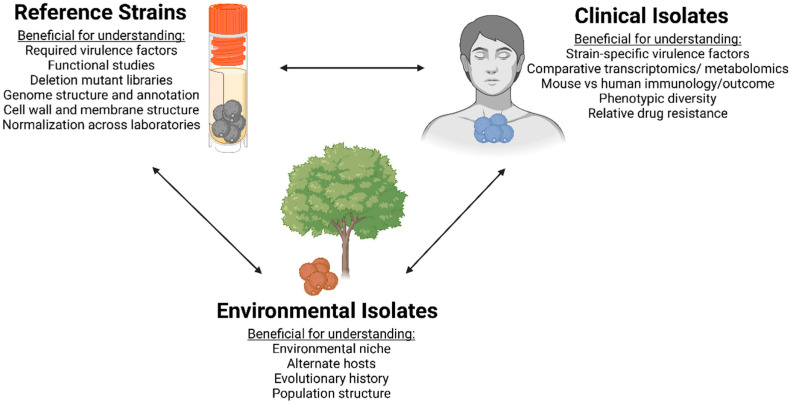
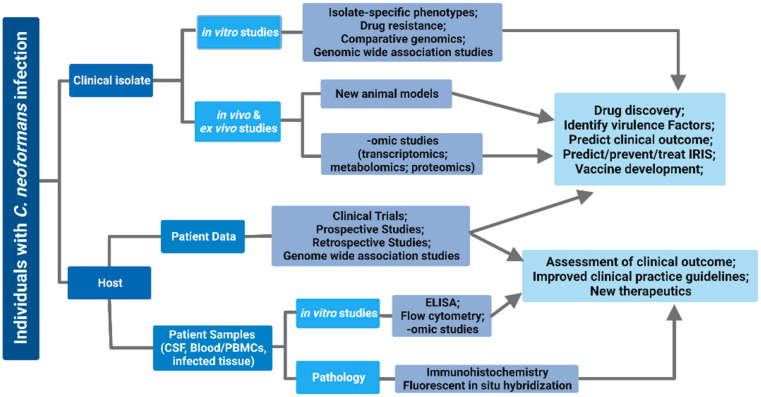
The human pathogenic fungus Cryptococcus neoformans is a global health concern. Previous research in the field has focused on studies using reference strains to identify virulence factors, generate mutant libraries, define genomic structures, and perform functional studies. In this review, we discuss the benefits and drawbacks of using reference strains to study C. neoformans, describe how the study of clinical isolates has expanded our understanding of pathogenesis, and highlight how studies using clinical isolates can further develop our understanding of the host-pathogen interaction during C. neoformans infection.
Keywords: Cryptococcus neoformans; clinical isolates; genotype; host–pathogen interaction.
Conflict of interest statement
The authors declare no conflict of interest.
Figures
References
-
- Rajasingham R., Smith R.M., Park B.J., Jarvis J.N., Govender N.P., Chiller T.M., Denning D.W., Loyse A., Boulware D.R. Global burden of disease of HIV-associated cryptococcal meningitis: An updated analysis. Lancet Infect. Dis. 2017;17:873–881. doi: 10.1016/S1473-3099(17)30243-8. - DOI - PMC - PubMed
-
- Jarvis J.N., Lawrence D.S., Meya D.B., Kagimu E., Kasibante J., Mpoza E., Rutakingirwa M.K., Ssebambulidde K., Tugume L., Rhein J., et al. Single-dose liposomal amphotericin B treatment for cryptococcal meningitis. N. Engl. J. Med. 2022;386:1109–1120. doi: 10.1056/NEJMoa2111904. - DOI - PMC - PubMed
-
- Boulware D.R., Meya D.B., Muzoora C., Rolfes M.A., Huppler Hullsiek K., Musubire A., Taseera K., Nabeta H.W., Schutz C., Williams D.A., et al. Timing of antiretroviral therapy after diagnosis of cryptococcal meningitis. N. Engl. J. Med. 2014;370:2487–2498. doi: 10.1056/NEJMoa1312884. - DOI - PMC - PubMed
Publication types
Grants and funding
LinkOut - more resources
Full Text Sources
