. 2023 Mar 17;59(3):596.
doi: 10.3390/medicina59030596.

Multidisciplinary Therapeutic Management in Complex Cervical Trauma

Affiliations

Multidisciplinary Therapeutic Management in Complex Cervical Trauma

Florentina Severin et al. Medicina (Kaunas). .

Abstract

Background and Objectives: In the current literature, mandatory surgical exploration is a controversial topic, with some advocating for it and others against it, proposing a selective conservative management. This multidisciplinary therapeutic approach is based on clinical examination and serial paraclinical explorations associated with supportive drug treatment. Materials and Methods: The study group consisted of 103 patients with complex cervical trauma pathology produced by various mechanisms such as car or domestic accidents, aggression, ballistic trauma, self-inflicted attempts, hanging or strangulation hospitalized in the Ear, Nose and Throat (E.N.T.) Clinic, at "St. Spiridon" Iași Hospital, between 2012 and 2016. Results: The universal clinical indication for urgent surgical exploration of the patient with complex cervical trauma is the presence of the following symptoms: unstable vital signs, significant pulsatile bleeding, hematoma with a substantial increase in size, shock, airway obstruction, open airway wound, hematemesis, or hemoptysis. In this context, we considered it worthwhile to research the management of complex cervical trauma in a reference university medical center, alongside the analysis of the patient's characteristics under different aspects (demographic, pathological aspects, therapeutic). Conclusions: Complex cervical trauma has a variety of clinical aspects, with a variable evolution, which involves multidisciplinary therapeutic management. The increasing trauma rate is one of the main public health problems, requiring epidemiological studies, and the implementation of control strategies.

Keywords: complex cervical trauma; multidisciplinary treatment; otorhinolaryngology; surgery.


Conflict of interest statement

The authors declare no conflict of interest.

Figures
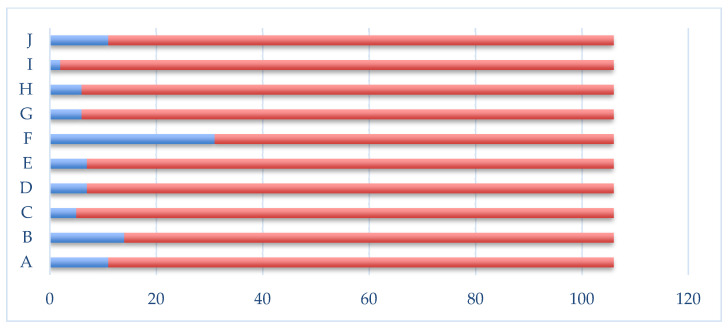
Figure 1
Figure 1
Distribution of complex aero-digestive cervical trauma cases and associated injuries. A—section of the thyrohyoid membrane with the interest of the hypopharynx. B—fracture of the laryngeal cartilages with laceration of the epiglottis, vocal cords, and pyriform sinuses. C—dilacerations with retrocricoid hematomas. D—sectioning of the cricothyroid membrane and partial or total involvement of the cricoid cartilage. E—sectioning of the crico-tracheal membrane and the tracheal rings. F—dissection of the superficial jugular veins. G—internal jugular vein involvement. H—thyroid gland interest and I—the interest of the submandibular gland. J—Polytraumatism.
Figure 2
Figure 2
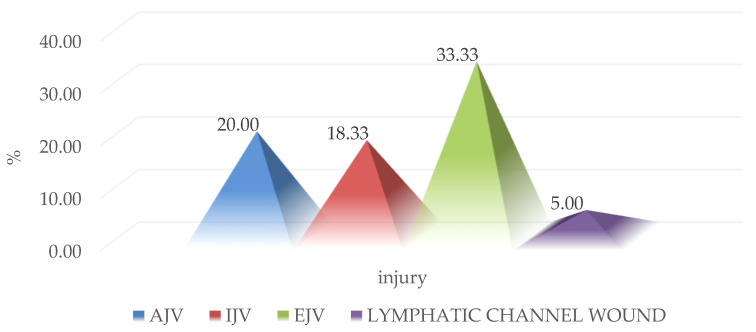
Distribution of venous lesions that required surgical treatment. (AJV = anterior jugular vein, IVJ = internal jugular vein, EJV = external jugular vein).
Figure 3
Figure 3
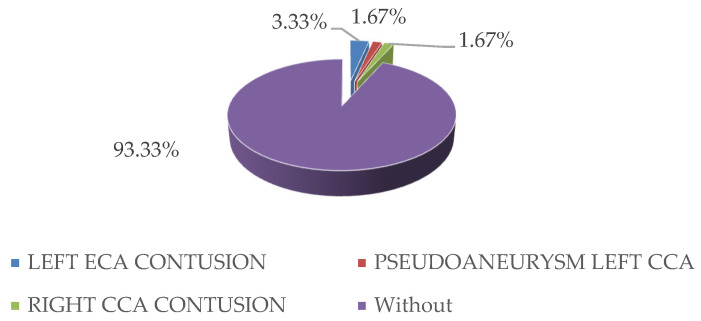
Distribution and characteristics of carotid lesions that required specific surgical treatment. (ECA = external carotid artery, CCA = common carotid artery).
Figure 4
Figure 4
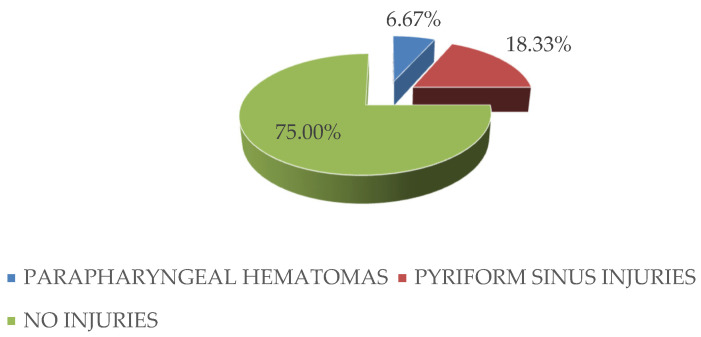
Distribution and characteristics of hypopharyngeal and parapharyngeal lesions that required surgical therapeutic management.
Figure 5
Figure 5
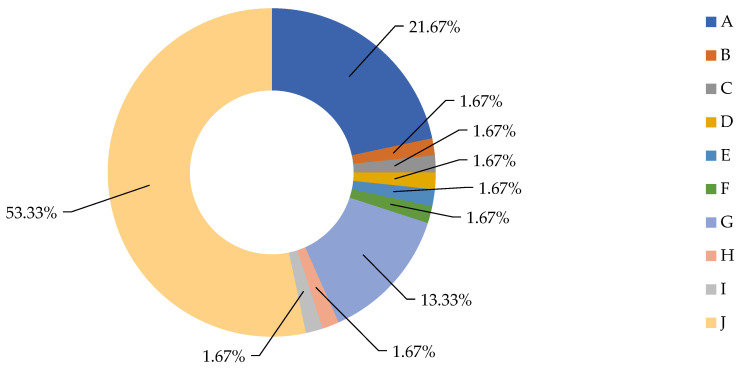
Distribution and characteristics of traumatic laryngeal injuries that required a surgical therapeutic approach. A—vocal cord injuries. B—arytenoid cartilage injuries. C—cricoid cartilage fracture. D—cricotracheal membrane section. E—section thyroyidian membrane. F—paralaryngian hematoma. G—total or partial thyroid cartilage fractures. H—section thyrohyoid membrane, epiglottic exposure, and laryngeal continuity solution. I—continuity solution at the laryngeal level with the appearance of cervical emphysema. J—no laryngeal injuries.
Figure 6
Figure 6
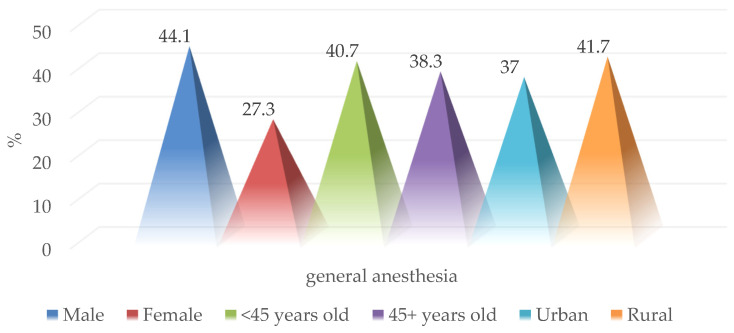
Epidemiological characteristics of patients with surgical exploration performed under general anesthesia.
Figure 7
Figure 7
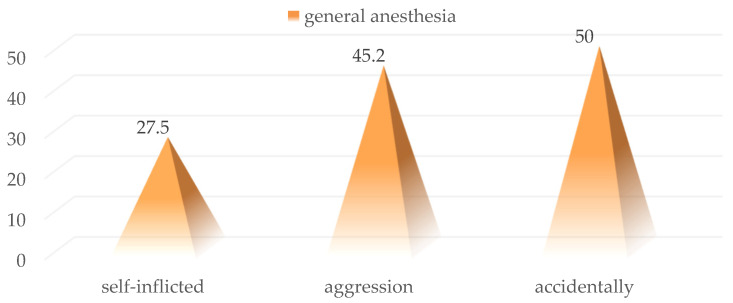
Distribution of cases surgically explored under general anesthesia according to the injury mechanism.
Figure 8
Figure 8
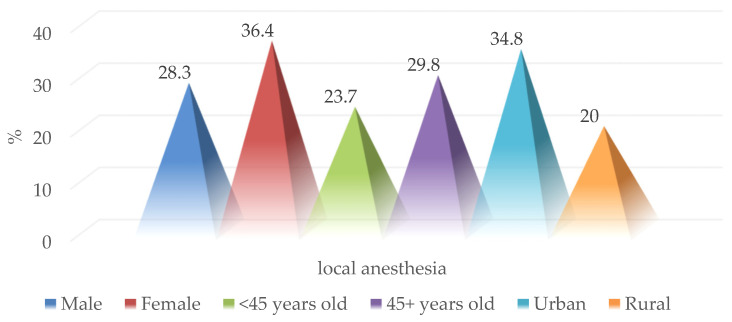
Epidemiological characteristics of patients with surgical exploration performed under local anesthesia.
Figure 9
Figure 9
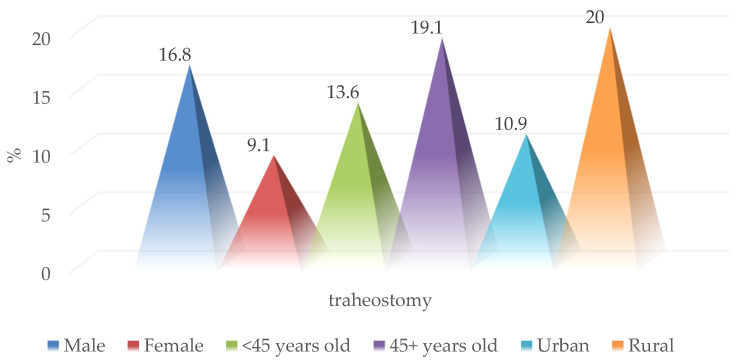
Epidemiological characteristics of patients who underwent tracheostomy.
Figure 10
Figure 10
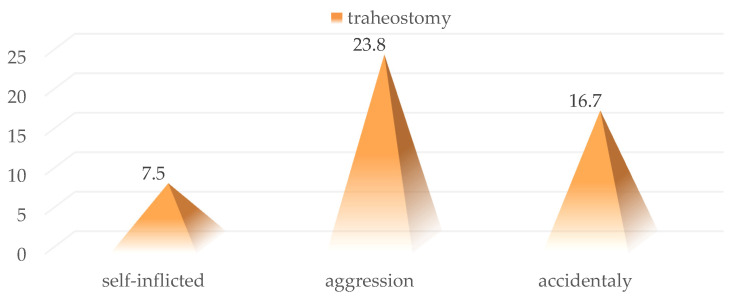
Distribution of cases in the batch in which tracheostomy was performed according to the lesion mechanism.
Figure 11
Figure 11
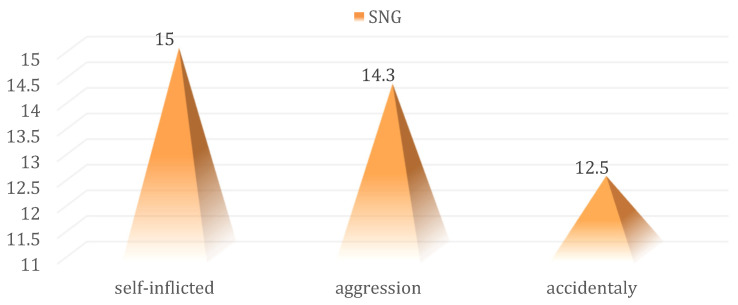
Distribution of cases in the batch to which SNG was applied according to the lesion mechanism.
Figure 12
Figure 12
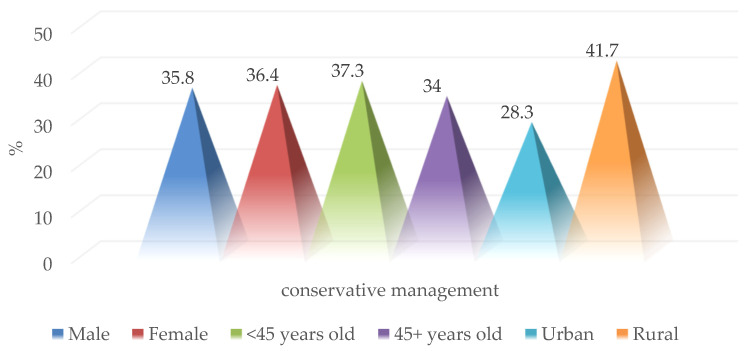
Epidemiological characteristics of patients with conservative management.
Figure 13
Figure 13
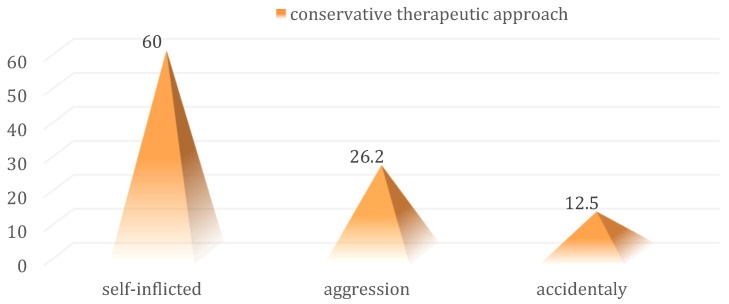
Distribution of cases in the batch with indications for conservative management according to the lesion mechanism.
Figure 14
Figure 14
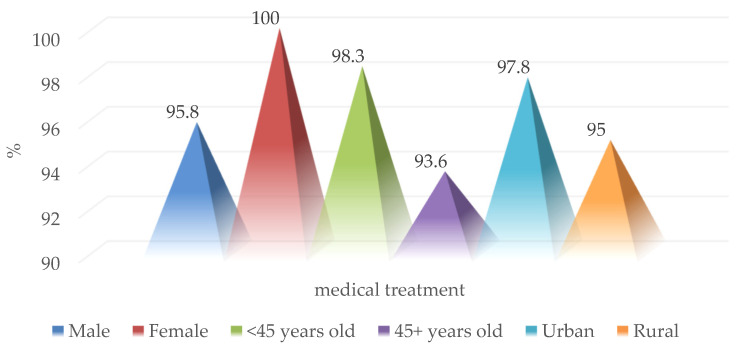
Epidemiological characteristics of patients who received medical treatment.

References

    1. Bent J.P., 3rd, Silver J.R., Porubsky E.S. Acute laryngeal trauma: A review of 77 patients. Pt 1Otolaryngol. Head Neck Surg. 1993;109:441–449. doi: 10.1177/019459989310900309. - DOI - PubMed
    1. Greaves N. Gunshot bullet embolus with pellet migration from the left brachiocephalic vein to the right ventricle: A case report. Scand. J. Trauma Resusc. Emerg. Med. 2010;18:36–40. doi: 10.1186/1757-7241-18-36. - DOI - PMC - PubMed
    1. Monson D.O., Saletta J.D., Freeark R.J. Carotid vertebral trauma. J. Trauma. 1969;9:987–999. doi: 10.1097/00005373-196912000-00003. - DOI - PubMed
    1. Azuaje R.E., Jacobson L.E., Glover J., Gomez G.A., Rodman G.H., Jr., Broadie T.A., Simons C.J., Bjerke H.S. Reliability of physical examination as a predictor of vascular injury after penetrating neck trauma. Am. Surg. 2003;69:804–807. doi: 10.1177/000313480306900915. - DOI - PubMed
    1. Merion R.M., Harness J.K., Ramsburgh S.R., Thompson N.W. Selective management of penetrating neck trauma. Costs implication. Arch. Surg. 1981;116:691–696. doi: 10.1001/archsurg.1981.01380170163029. - DOI - PubMed