


Microbial and Host Metabolites at the Backstage of Fever: Current Knowledge about the Co-Ordinate Action of Receptors and Molecules Underlying Pathophysiology and Clinical Implications
- PMID: 36984901
- PMCID: PMC10056708
- DOI: 10.3390/metabo13030461
Microbial and Host Metabolites at the Backstage of Fever: Current Knowledge about the Co-Ordinate Action of Receptors and Molecules Underlying Pathophysiology and Clinical Implications
Abstract
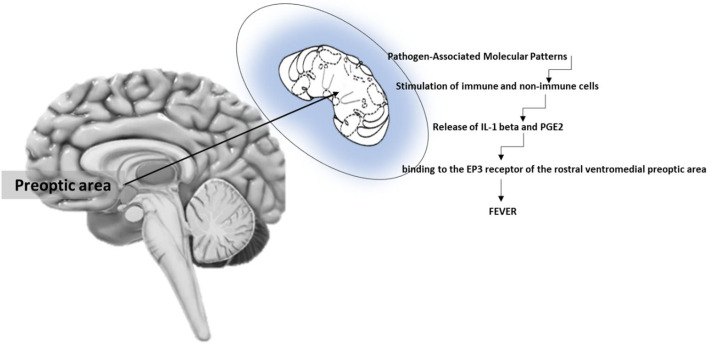
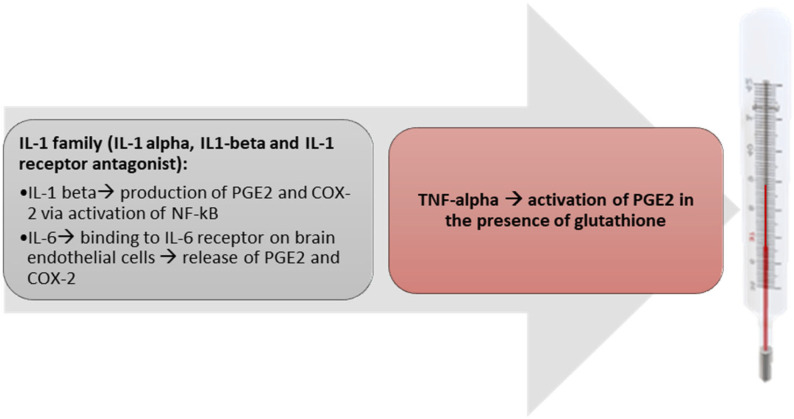
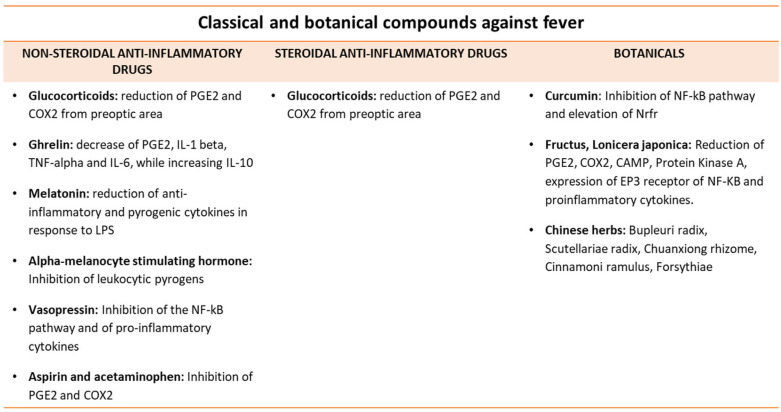
Fever represents an elevation of body temperature, that exerts a protective effect against pathogens. Innate immune cells and neurons are implicated in the regulation of body temperature. Pathogen-associated molecular patterns, i.e., lipopolysaccharides from Gram-negative bacteria and peptidoglycan and lipoteichoic acid from Gram-positive bacteria are exogenous pyrogens, that bind to Toll-like receptors on immune and non-immune cells. The subsequent release of pro-inflammatory cytokines [interleukin-1 (IL-1), IL-6 and Tumor necrosis factor-alpha] and their passage through the brain trigger the febrile response. In fact, neurons of the pre-optic area produce prostaglandin E2 (PGE2), that, in turn, bind to the PGE2 receptors; thus, generating fever. Apart from classical non-steroidal anti-inflammatory drugs, i.e., aspirin and acetaminophen, various botanicals are currently used as antipyretic agents and, therefore, their mechanisms of action will be elucidated.
Keywords: antipyretic agents; fever; interleukins; lipopolysaccharide; microbes; microbial antigens; prostaglandin E2; thermoregulation.
Conflict of interest statement
The authors declare no conflict of interest.
Figures
References
Publication types
LinkOut - more resources
Full Text Sources
