Review
. 2023 Mar 17;28(6):2722.
doi: 10.3390/molecules28062722.

Sharpless Asymmetric Dihydroxylation: An Impressive Gadget for the Synthesis of Natural Products: A Review

Affiliations
Review

Sharpless Asymmetric Dihydroxylation: An Impressive Gadget for the Synthesis of Natural Products: A Review

Aqsa Mushtaq et al. Molecules. .

Abstract

Sharpless asymmetric dihydroxylation is an important reaction in the enantioselective synthesis of chiral vicinal diols that involves the treatment of alkene with osmium tetroxide along with optically active quinine ligand. Sharpless introduced this methodology after considering the importance of enantioselectivity in the total synthesis of medicinally important compounds. Vicinal diols, produced as a result of this reaction, act as intermediates in the synthesis of different naturally occurring compounds. Hence, Sharpless asymmetric dihydroxylation plays an important role in synthetic organic chemistry due to its undeniable contribution to the synthesis of biologically active organic compounds. This review emphasizes the significance of Sharpless asymmetric dihydroxylation in the total synthesis of various natural products, published since 2020.

Keywords: Sharpless asymmetric dihydroxylation; alkaloids; enantioselective; flavones; lactones; macrolides; natural products; polyketides.


Conflict of interest statement

The authors declare no conflict of interest.

Figures
Scheme 1
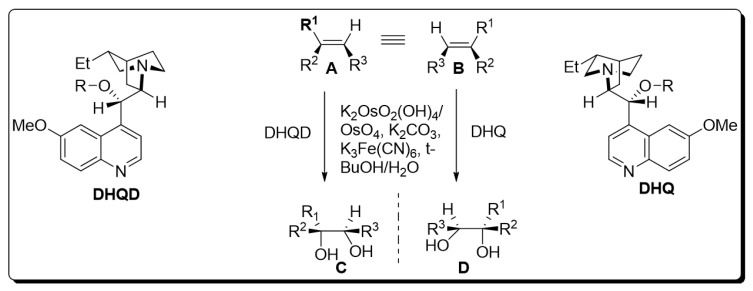
Scheme 1
Osmium-catalyzed asymmetric dihydroxylation.
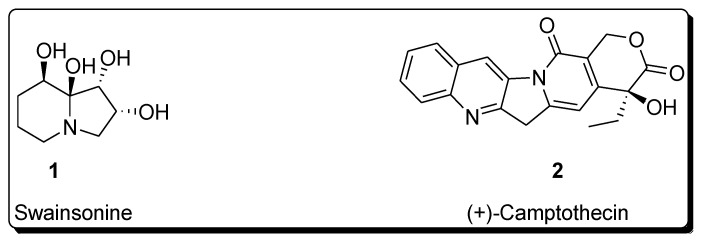
Figure 1
Figure 1
Structure of biologically important organic compounds employing Sharpless asymmetric dihydroxylation in their total synthesis.
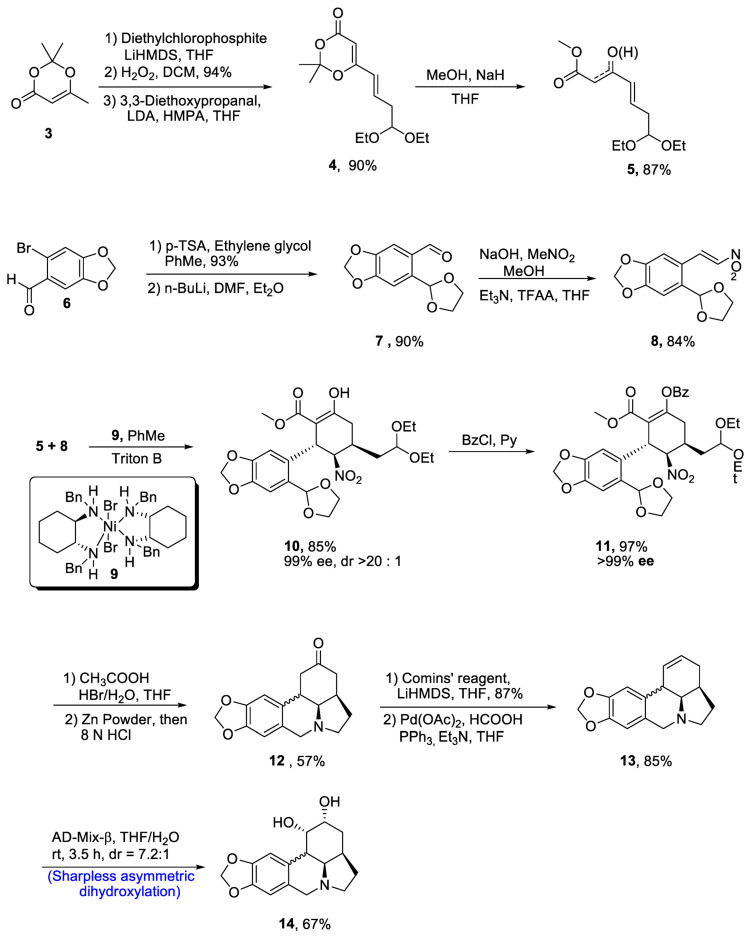
Scheme 2
Scheme 2
Synthesis of (−)-zephyranthine 14.
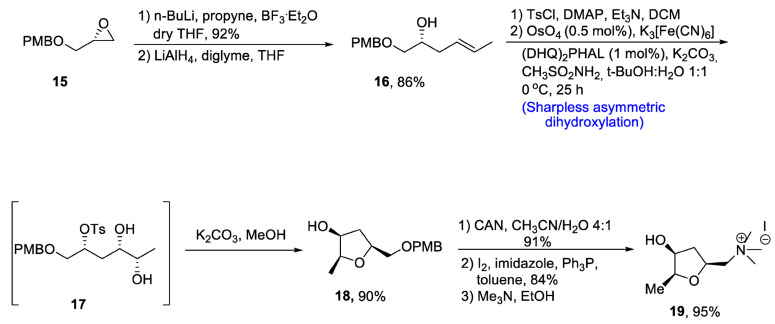
Scheme 3
Scheme 3
Synthesis of epi-muscarine alkaloid 19.
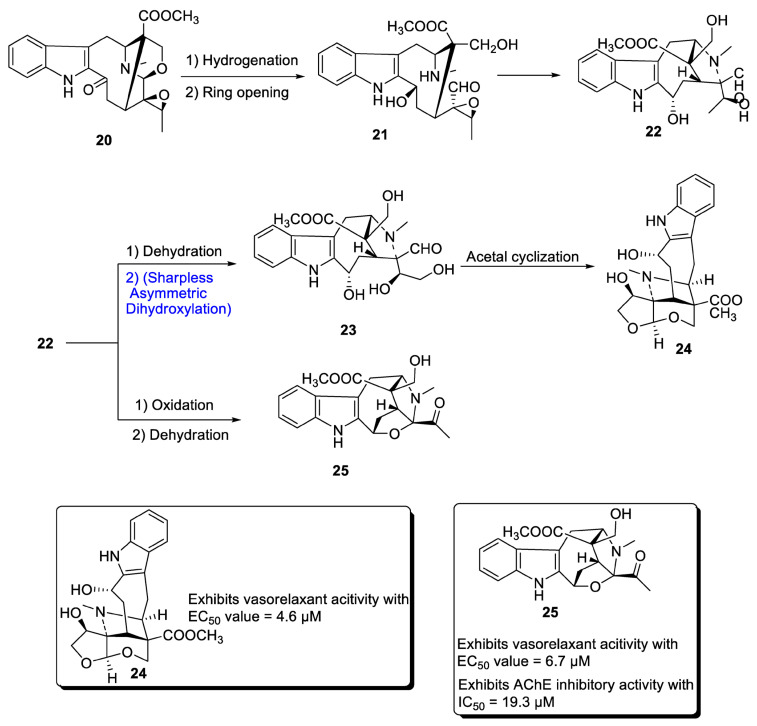
Scheme 4
Scheme 4
Synthesis of alstolarines A 24 and B 25.
Scheme 5
Scheme 5
Synthesis of glyphaeaside C.
Scheme 6
Scheme 6
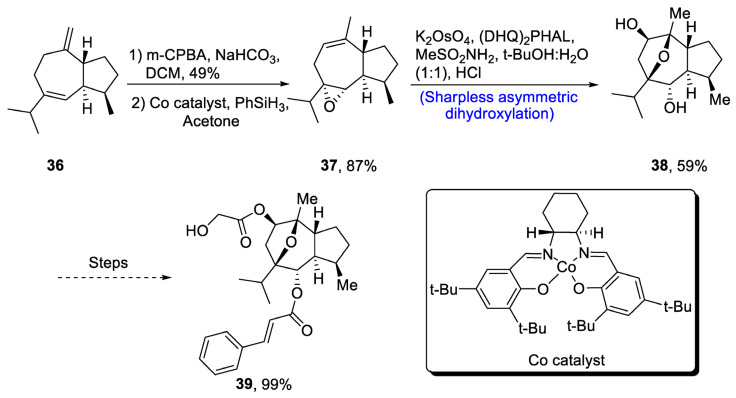
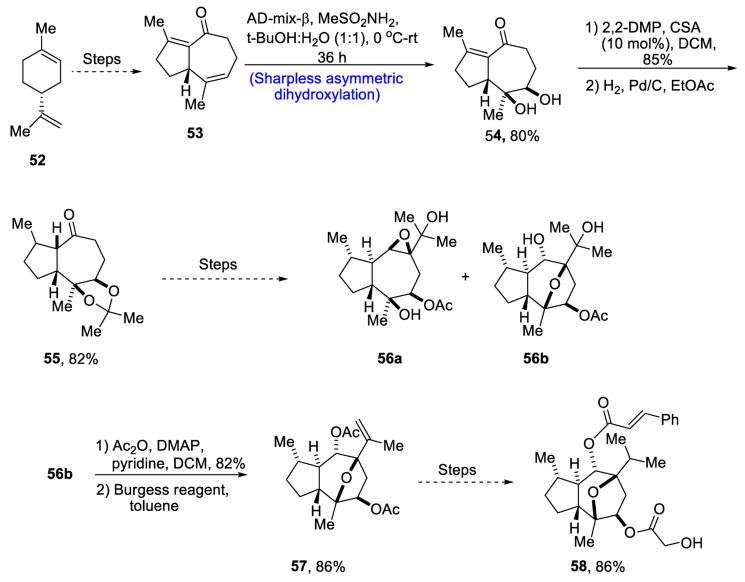
Synthesis of (−)-englerin A 39.
Scheme 7
Scheme 7
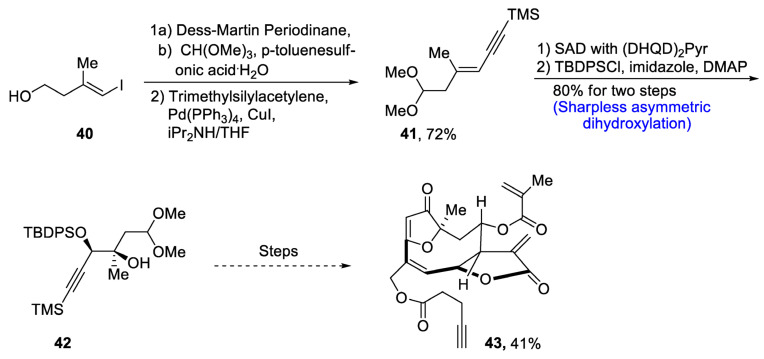
Synthesis of goyazensolide 43.
Scheme 8
Scheme 8
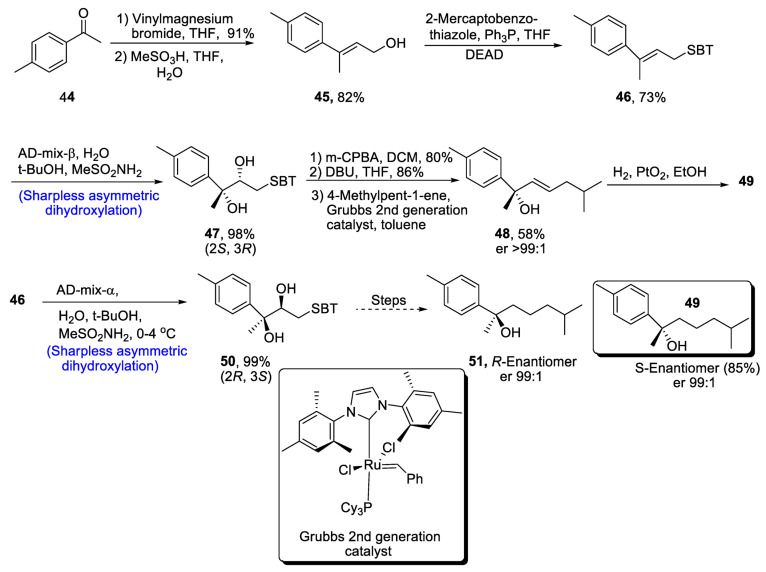
Synthesis of aromatic bisabolanes 49 and 51.
Scheme 9
Scheme 9
Synthesis of 4-epi-englerin A 58.
Scheme 10
Scheme 10
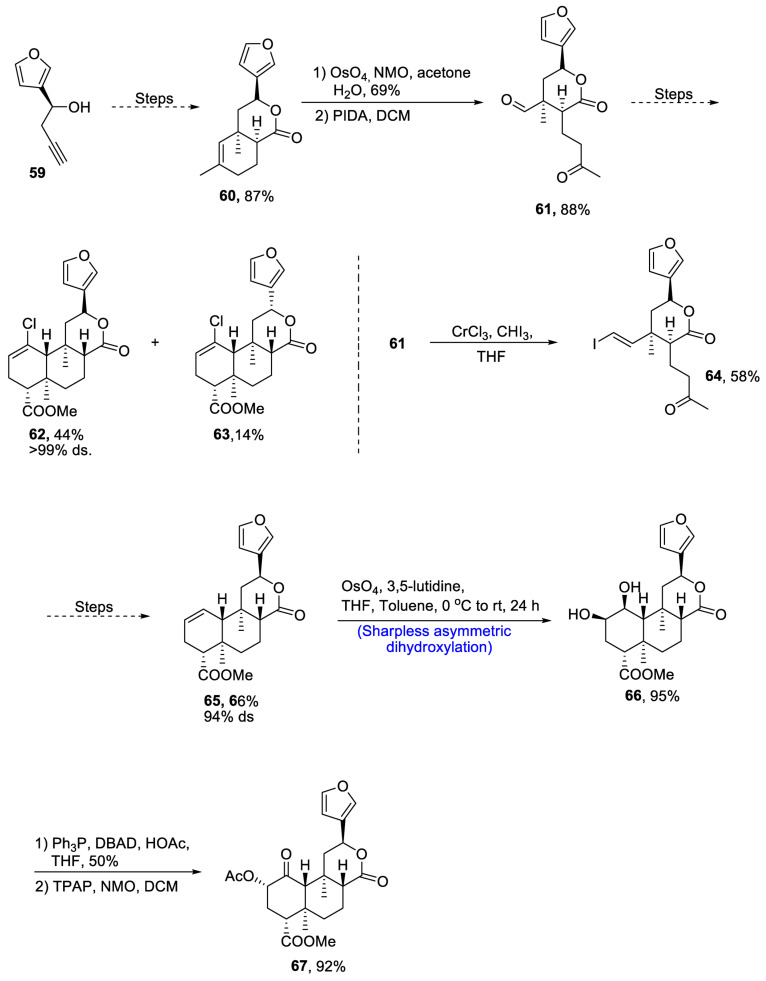
Synthesis of (−)-salvinorin A 67.
Scheme 11
Scheme 11
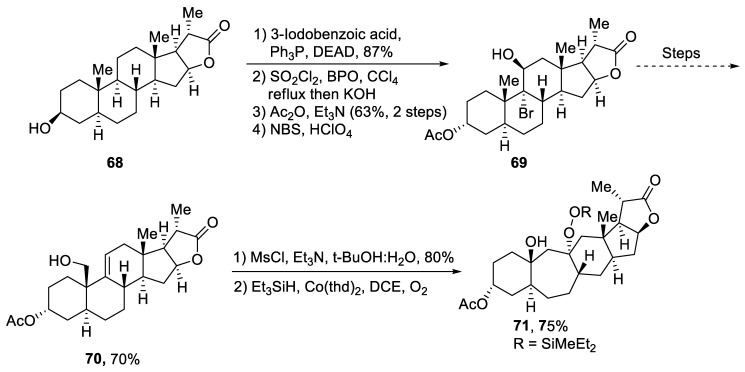
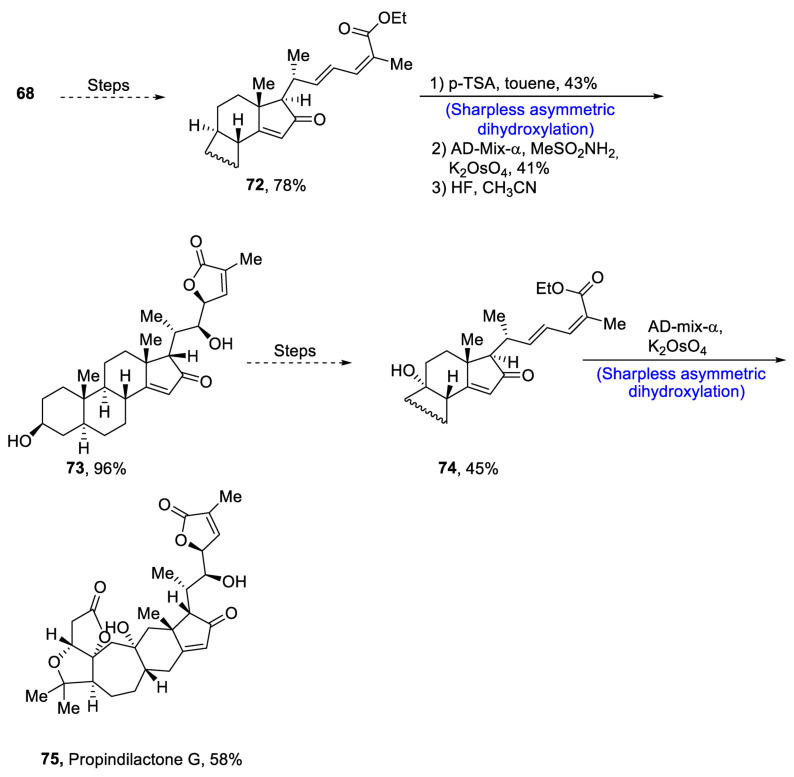
Synthesis of propindilactone G 75.
Scheme 11
Scheme 11
Synthesis of propindilactone G 75.
Scheme 12
Scheme 12
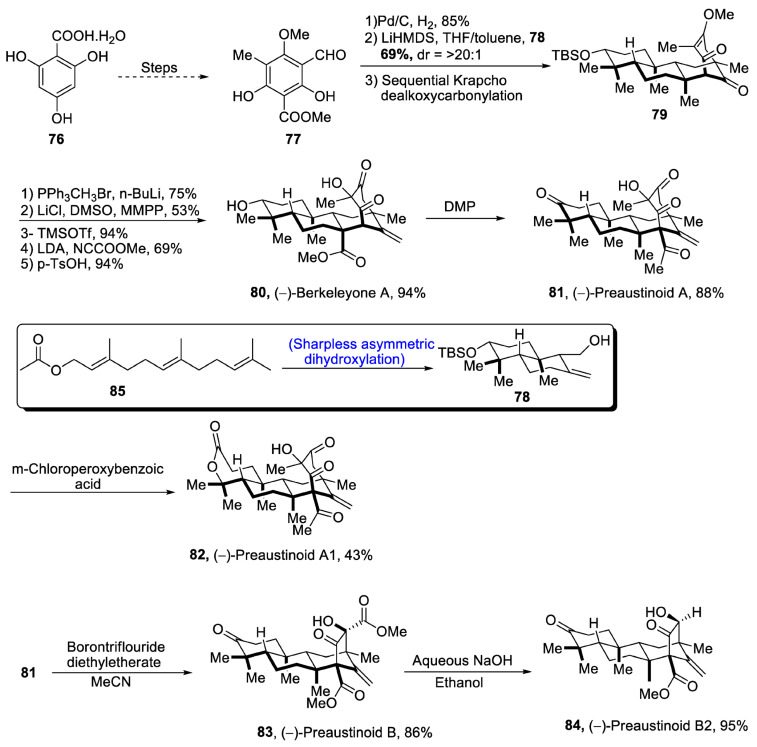
Synthesis of berkeleyone A 80 and preaustinoids 81, 82, 83 and 84.
Scheme 13
Scheme 13
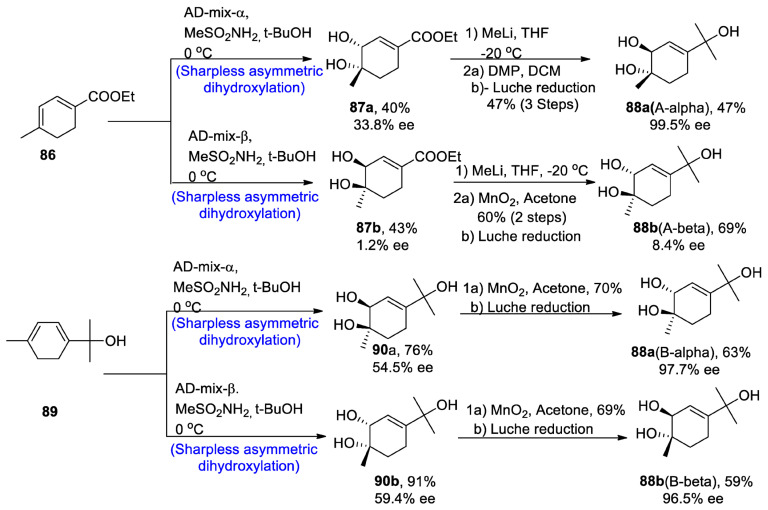
Synthesis of trans-p-menth-3-ene-1,2,8-triol 88.
Scheme 14
Scheme 14
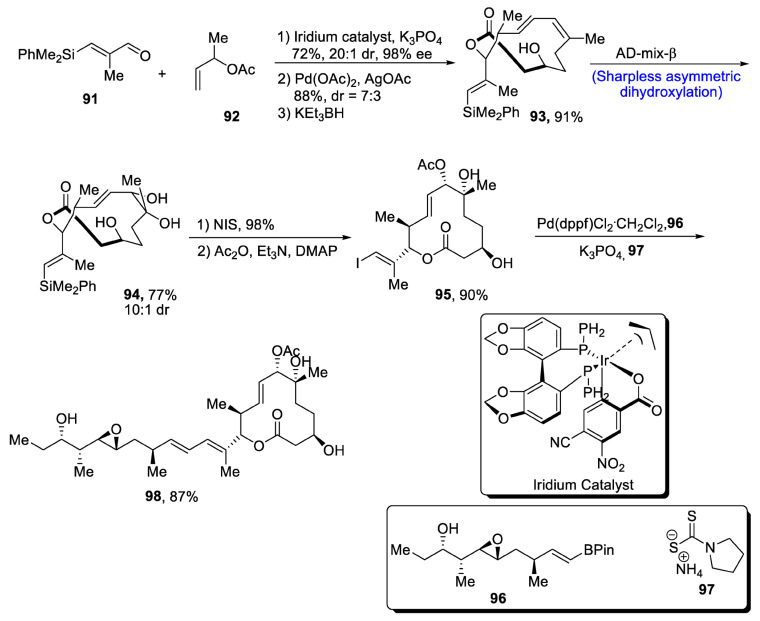
Synthesis of pladienolides 98.
Scheme 15
Scheme 15
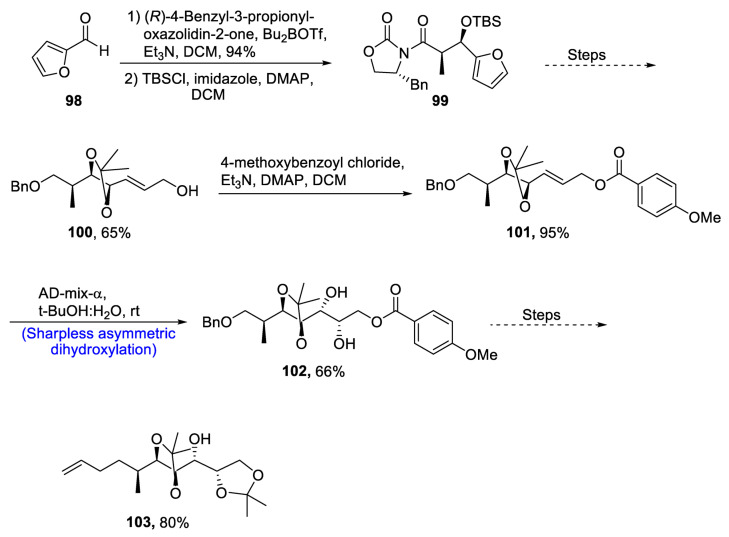
Synthesis of alchivemycins A and B 103.
Scheme 16
Scheme 16
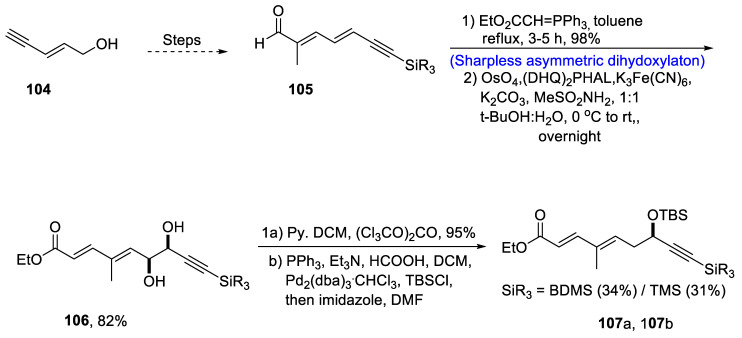
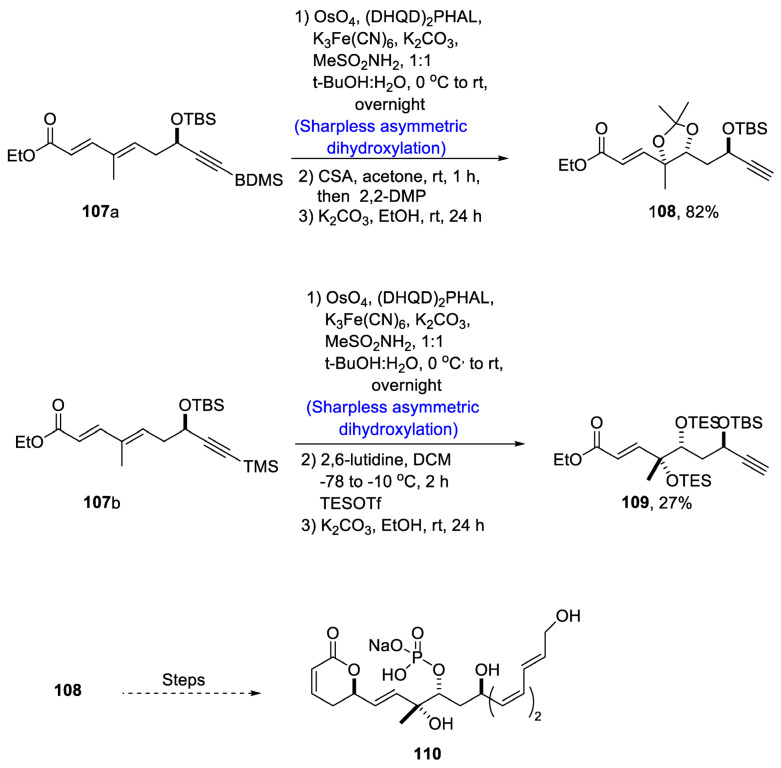
Synthesis of fostriecin 110.
Scheme 16
Scheme 16
Synthesis of fostriecin 110.
Scheme 17
Scheme 17
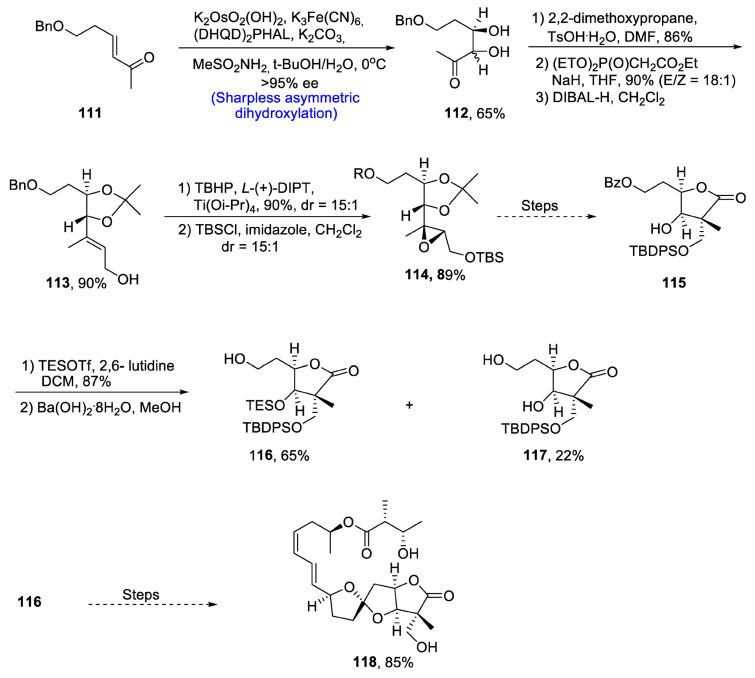
Synthesis of ascospiroketal B 118.
Scheme 18
Scheme 18
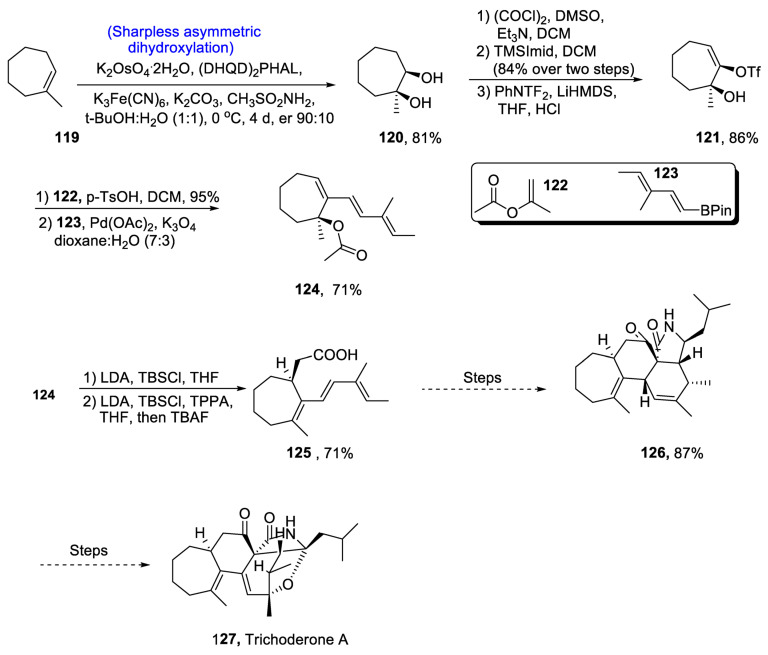
Synthesis of trichoderone A 127.
Scheme 19
Scheme 19
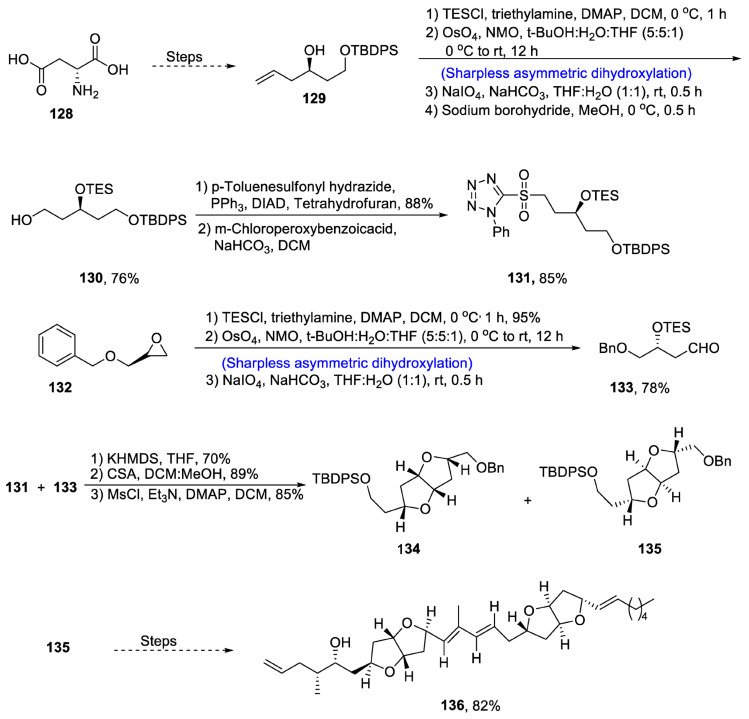
Synthesis of amphirionin-2 136.
Scheme 20
Scheme 20
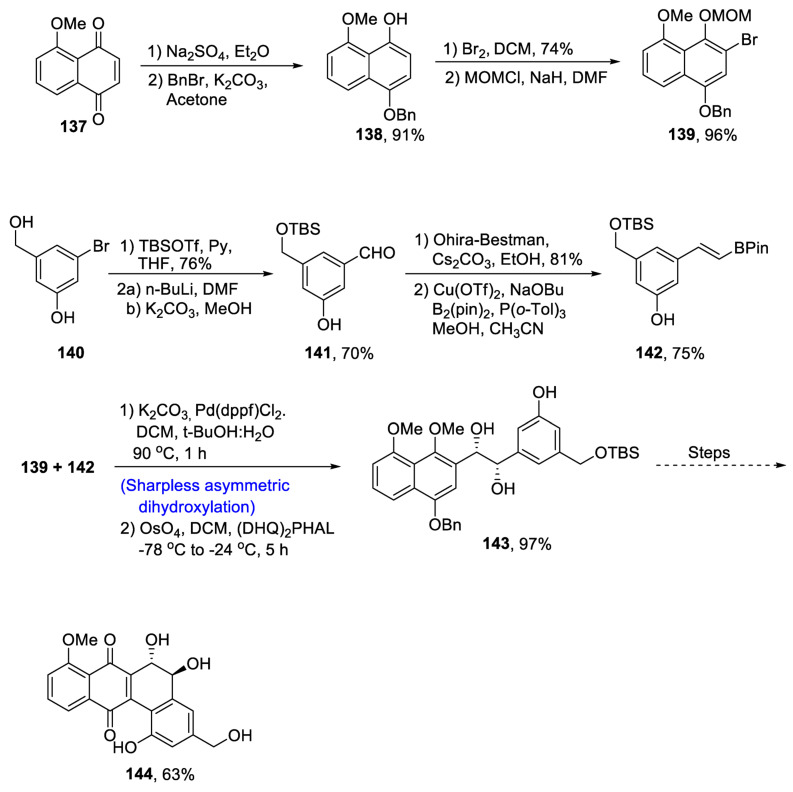
Synthesis of (+)-PD-116740 144.
Scheme 21
Scheme 21
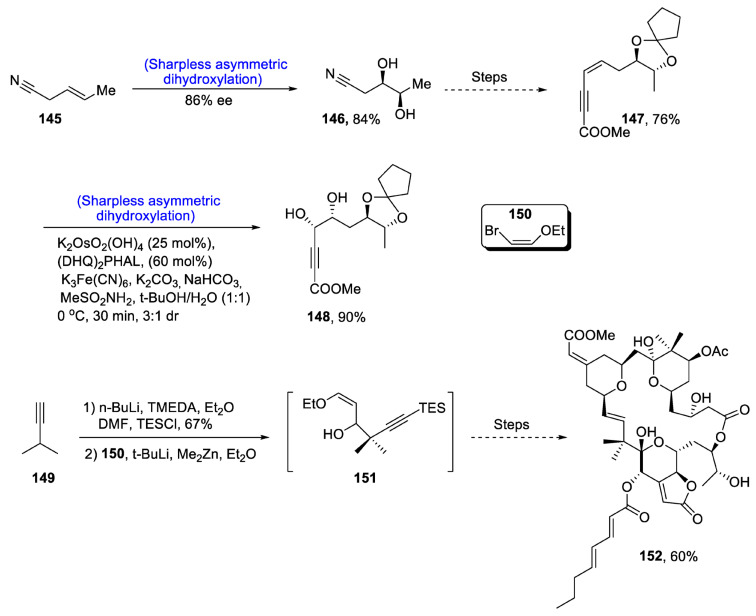
Synthesis of bryostatin 152.
Scheme 22
Scheme 22
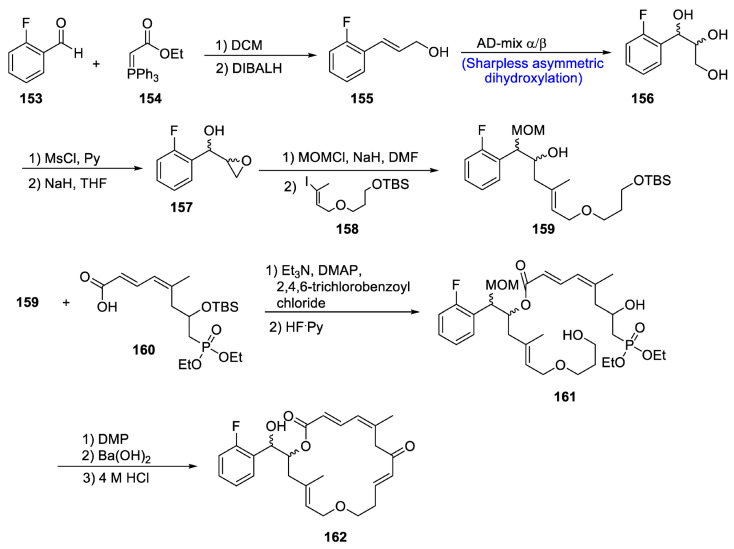
Synthesis of zampanolide mimics 162.
Scheme 23
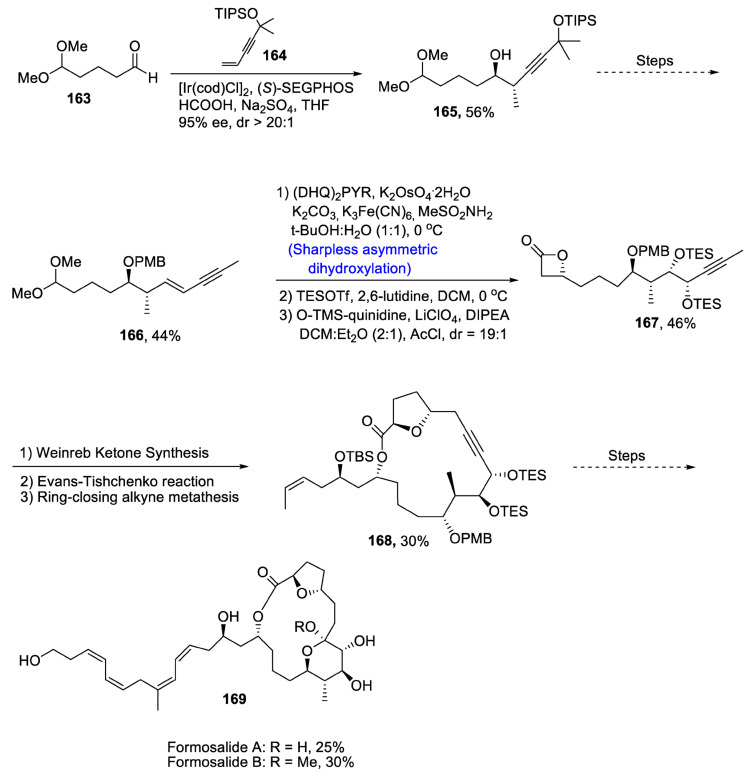
Scheme 23
Synthesis of formosalides A and B 169.
Scheme 24
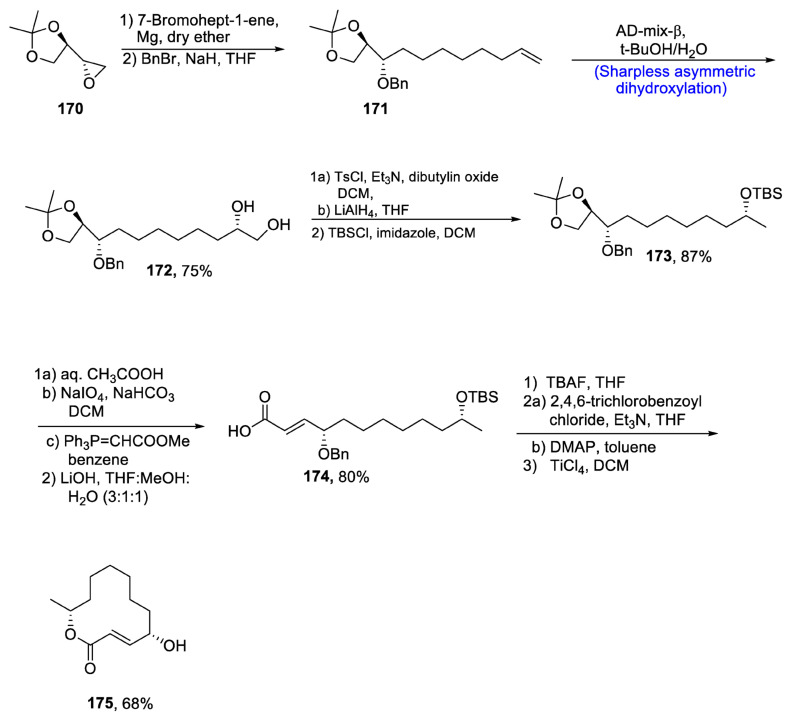
Scheme 24
Synthesis of patulolide C 175.
Scheme 25
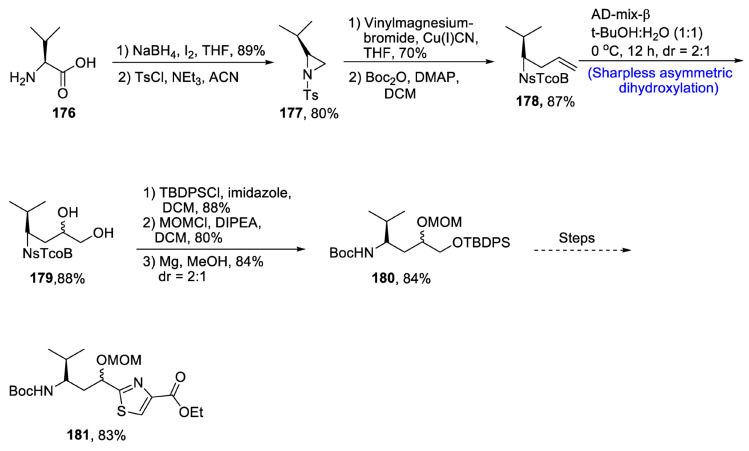
Scheme 25
Synthesis of tubuvaline 181.
Scheme 26
Scheme 26
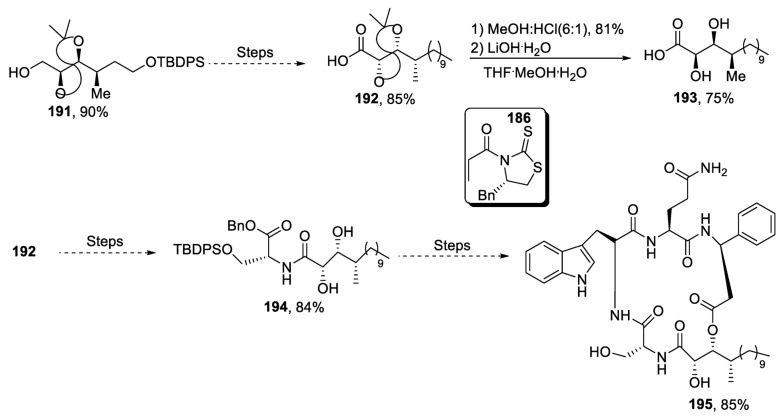
Synthesis of alveolaride C 195.
Scheme 26
Scheme 26
Synthesis of alveolaride C 195.
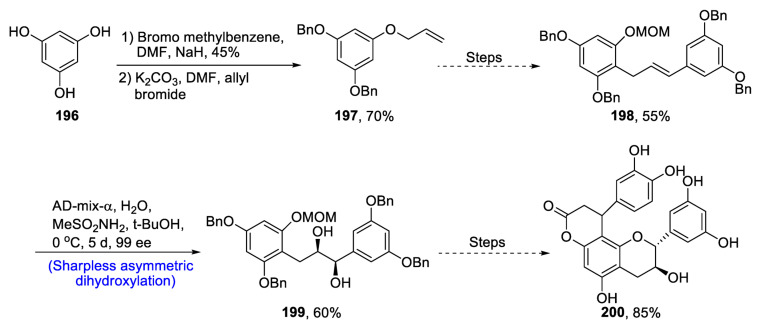
Scheme 27
Scheme 27
Synthesis of new phenolic constituent 200.
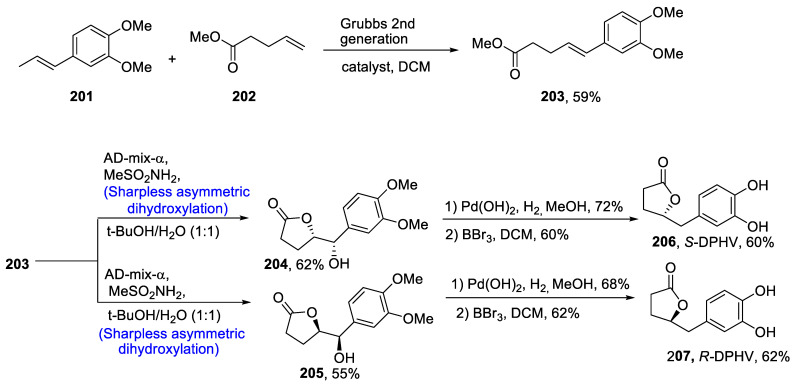
Scheme 28
Scheme 28
Synthesis of DHPV 206 and 207.
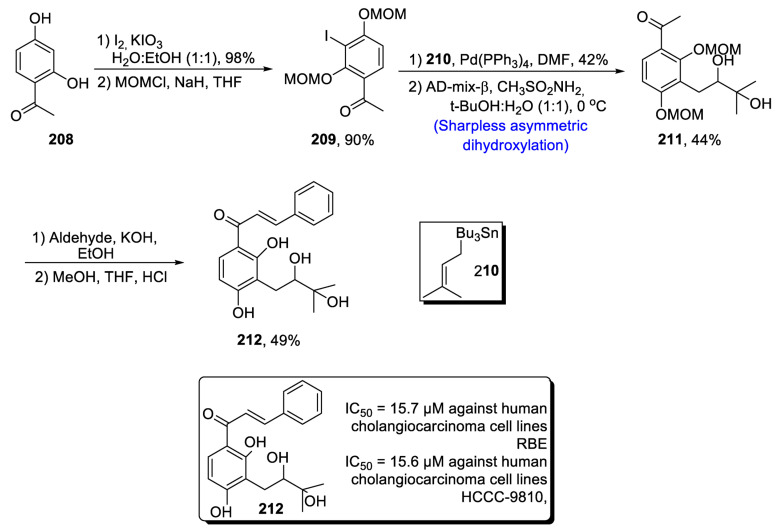
Scheme 29
Scheme 29
Synthesis of sanjoseolide 212.
Scheme 30
Scheme 30
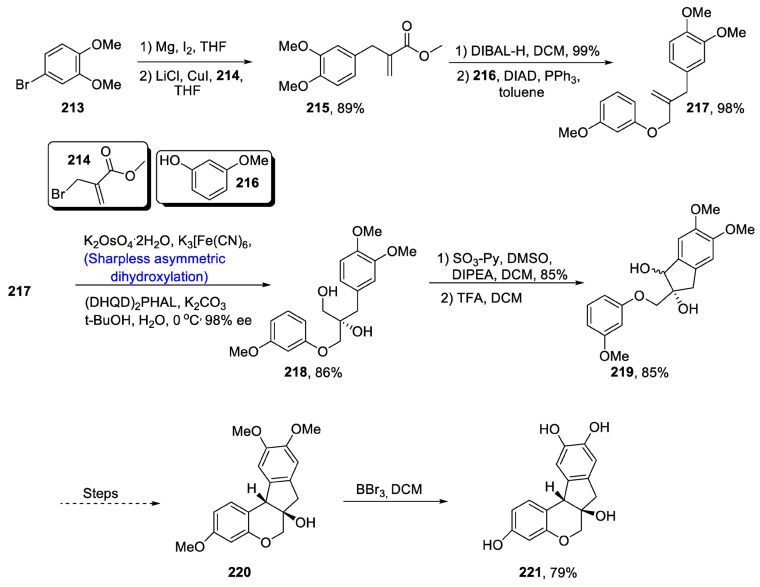
Synthesis of (+)-brazilin 220.
Scheme 31
Scheme 31
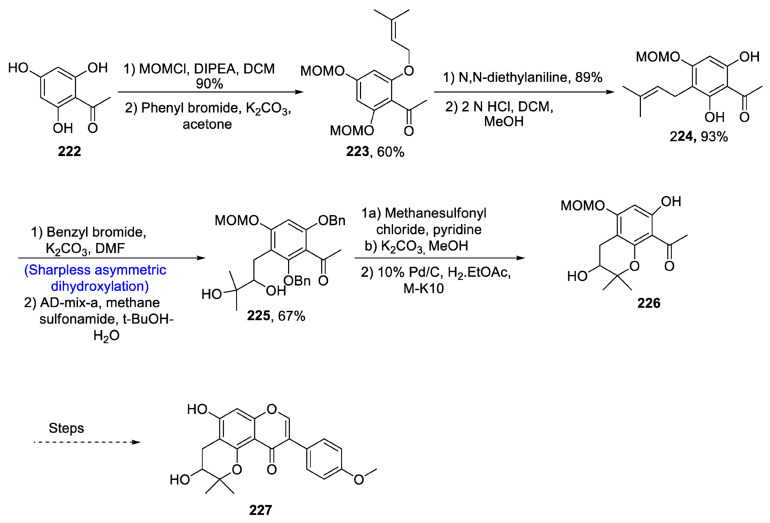
Synthesis of cudraisoflavone J 227.
Scheme 32
Scheme 32
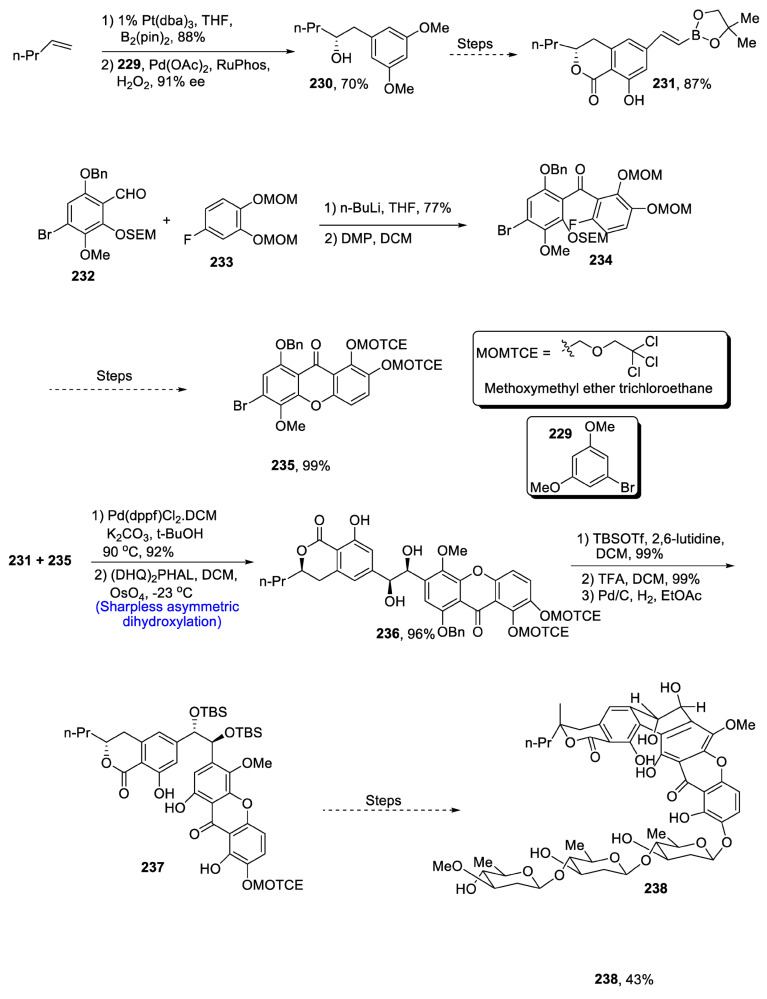
Synthesis of FD-594 238.
Scheme 33
Scheme 33
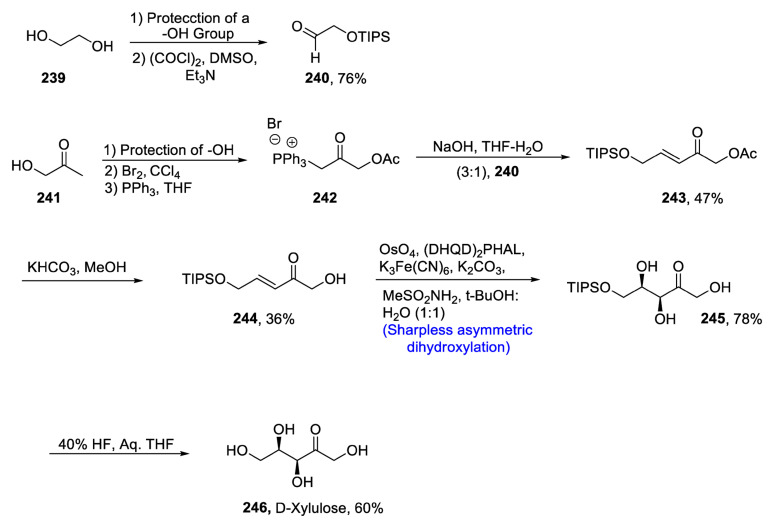
Synthesis of D-xylulose 246.
Scheme 34
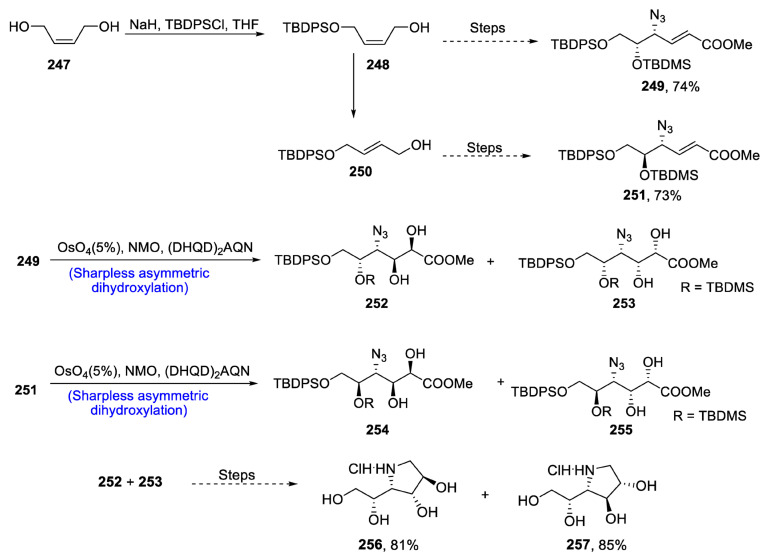
Scheme 34
Synthesis of 1,4-dideoxy-1,4-imino-D-iditol 256 and 257.
Scheme 35
Scheme 35
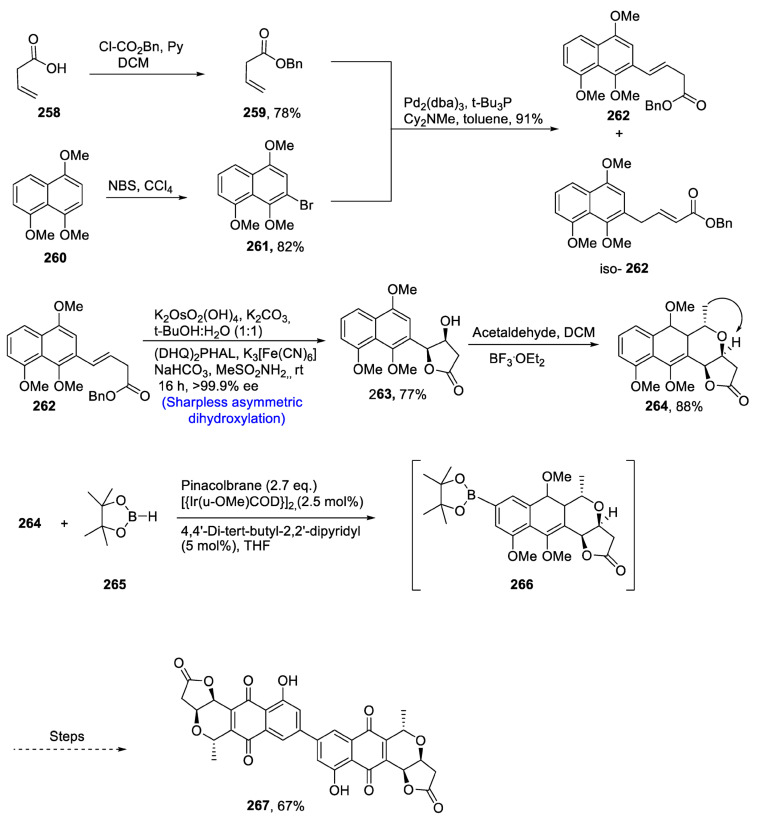
Synthesis of crisamicin 268.
Scheme 36
Scheme 36
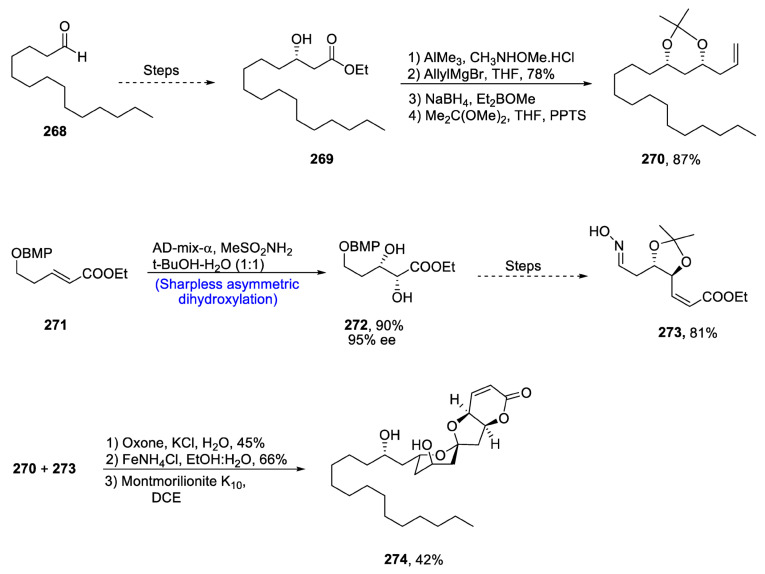
Synthesis of EBC-23 274.
Scheme 37
Scheme 37
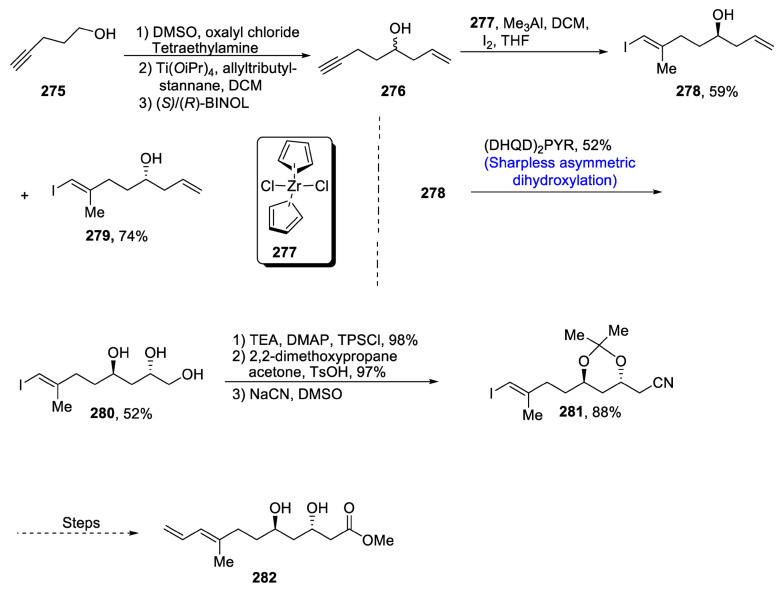
Synthesis of ieodomycins 282.
Scheme 38
Scheme 38
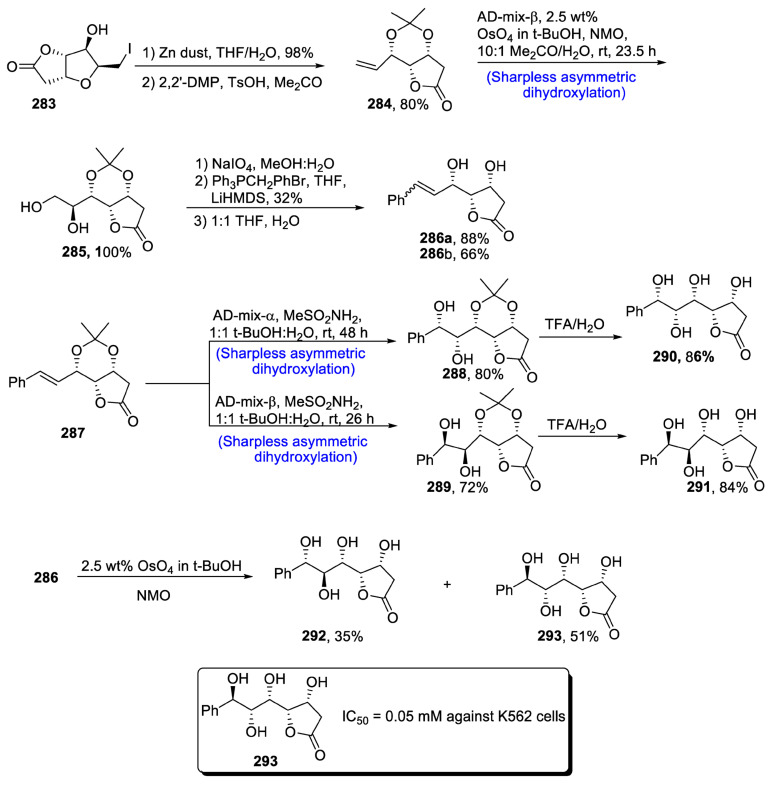
Synthesis of cardiobutanolide 293.
Scheme 39
Scheme 39
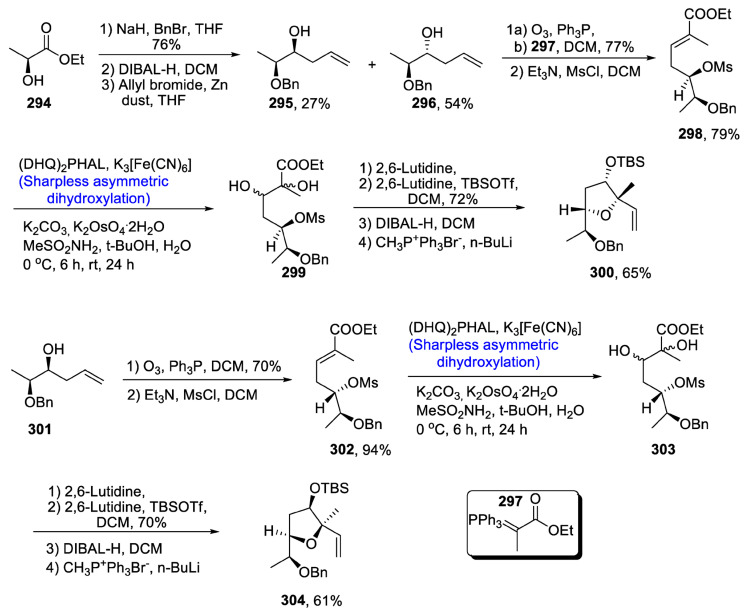
Synthesis of THF rings for caruifolin A 304.
Scheme 40
Scheme 40
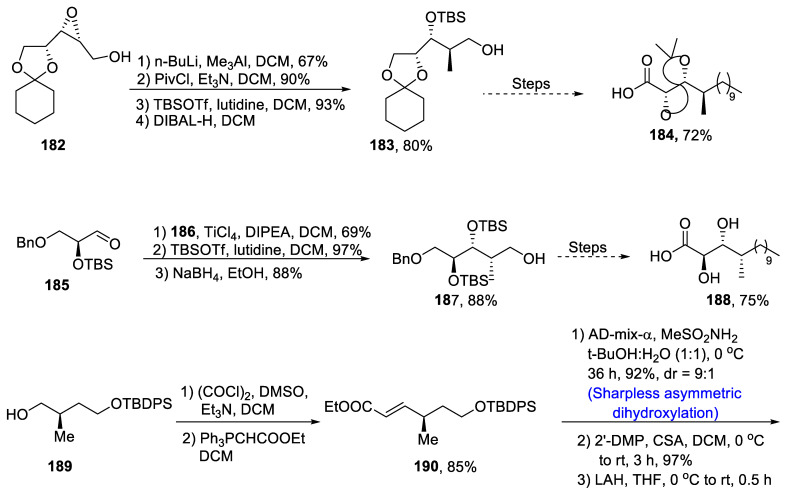
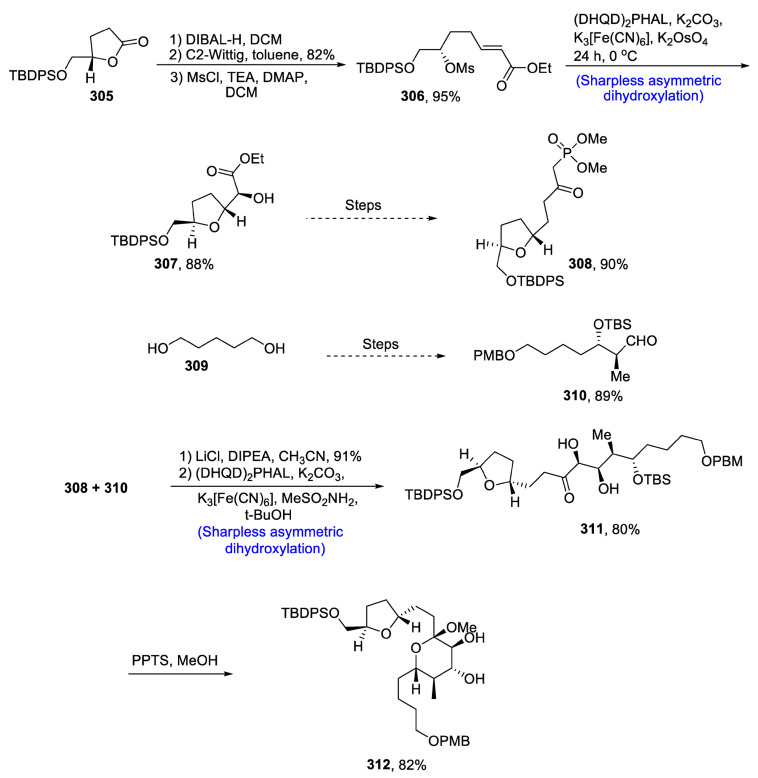
Synthesis of C1-C16 fragment of formosalide B 312.
Scheme 41
Scheme 41
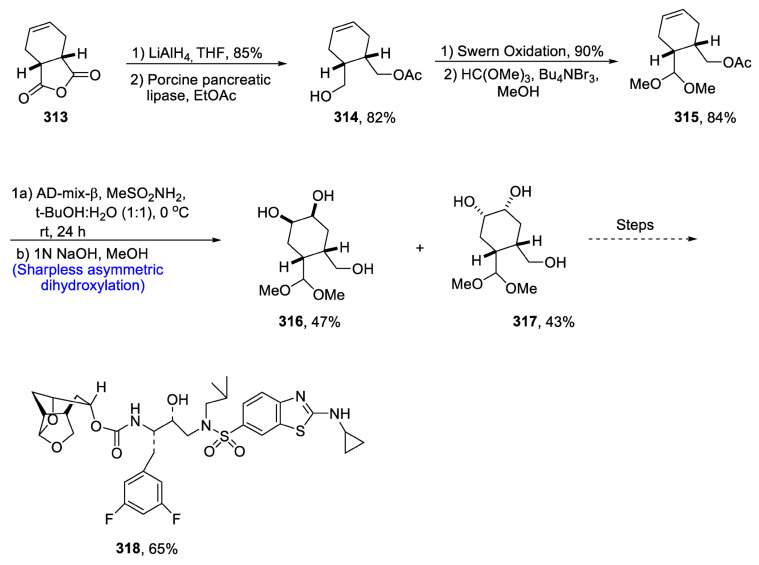
Synthesis of HIV-protease inhibitor 318.
Scheme 42
Scheme 42
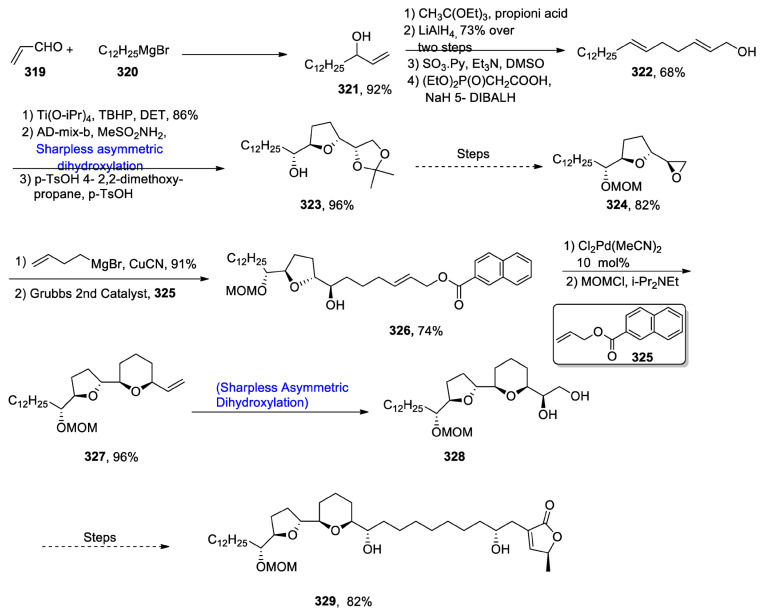
Synthesis of (+)-muconin 329.
Scheme 43
Scheme 43
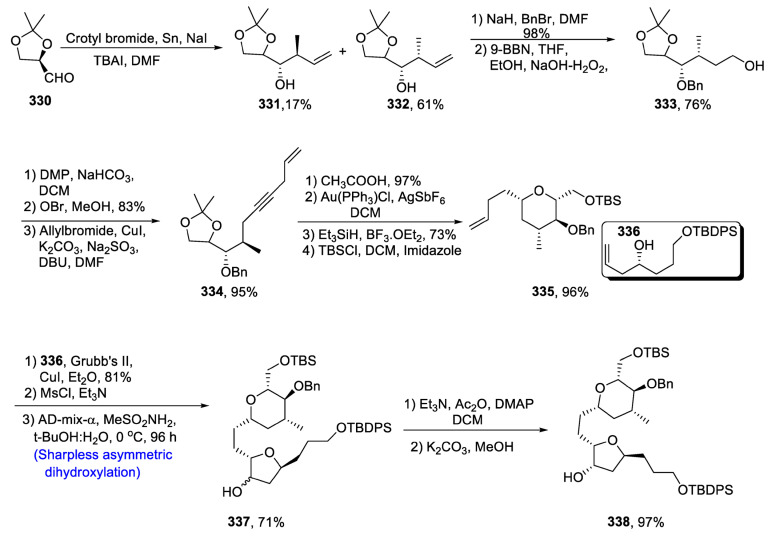
Synthesis of C14-C28 fragment of eribulin 338.
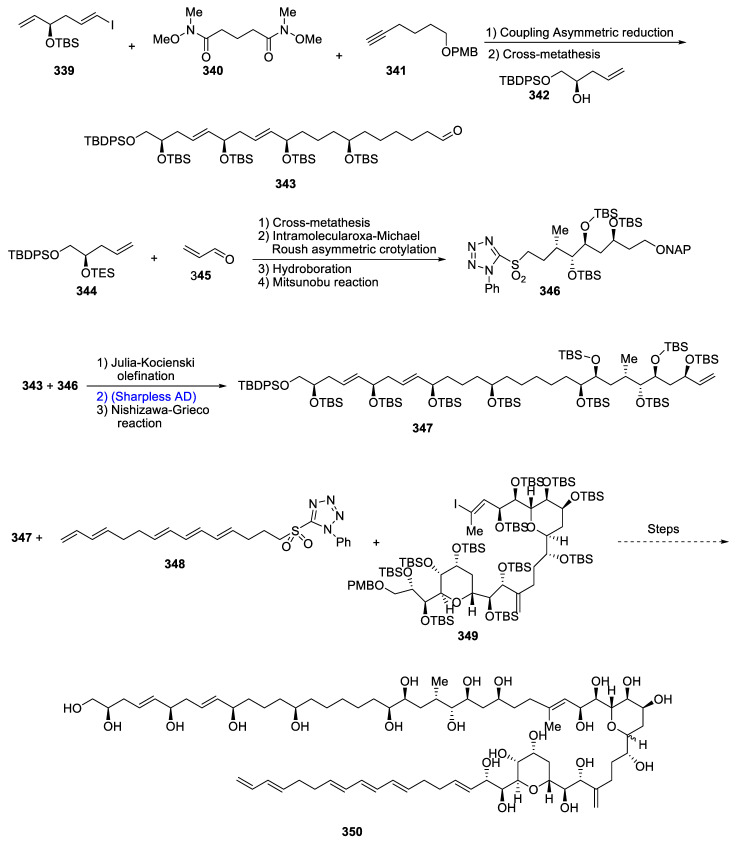
Scheme 44
Scheme 44
Synthesis of amphidinol 3 350.
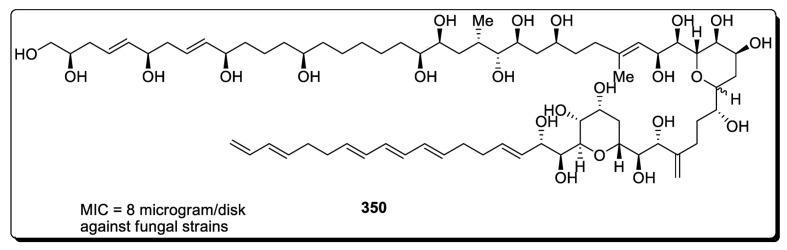
Scheme 44
Scheme 44
Synthesis of amphidinol 3 350.
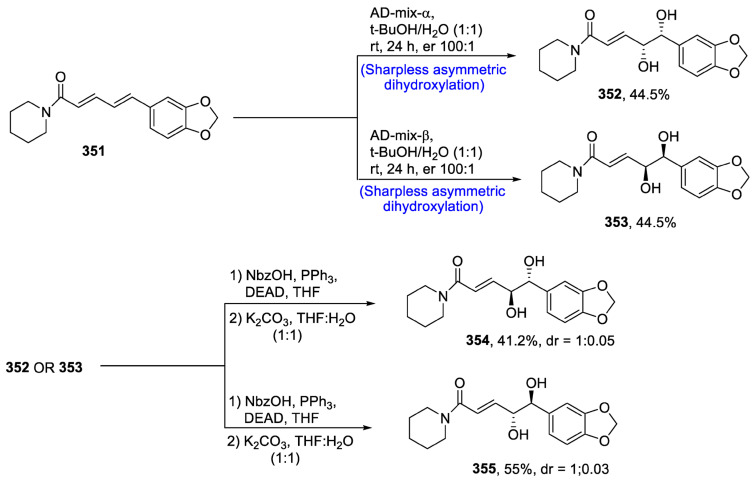
Scheme 45
Scheme 45
Synthesis of 4,5-dihydroxypiperines 354 and 355.
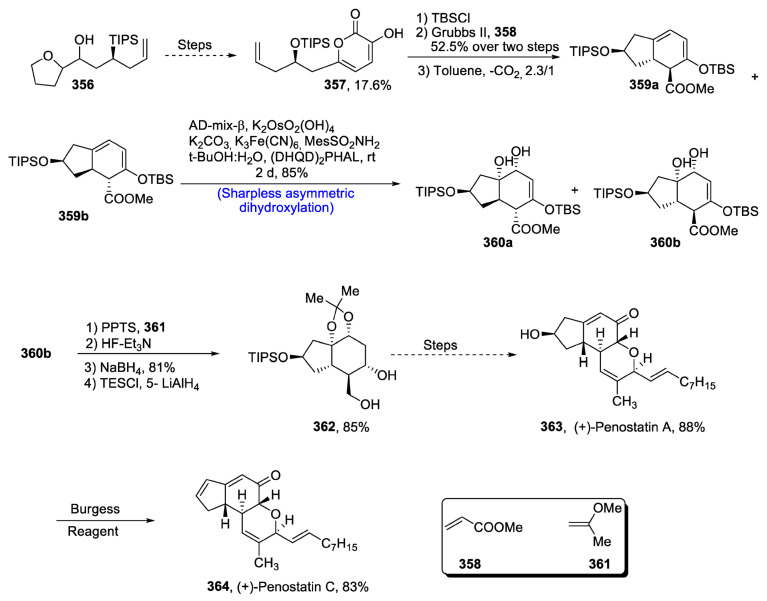
Scheme 46
Scheme 46
Synthesis of (+)-penostatins A 363 and C 364.
Scheme 47
Scheme 47
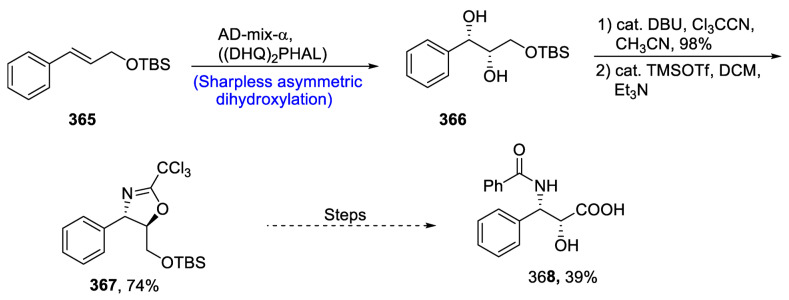
Synthesis of taxol side chain 368.
Scheme 48
Scheme 48
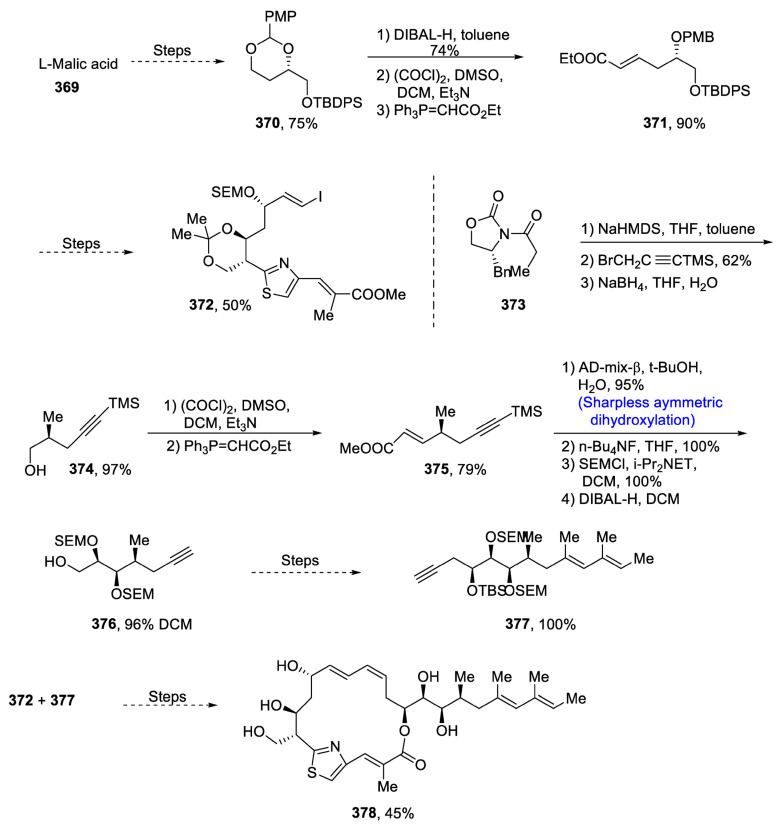
Synthesis of thuggacin cmc-A 378.

References

    1. Gnas Y., Glorius F. Chiral auxiliaries—Principles and recent applications. Synthesis. 2006;12:1899–1930. doi: 10.1002/chin.200637232. - DOI
    1. Kitano Y., Matsumoto T., Sato F. A highly efficient kinetic resolution of γ- and β-trimethylsilyl secondary allylic alcohols by the sharpless asymmetric epoxidation. Tetrahedron. 1988;44:4073–4086. doi: 10.1016/S0040-4020(01)86657-6. - DOI
    1. Minato M., Yamamoto K., Tsuji J. Osmium tetraoxide catalyzed vicinal hydroxylation of higher olefins by using hexacyanoferrate(III) ion as a cooxidant. J. Org. Chem. 1999;55:766–768. doi: 10.1021/jo00289a066. - DOI
    1. Martin V.S., Woodard S.S., Katsuki T., Yamada Y., Ikeda M., Sharpless K.B. Kinetic resolution of racemic allylic alcohols by enantioselective epoxidation. A route to substances of absolute enantiomeric purity? J. Am. Chem. Soc. 1981;103:6237–6240. doi: 10.1021/ja00410a053. - DOI
    1. Sharpless K.B., Amberg W., Bennani Y.L., Crispino G.A., Hartung J., Jeong K.S., Kwong H.L., Morikawa K., Wang Z.M. The osmium-catalyzed asymmetric dihydroxylation: A new ligand class and a process improvement. J. Org. Chem. 1992;57:2768–2771. doi: 10.1021/jo00036a003. - DOI

LinkOut - more resources