


Clinical Outcomes After ACL Reconstruction in Soccer (Football, Futbol) Players: A Systematic Review and Meta-Analysis
- PMID: 36988238
- PMCID: PMC10606974
- DOI: 10.1177/19417381231160167
Clinical Outcomes After ACL Reconstruction in Soccer (Football, Futbol) Players: A Systematic Review and Meta-Analysis
Abstract
Context: The risk factors for anterior cruciate ligament (ACL) tear for athletes participating in pivoting sports includes young age and female sex. A previous meta-analysis has reported a reinjury rate of 15% after ACL reconstruction (ACLR) for athletes across all sports. To the best of the authors' knowledge, this is the first systematic review and meta-analysis of available literature reporting outcomes after ACLR in soccer players.
Objective: To review and aggregate soccer-specific outcomes data after ACLR found in current literature to help guide a more tailored discussion regarding expectations and prognosis for soccer players seeking operative management of ACL injuries.
Data sources: A comprehensive search of publications was performed using PubMed, EMBASE, Cochrane Central Register of Controlled Trials, and SPORTDiscus databases.
Study selection: Inclusion criteria consisted of original studies, level of evidence 1 to 4, studies reporting clinical and patient-reported outcomes (PROs) after primary ACLR in soccer players at all follow-up length.
Study design: The primary outcomes of interest were graft failure/reoperation rates, ACL injury in contralateral knee, return to soccer time, and PROs.
Level of evidence: Level 4.
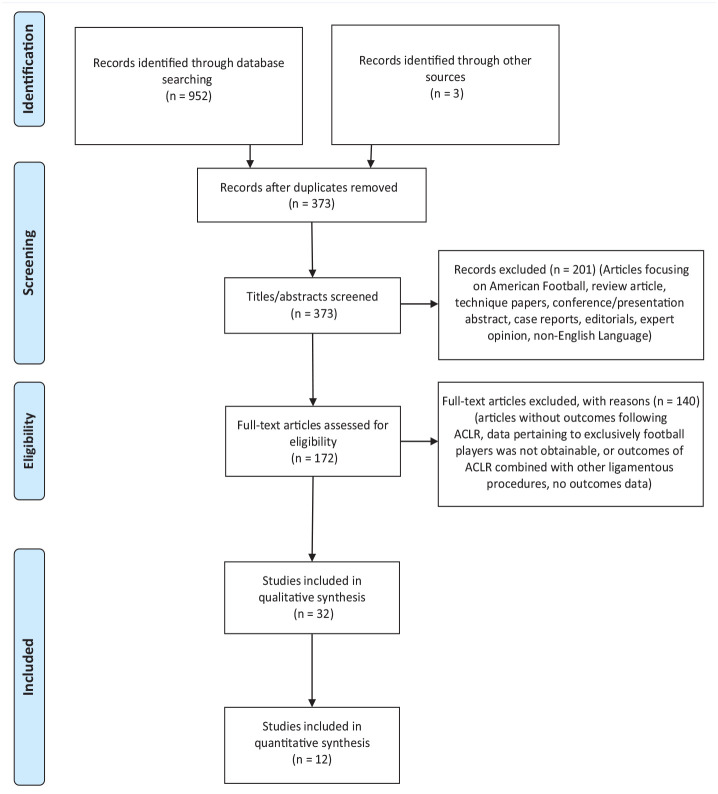
Data extraction: Search of literature yielded 32 studies for inclusion that involved 3112 soccer players after ACLR.
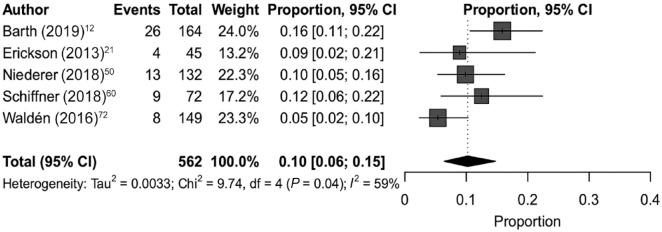
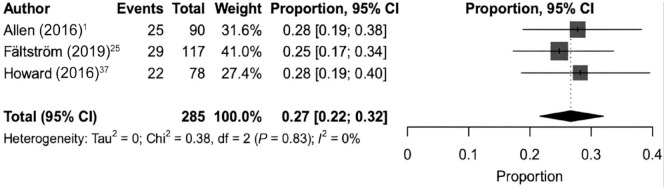
Results: The overall graft failure/reoperation rate ranged between 3.0% and 24.8% (mean follow-up range, 2.3-10 years) and the combined ACL graft failure and contralateral ACL injury rate after initial ACLR was 1.0% to 16.7% (mean follow-up range, 3-10 years); a subgroup analysis for female and male players revealed a secondary ACL injury incidence rate of 27%, 95% CI (22%, 32%) and 10%, 95% CI (6%, 15%), respectively. Soccer players were able to return to play between 6.1 and 11.1 months and the majority of PROs showed favorable scores at medium-term follow-up.
Conclusion: Soccer players experience high ACL injury rates after primary ACLR and demonstrated similar reinjury rates as found in previous literature of athletes who participate in high-demand pivoting sports.
Keywords: anterior cruciate ligament reconstruction; football; futbol; outcomes; return to sport; soccer.
Conflict of interest statement
The following authors declared potential conflicts of interest: D.P.P. worked as a presenter for Zimmer. J.E.F. received researched support from both Arthrex and Smith & Nephew. C.S.A. received royalties from both Arthrex and Lead Player, has stock or stock options with At Peak, received research support from the MLB, and received research support from Stryker. B.M.S. received royalties from Nova Science Publishers.
Figures
References
-
- Allen MM, Pareek A, Krych AJ, et al. Are female soccer players at an increased risk of second anterior cruciate ligament injury compared with their athletic peers? Am J Sports Med. 2016;44(10):2492-2498. - PubMed
-
- Alonso J, Malig S, Fontboté C, Azar C, Vergara F, Yáñez R. Return to play after anterior cruciate ligament reconstruction among amateur soccer players. Rev Chil Ortop Traumatol. 2019;60(2):35-38.
-
- Alvarez-Diaz P, Alentorn-Geli E, Ramon S, et al. Effects of anterior cruciate ligament reconstruction on neuromuscular tensiomyographic characteristics of the lower extremity in competitive male soccer players. Knee Surg Sports Traumatol Arthrosc. 2015;23(11):3407-3413. - PubMed
Publication types
MeSH terms
LinkOut - more resources
Full Text Sources
Research Materials
Miscellaneous
