


Circadian Features of Cluster Headache and Migraine: A Systematic Review, Meta-analysis, and Genetic Analysis
- PMID: 36990725
- PMCID: PMC10259280
- DOI: 10.1212/WNL.0000000000207240
Circadian Features of Cluster Headache and Migraine: A Systematic Review, Meta-analysis, and Genetic Analysis
Abstract
Background and objectives: Cluster headache and migraine have circadian features at multiple levels (cellular, systems, and behavioral). A thorough understanding of their circadian features informs their pathophysiologies.
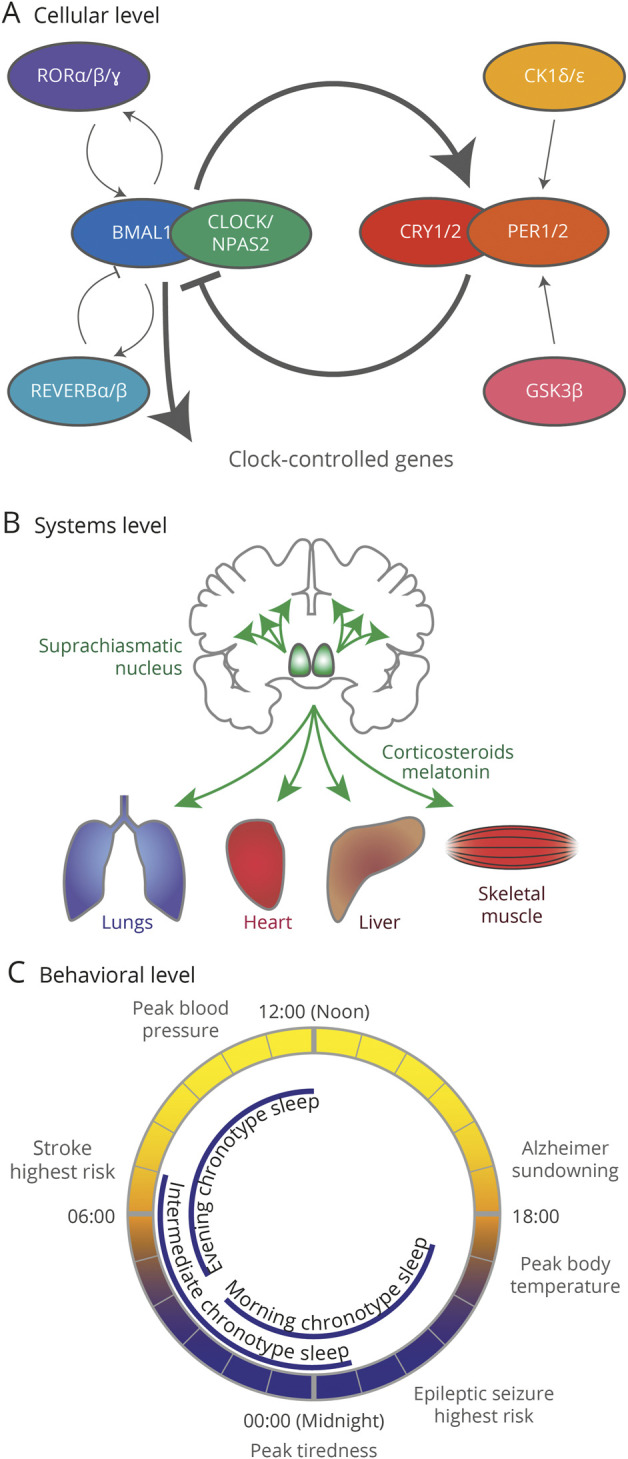
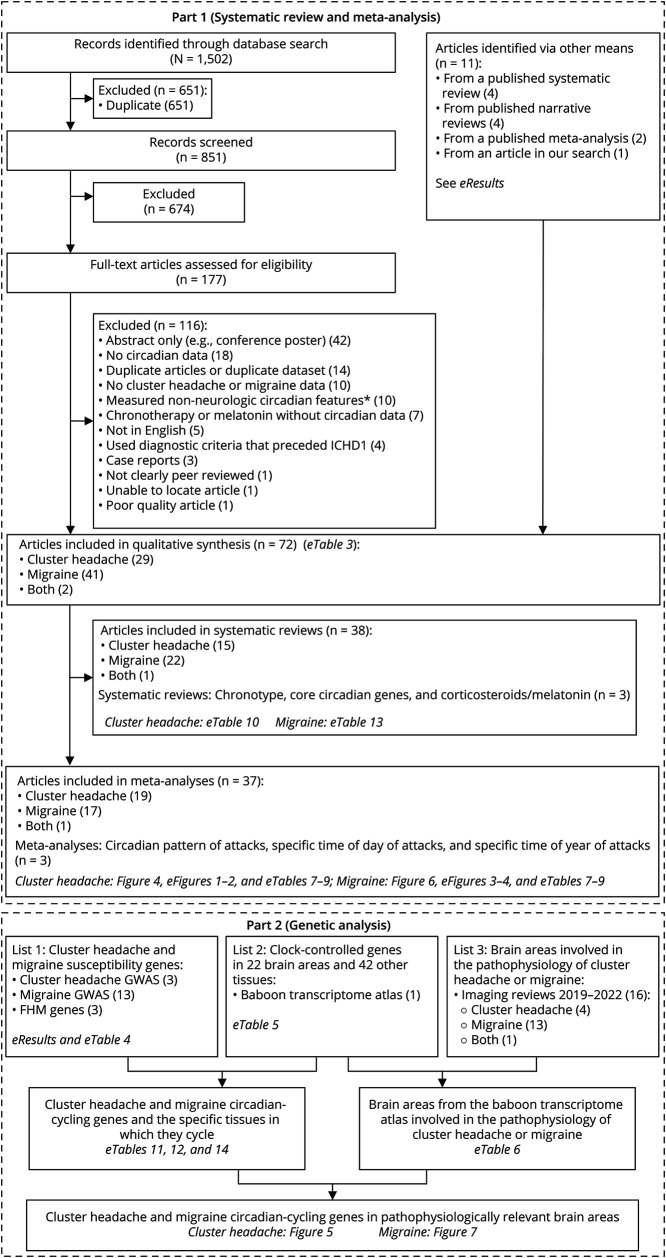
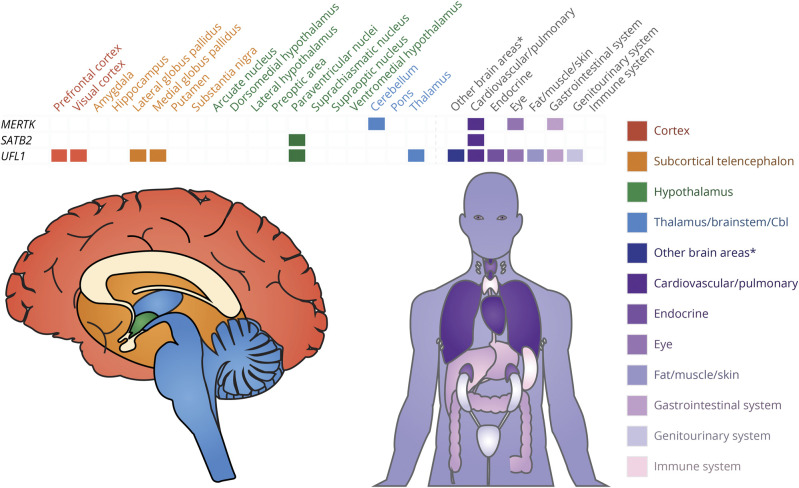
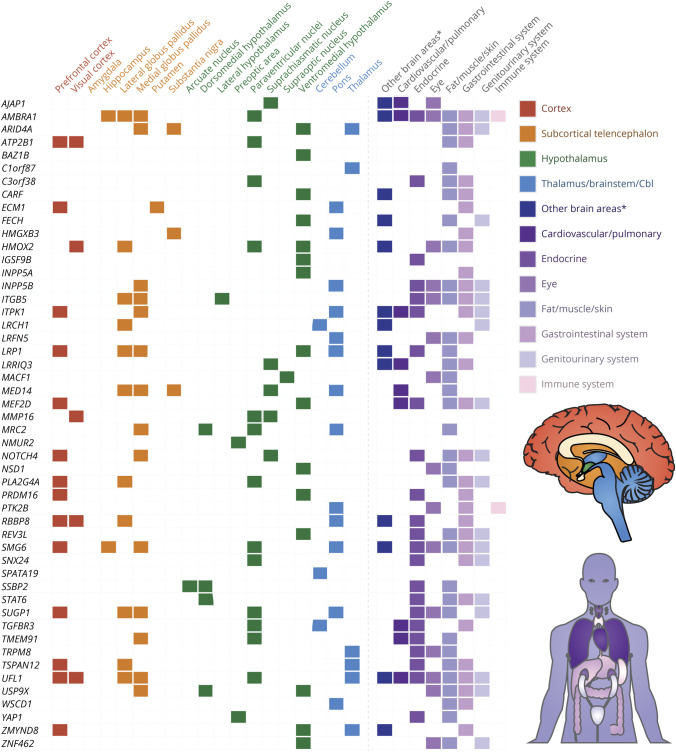
Methods: A librarian created search criteria in MEDLINE Ovid, Embase, PsycINFO, Web of Science, and Cochrane Library. Two physicians independently performed the remainder of the systematic review/meta-analysis using Preferred Reporting Items for Systematic Review and Meta-Analyses guidelines. Separate from the systematic review/meta-analysis, we performed a genetic analysis for genes with a circadian pattern of expression (clock-controlled genes or CCGs) by cross-referencing genome-wide association studies (GWASs) of headache, a nonhuman primate study of CCGs in a variety of tissues, and recent reviews of brain areas relevant in headache disorders. Altogether, this allowed us to catalog circadian features at the behavioral level (circadian timing, time of day, time of year, and chronotype), systems level (relevant brain areas where CCGs are active, melatonin and corticosteroid levels), and cellular level (core circadian genes and CCGs).
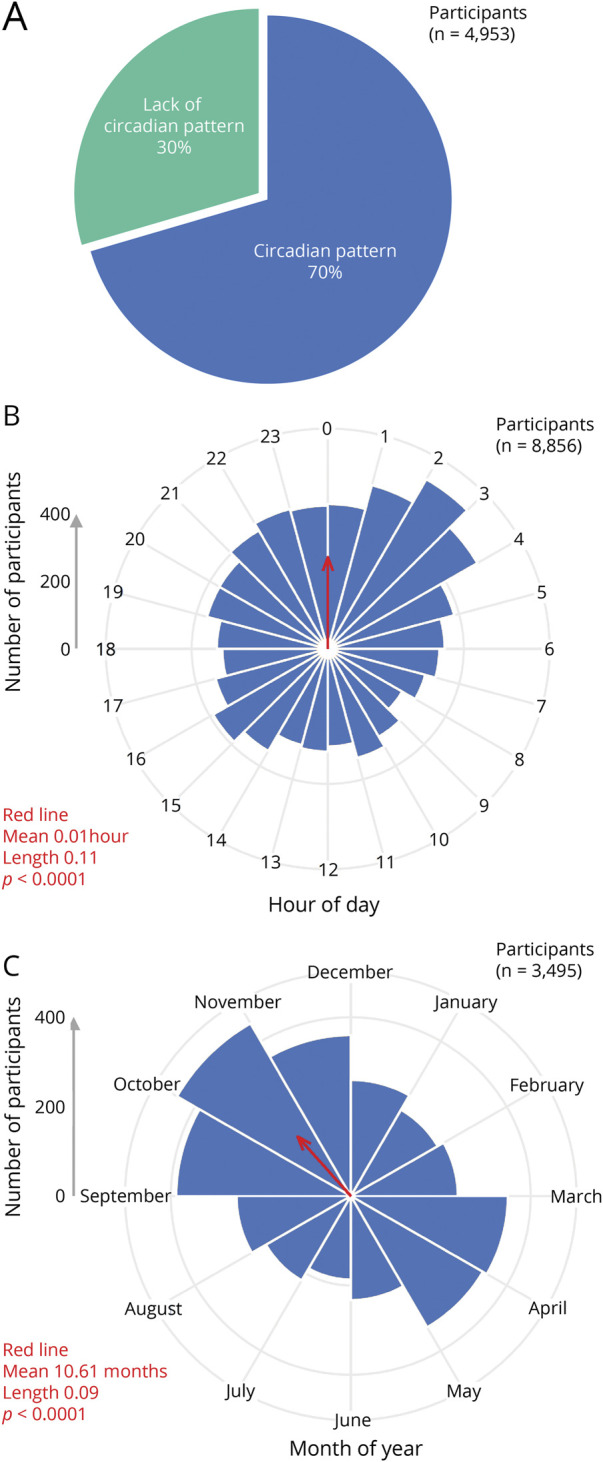
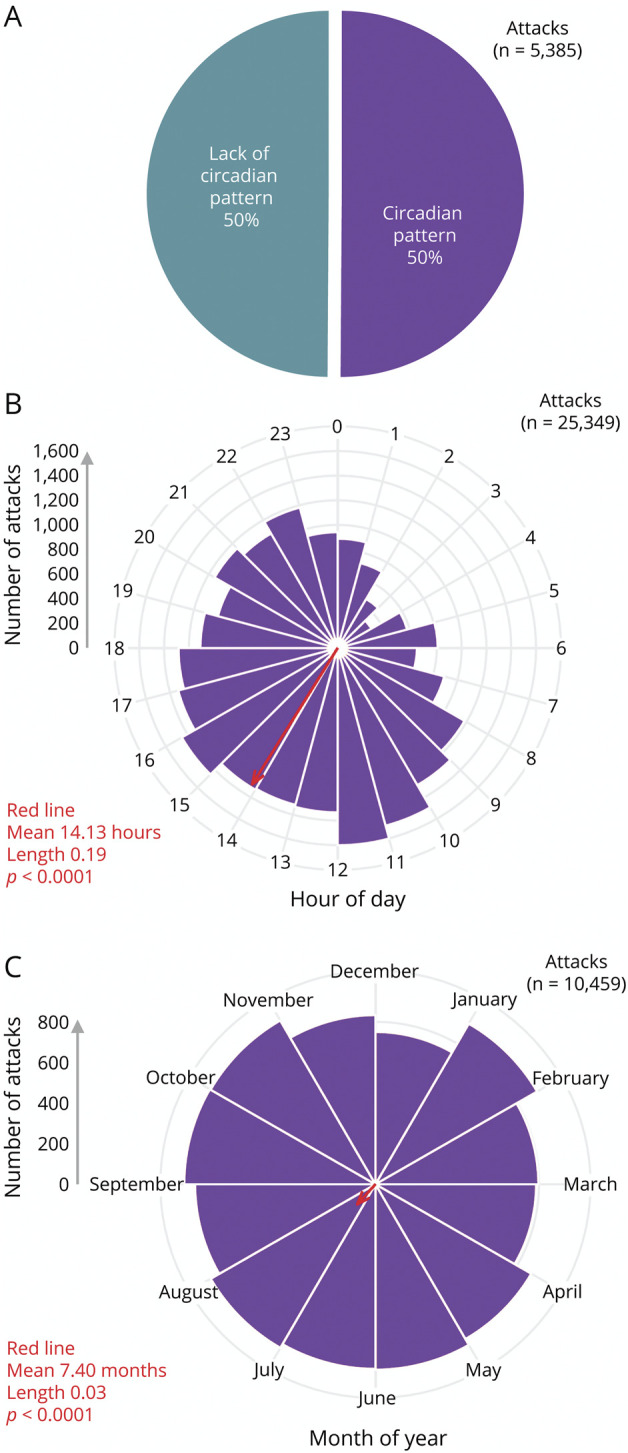
Results: For the systematic review and meta-analysis, 1,513 studies were found, and 72 met the inclusion criteria; for the genetic analysis, we found 16 GWASs, 1 nonhuman primate study, and 16 imaging reviews. For cluster headache behavior, meta-analyses showed a circadian pattern of attacks in 70.5% (3,490/4,953) of participants across 16 studies, with a clear circadian peak between 21:00 and 03:00 and circannual peaks in spring and autumn. Chronotype was highly variable across studies. At the systems level, lower melatonin and higher cortisol levels were reported in cluster headache participants. At the cellular level, cluster headache was associated with core circadian genes CLOCK and REV-ERBα, and 5 of the 9 cluster headache susceptibility genes were CCGs. For migraine behavior, meta-analyses showed a circadian pattern of attacks in 50.1% (2,698/5,385) of participants across 8 studies, with a clear circadian trough between 23:00 and 07:00 and a broad circannual peak between April and October. Chronotype was highly variable across studies. At the systems level, urinary melatonin levels were lower in participants with migraine and even lower during an attack. At the cellular level, migraine was associated with core circadian genes CK1δ and RORα, and 110 of the 168 migraine susceptibility genes were CCGs.
Discussion: Cluster headache and migraine are highly circadian at multiple levels, reinforcing the importance of the hypothalamus. This review provides a pathophysiologic foundation for circadian-targeted research into these disorders.
Trial registration information: The study was registered with PROSPERO (registration number CRD42021234238).
© 2023 American Academy of Neurology.
Conflict of interest statement
B. Benkli, S.Y. Kim, N. Koike, C. Han, C. Tran, E. Silva, Y. Yan, K. Yagita, Z. Chen, and S-H. Yoo report no disclosures relevant to the manuscript. M.J. Burish reports being an unpaid member of the medical advisory board of Clusterbusters and reports being a site investigator for a cluster headache clinical trial funded by Lundbeck. Go to
Figures
Comment in
-
Circadian Factors in Cluster Headache and Migraine: It's All About the Timing.Neurology. 2023 May 30;100(22):1035-1036. doi: 10.1212/WNL.0000000000207329. Epub 2023 Mar 29. Neurology. 2023. PMID: 36990724 No abstract available.
References
-
- May A, Schwedt TJ, Magis D, Pozo-rosich P, Evers S, Wang SJ. Cluster headache. Nat Rev Dis Prim. 2018;4:18006. - PubMed
-
- Schindler EAD, Burish MJ. Recent advances in the diagnosis and management of cluster headache. BMJ. 2022;376:e059577. - PubMed
-
- Ailani J, Burch RC, Robbins MS. The American Headache Society Consensus statement: update on integrating new migraine treatments into clinical practice. Headache. 2021;61(7):1021-1039. - PubMed
Publication types
MeSH terms
Substances
Grants and funding
LinkOut - more resources
Full Text Sources
Medical
Miscellaneous
