. 2024 Jan;42(1):87-98.
doi: 10.1038/s41587-023-01748-1. Epub 2023 Mar 29.

Targeted DNA integration in human cells without double-strand breaks using CRISPR-associated transposases

Affiliations

Targeted DNA integration in human cells without double-strand breaks using CRISPR-associated transposases

George D Lampe et al. Nat Biotechnol. 2024 Jan.

Abstract

Conventional genome engineering with CRISPR-Cas9 creates double-strand breaks (DSBs) that lead to undesirable byproducts and reduce product purity. Here we report an approach for programmable integration of large DNA sequences in human cells that avoids the generation of DSBs by using Type I-F CRISPR-associated transposases (CASTs). We optimized DNA targeting by the QCascade complex through protein design and developed potent transcriptional activators by exploiting the multi-valent recruitment of the AAA+ ATPase TnsC to genomic sites targeted by QCascade. After initial detection of plasmid-based integration, we screened 15 additional CAST systems from a wide range of bacterial hosts, identified a homolog from Pseudoalteromonas that exhibits improved activity and further increased integration efficiencies. Finally, we discovered that bacterial ClpX enhances genomic integration by multiple orders of magnitude, likely by promoting active disassembly of the post-integration CAST complex, akin to its known role in Mu transposition. Our work highlights the ability to reconstitute complex, multi-component machineries in human cells and establishes a strong foundation to exploit CRISPR-associated transposases for eukaryotic genome engineering.


Figures

Fig. 1 ∣
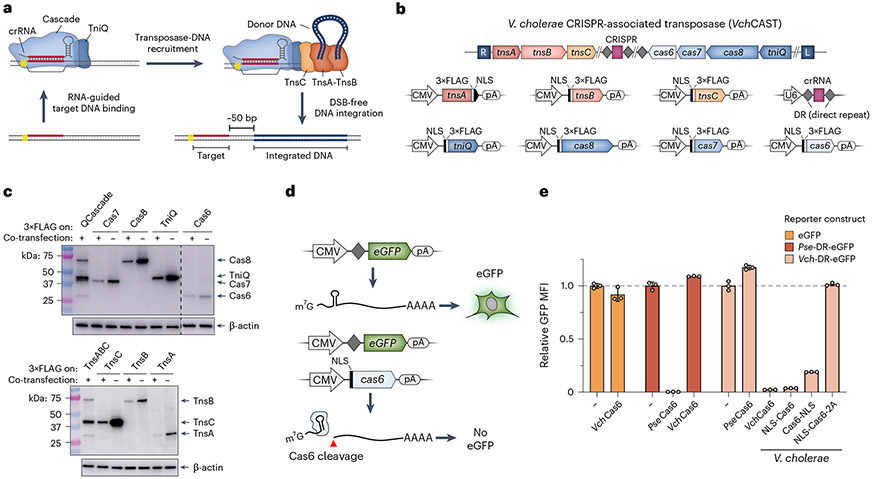
Fig. 1 ∣. Reconstitution of protein–RNA CAST components in human cells.
a, Schematic detailing DNA integration using RNA-guided transposases. b, Type I-F CRISPR-associated transposons encode the CRISPR RNA (crRNA) and seven proteins needed for DNA integration (top). Mammalian expression vectors used for heterologous reconstitution in human cells are shown at the bottom. c, Western blotting with anti-FLAG antibody demonstrates robust protein expression upon individual (−) or multi-plasmid (+) co-transfection of HEK293T cells. Co-transfections contained all VchCAST components, with the FLAG-tagged subunit(s) indicated. β-actin was used as a loading control. Western blots were repeated in biological duplicates with similar results. d, Schematic of eGFP knockdown assay to monitor crRNA processing by Cas6 in HEK293T cells. Cleavage of the CRISPR direct repeat (DR)-encoded stem-loop severs the 5′ cap from the ORF and polyA (pA) tail, leading to a loss of eGFP fluorescence (bottom). e, Transposon-encoded VchCas6 (Type I-F3) exhibits efficient RNA cleavage and eGFP knockdown, as measured by flow cytometry. Knockdown was similar to PseCas6 from a canonical CRISPR–Cas system (Type I-E), was absent with a non-cognate DR substrate and was sensitive to C-terminal tagging. To control for overexpression, data were normalized to negative control conditions (−), in which dCas9 was co-transfected with the reporter. Data are shown as the mean ± s.d. for n = 3 biologically independent samples. Uncropped western blots are shown in Source Data Fig. 1.
Fig. 2 ∣
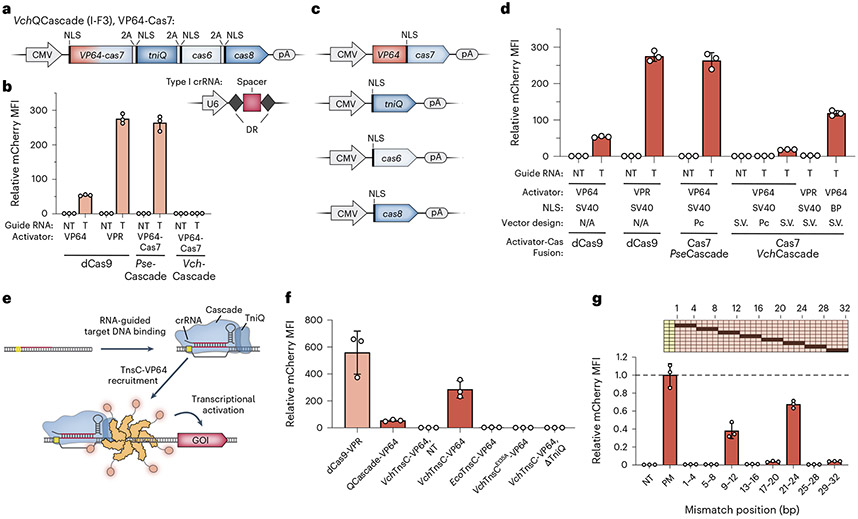
Fig. 2 ∣. Development of QCascade-based and TnsC-based transcriptional activators to monitor DNA targeting.
a, Design of mammalian expression vectors encoding transposon-encoded Type I-F3 systems (VchQCascade). Cascade subunits are concatenated on a single polycistronic vector and connected by virally derived 2A peptides, as described previously. b, Normalized mCherry fluorescence levels for the indicated experimental conditions, measured by flow cytometry. Whereas PseCascade stimulated robust activation, VchQCascade was inactive under these conditions. NT, non-targeting sgRNA/crRNA; T, targeting sgRNA/crRNA. c, Design of separately encoded VchQCascade mammalian expression vectors with optimized NLS tag placement. d, VchQCascade mediates transcriptional activation when encoded by re-engineered expression vectors, as measured by flow cytometry. mCherry expression is further enhanced when replacing mono-partite (SV40) NLS tags with BP NLS tags. Pc, polycistronic; S.V., single vectors; NT, non-targeting; T, targeting. e, Schematic of transcriptional activation assay, in which DNA targeting by VchQCascade leads to multi-valent recruitment of VchTnsC–VP64. The assembly mechanism is based on our recent biochemical, structural and functional data. f, Normalized mCherry fluorescence levels for the indicated experimental conditions, measured by flow cytometry. VchTnsC-based activation requires cognate protein–protein interactions, is strictly dependent on the presence of TniQ and involves ATP-dependent oligomer formation, which is eliminated with the E135A mutation. Several controls are shown for comparison, and gRNAs target the same sites shown in Supplementary Fig. 3a. NT, non-targeting crRNA. g, Transcriptional activation shows strong sensitivity to RNA–DNA mismatches within both the PAM-proximal seed sequence and a PAM-distal region implicated in TnsC recruitment. Data are shown as in f, and the schematic at the top displays the mismatched positions that were tested. Data were normalized to the perfectly matching (PM) crRNA. Data in b, d, f and g are shown as the mean ± s.d. for n = 3 biologically independent samples.
Fig. 3 ∣
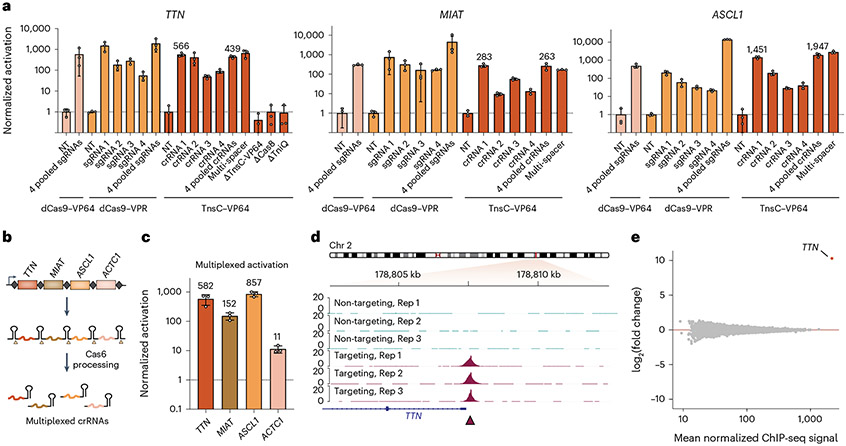
Fig. 3 ∣. Potent genomic transcriptional activation via RNA-guided recruitment of the AAA+ ATPase, TnsC.
a, TnsC–VP64 directs efficient transcriptional activation of endogenous human gene expression, as measured by RT–qPCR. Four distinct crRNAs were combined for each condition and were delivered individually, as a pool or as a single multi-spacer multiplexed CRISPR array. The dCas9–VP64 and dCas9–VPR comparisons used four distinct sgRNAs encoded on separate plasmids. NT, non-targeting; T, targeting. b, Schematic demonstrating Cas6’s ability to process CRISPR arrays in vivo, thus allowing for the use of multiplexed CRISPR arrays to target multiple sites concurrently. c, Multiplexed activation of four distinct genes in the same cell pool. d, A 10-kb viewing window of ChIP-seq signal at the TTN promoter corresponding to TTN guide 1. e, Differential binding analysis plot. Across consensus peaks for each condition, the only region exhibiting significantly different ChIP enrichment (FDR < 0.05) between targeting and non-targeting conditions was the peak at the TTN promoter. Data in a and c are shown as the mean ± s.d. for n = 3 biologically independent samples. Viewing windows in d are shown for three biologically independent targeting and non-targeting samples, and ChIP-seq signal is visualized as SPMR. Data in e are shown as the mean for n = 3 biologically independent samples for each condition on the y axis and the mean for all n = 6 biologically independent samples on the x axis, irrespective of condition.
Fig. 4 ∣
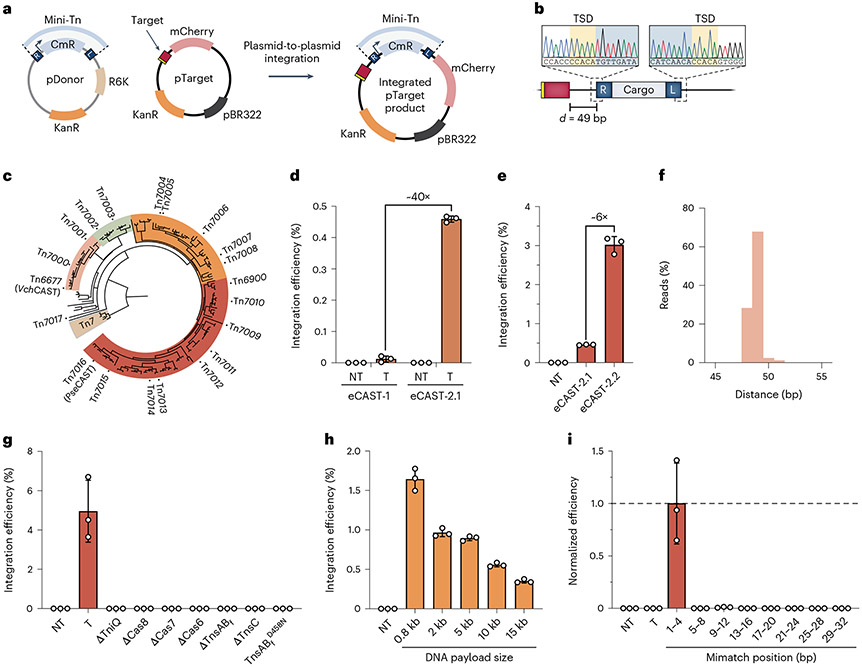
Fig. 4 ∣. Plasmid-based RNA-guided DNA integration in human cells using diverse CASTs.
a, Schematic of plasmid-to-plasmid transposition assay in human cells. b, Sanger sequencing confirmation of targeted integration products after plasmid isolation from human cells and selection in E. coli (a), showing the expected insertion site position and presence of target site duplication. c, Phylogenetic tree of Type I-F CRISPR-associated transposon systems adapted from previous work in the lab, with labels of the homologs that were tested in human cells. d, Comparison of plasmid-to-plasmid integration efficiencies with eCAST-1 (VchCAST) and eCAST-2.1 (PseCAST), as measured by qPCR. Efficiencies are calculated by comparing Cq values between the integration junction product and a reference sequence located elsewhere on pTarget, as described in Methods. e, Optimization of eCAST-2 (PseCAST) integration efficiencis by varying NLS placement and plasmid stoichiometries, as described in Supplementary Fig. 7, yielded an approximate six-fold increase in integration efficiencies. f, Amplicon sequencing reveals a strong preference for integration 49 bp downstream of the 3′ edge of the site targeted by the crRNA in T-RL integrants. g, Deletion experiments confirm the obligate requirement of each protein component, a targeting crRNA and intact transposase active site (D220N mutation in TnsB, D458N mutation in TnsABf) for successful integration. h, RNA-guided DNA integration functions with genetic payloads spanning 1–15 kb in size, transfected based on molar amount. i, RNA-guided DNA integration shows a strong sensitivity to mismatches across the entire 32-bp target site. Data were normalized to the perfectly matching (PM) crRNA, which exhibited an efficiency of 4.7 ± 1.8%. Data in d, e and gi are shown as the mean ± s.d. for n = 3 biologically independent samples. Data in d, e and gi were determined by qPCR.
Fig. 5 ∣
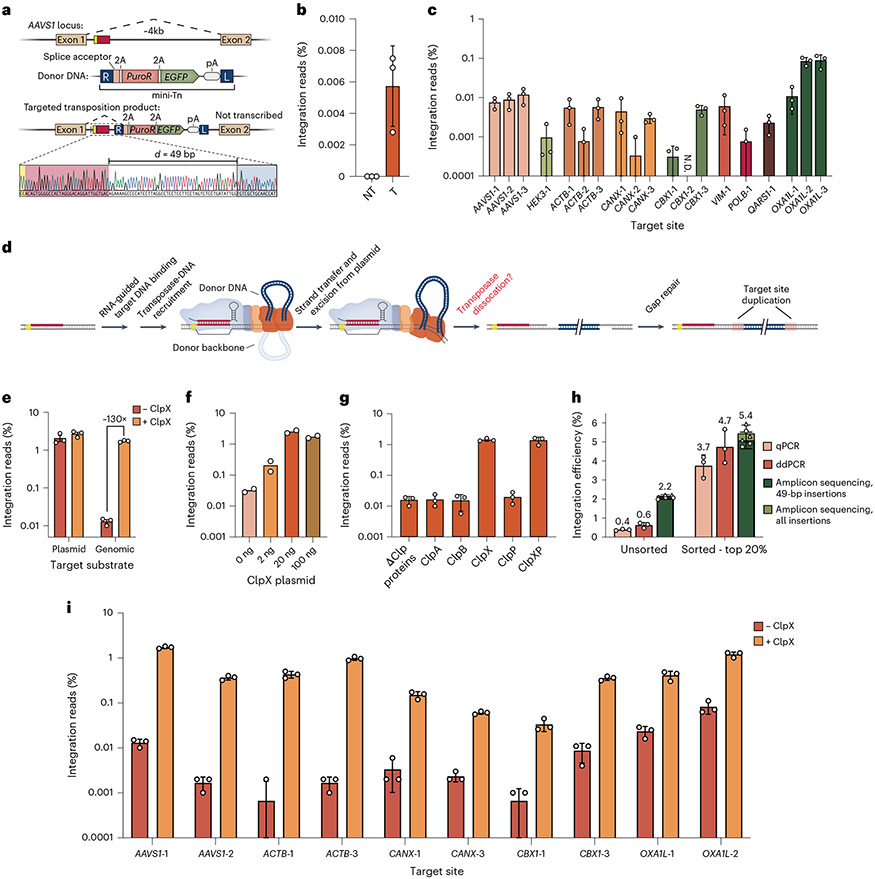
Fig. 5 ∣. ClpX-mediated enhancement of genomic DNA integration with eCAST-3.
a, Sanger sequencing of nested PCR of genomic lysates In which eCAST-2.2 targeted the AAVS1 genome and showed a junction product 49 bp downstream of the target site targeted by crRNA12 (AAVS1-1), one of the optimal crRNAs screened in Supplementary Fig. 10a. b, Initial quantifications of genomic integration efficiencies at AAVS1-1. c, Integration efficiencies across multiple loci within human genome showed broadly limited efficiencies. Quantified integration efficiencies less than 0.0001% were not plotted, and ‘N.D.’ represents a target site in which no integration events were detected across three biological replicates. d, Proposed steps required for successful targeted integration, including the downstream gap repair needed for complete resolution of the integration product. e, Co-transfection of EcoClpX specifically improves genomic, but not plasmid, integration efficiencies in human cells. f, Co-transfecting EcoClpX at varied amounts directly impacts genomic integration efficiencies in human cells. g, Investigating the impact of various Clp proteins from E. coli on genomic integration efficiencies in human cells. h, Integration efficiencies for samples before and after FACS of a fluorescent transfection marker to select for the top 20% brightest cells. Sorting enriched integration efficiencies, as measured by qPCR, ddPCR and amplicon sequencing (Supplementary Fig. 9b). For amplicon sequencing samples, triangle data points represent all insertions characterized, whereas circle data points represent only 49-bp insertions. i, Integration efficiencies were investigated across multiple loci within the human genome with and without EcoClpX. Quantified integration efficiencies less than 0.0001% were not plotted. Data in b, c, e and gi are shown as the mean ± s.d. for n = 3 biologically independent samples. Data in f are shown as the mean for n = 2 biologically independent samples. Data in b, c, e, f, g and i are quantified by amplicon sequencing. FACS, fluorescence-activated cell sorting.

Update of

References

    1. Pickar-Oliver A & Gersbach CA The next generation of CRISPR–Cas technologies and applications. Nat. Rev. Mol. Cell Biol 20, 490–507 (2019). - PMC - PubMed
    1. Knott GJ & Doudna JA CRISPR–Cas guides the future of genetic engineering. Science 361, 866–869 (2018). - PMC - PubMed
    1. Anzalone AV, Koblan LW & Liu DR Genome editing with CRISPR–Cas nucleases, base editors, transposases and prime editors. Nat. Biotechnol 38, 824–844 (2020). - PubMed
    1. Maruyama T. et al. Inhibition of non-homologous end joining increases the efficiency of CRISPR/Cas9-mediated precise genome editing. Nature 33, 538–542 (2015). - PMC - PubMed
    1. Nakade S. et al. Microhomology-mediated end-joining-dependent integration of donor DNA in cells and animals using TALENs and CRISPR/Cas9. Nat. Commun 5, 5560 (2014). - PMC - PubMed