


Effects of air pollution on restricted activity days: systematic review and meta-analysis
- PMID: 36991377
- PMCID: PMC10061989
- DOI: 10.1186/s12940-023-00979-8
Effects of air pollution on restricted activity days: systematic review and meta-analysis
Abstract
Background: The adverse effects of air pollution on human health include many diseases and health conditions associated with mortality, morbidity and disability. One example of these outcomes that can be translated into economic costs is the number of days of restricted activity. The aim of this study was to assess the effect of outdoor exposure to particulate matter with an aerodynamic diameter less than or equal to 10 and 2.5 μm (PM10, PM2.5), nitrogen dioxide (NO2), and ozone (O3), on restricted activity days.
Methods: Observational epidemiological studies with different study designs were included, and pooled relative risks (RR) with 95% confidence intervals (95%CI) were calculated for an increase of 10 μg/m3 of the pollutant of interest. Random-effects models were chosen because of the environmental differences between the studies. Heterogeneity was estimated using prediction intervals (PI) and I-Squared (I2) values, while risk of bias was assessed using a tool developed by the World Health Organization specifically designed for air pollution studies, and based on different domains. Subgroup and sensitivity analyses were performed where possible. The protocol for this review was registered with PROSPERO (CRD42022339607).
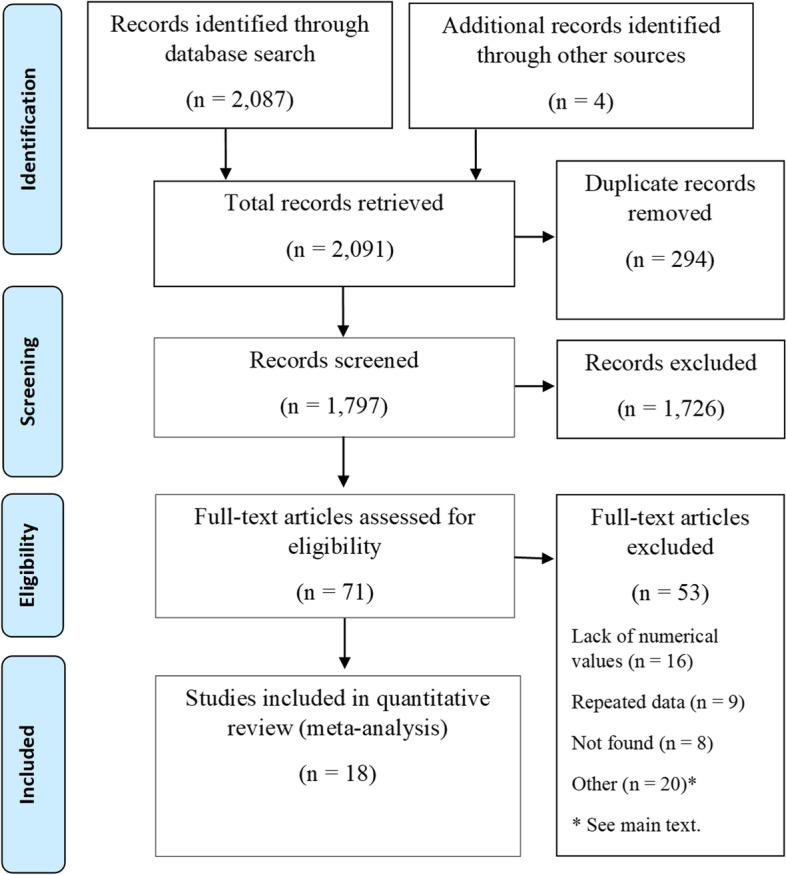
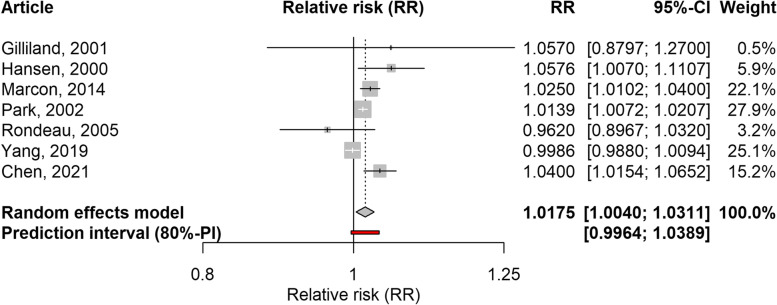
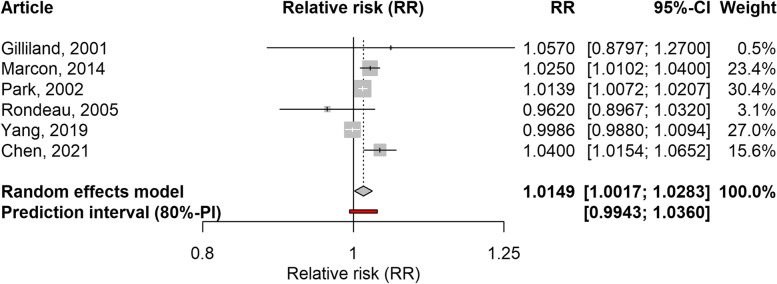
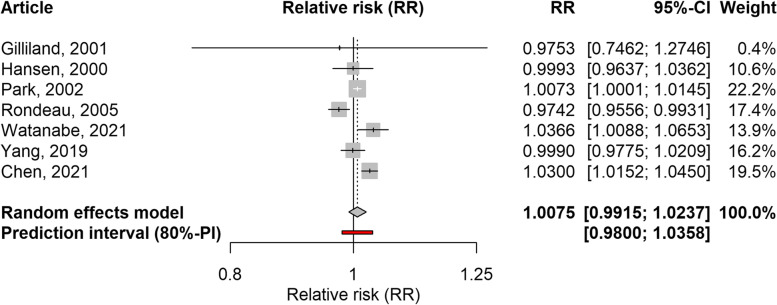
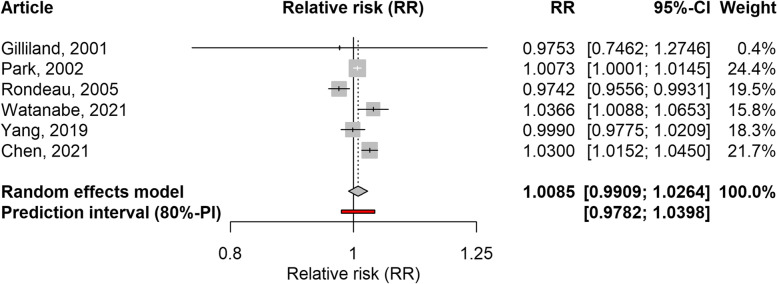
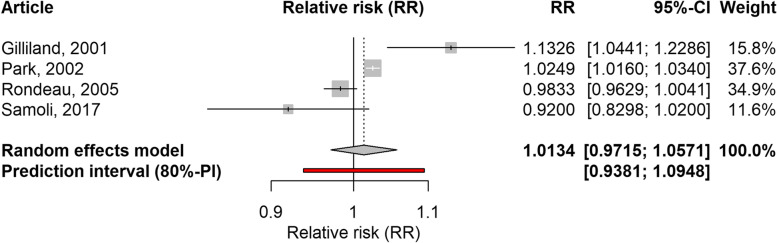
Results: We included 18 articles in the quantitative analysis. Associations between pollutants and restricted activity days in time-series studies of short-term exposures, measured as work-loss days, school-loss days, or both were significant for PM10 (RR: 1.0191; 95%CI: 1.0058-1.0326; 80%PI: 0.9979-1.0408; I2: 71%) and PM2.5 (RR: 1.0166; 95%CI: 1.0050-1.0283; 80%PI: 0.9944-1.0397; I2: 99%), but not for NO2 or O3. Some degree of heterogeneity between studies was observed, but sensitivity analysis showed no differences in the direction of the pooled relative risks when studies with a high risk of bias were excluded. Cross-sectional studies also showed significant associations for PM2.5 and restricted activity days. We could not perform the analysis for long-term exposures because only two studies analysed this type of association.
Conclusion: Restricted activity days and related outcomes were associated with some of the pollutants under evaluation, as shown in studies with different designs. In some cases, we were able to calculate pooled relative risks that can be used for quantitative modelling.
Keywords: Absenteeism; Air pollution; Meta-analysis; Observational study; Systematic review.
© 2023. The Author(s).
Conflict of interest statement
The authors declare no competing interests.
Figures


References
-
- WHO global air quality guidelines: Particulate matter (PM2.5 and PM10), ozone, nitrogen dioxide, sulfur dioxide and carbon monoxide [Internet]. Geneva: World Health Organization; 2021 [cited 2022 Aug 24]. Available from: http://www.ncbi.nlm.nih.gov/books/NBK574594/. - PubMed
-
- Hoffmann B, Boogaard H, de Nazelle A, Andersen ZJ, Abramson M, Brauer M, et al. WHO Air Quality Guidelines 2021-Aiming for Healthier Air for all: A Joint Statement by Medical, Public Health, Scientific Societies and Patient Representative Organisations. Int J Public Health. 2021;66:1604465. doi: 10.3389/ijph.2021.1604465. - DOI - PMC - PubMed
Publication types
MeSH terms
Substances
LinkOut - more resources
Full Text Sources
Medical
Research Materials
Miscellaneous
