


Viral Vectors in Gene Therapy: Where Do We Stand in 2023?
- PMID: 36992407
- PMCID: PMC10059137
- DOI: 10.3390/v15030698
Viral Vectors in Gene Therapy: Where Do We Stand in 2023?
Abstract
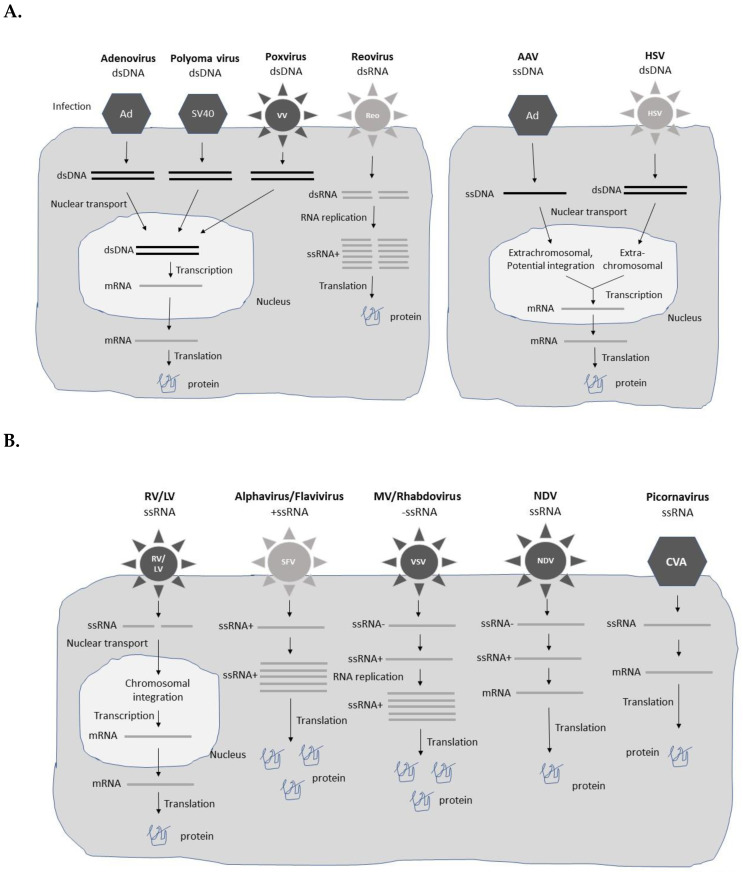
Viral vectors have been used for a broad spectrum of gene therapy for both acute and chronic diseases. In the context of cancer gene therapy, viral vectors expressing anti-tumor, toxic, suicide and immunostimulatory genes, such as cytokines and chemokines, have been applied. Oncolytic viruses, which specifically replicate in and kill tumor cells, have provided tumor eradication, and even cure of cancers in animal models. In a broader meaning, vaccine development against infectious diseases and various cancers has been considered as a type of gene therapy. Especially in the case of COVID-19 vaccines, adenovirus-based vaccines such as ChAdOx1 nCoV-19 and Ad26.COV2.S have demonstrated excellent safety and vaccine efficacy in clinical trials, leading to Emergency Use Authorization in many countries. Viral vectors have shown great promise in the treatment of chronic diseases such as severe combined immunodeficiency (SCID), muscular dystrophy, hemophilia, β-thalassemia, and sickle cell disease (SCD). Proof-of-concept has been established in preclinical studies in various animal models. Clinical gene therapy trials have confirmed good safety, tolerability, and therapeutic efficacy. Viral-based drugs have been approved for cancer, hematological, metabolic, neurological, and ophthalmological diseases as well as for vaccines. For example, the adenovirus-based drug Gendicine® for non-small-cell lung cancer, the reovirus-based drug Reolysin® for ovarian cancer, the oncolytic HSV T-VEC for melanoma, lentivirus-based treatment of ADA-SCID disease, and the rhabdovirus-based vaccine Ervebo against Ebola virus disease have been approved for human use.
Keywords: approved drugs; cancer; chronic disease; clinical trials; gene therapy; preclinical models; vaccines; viral vector.
Conflict of interest statement
The author declares no conflict of interest.
Figures
References
-
- Lundstrom K. Novel Approaches and Strategies for Biologics, Vaccines and CancerTherapies. Elsevier; San Diego, CA, USA: 2015. New era in gene therapy; pp. 15–37.
-
- Ramirez-Montagut T. Novel Approaches and Strategies for Biologics, Vaccines and Cancer Therapies. Elsevier; San Diego, CA, USA: 2015. Cancer vaccines; pp. 365–388.
Publication types
MeSH terms
Substances
LinkOut - more resources
Full Text Sources
Other Literature Sources
Medical
Research Materials
