


This is a preprint.
High-resolution functional description of vaginal microbiomes in health and disease
- PMID: 36993583
- PMCID: PMC10055360
- DOI: 10.1101/2023.03.24.533147
High-resolution functional description of vaginal microbiomes in health and disease
Update in
-
Integrating compositional and functional content to describe vaginal microbiomes in health and disease.Microbiome. 2023 Nov 30;11(1):259. doi: 10.1186/s40168-023-01692-x. Microbiome. 2023. PMID: 38031142 Free PMC article.
Abstract
Background: A Lactobacillus-dominated vaginal microbiome provides the first line of defense against numerous adverse genital tract health outcomes. However, there is limited understanding of the mechanisms by which the vaginal microbiome modulates protection, as prior work mostly described its composition through morphologic assessment and marker gene sequencing methods that do not capture functional information. To address this limitation, we developed metagenomic community state types (mgCSTs) which uses metagenomic sequences to describe and define vaginal microbiomes based on both composition and function.
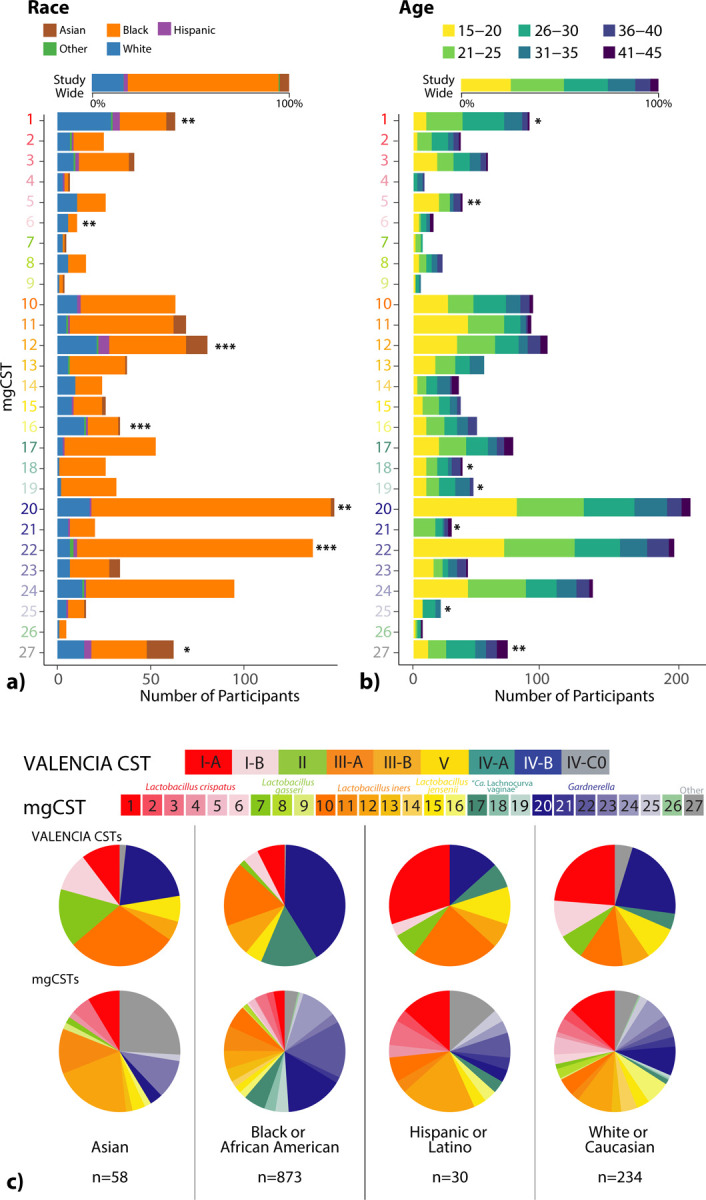
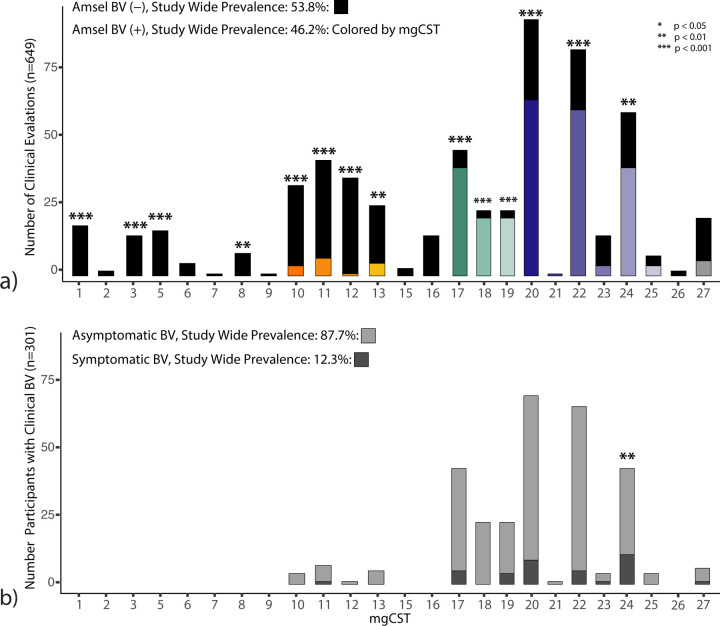
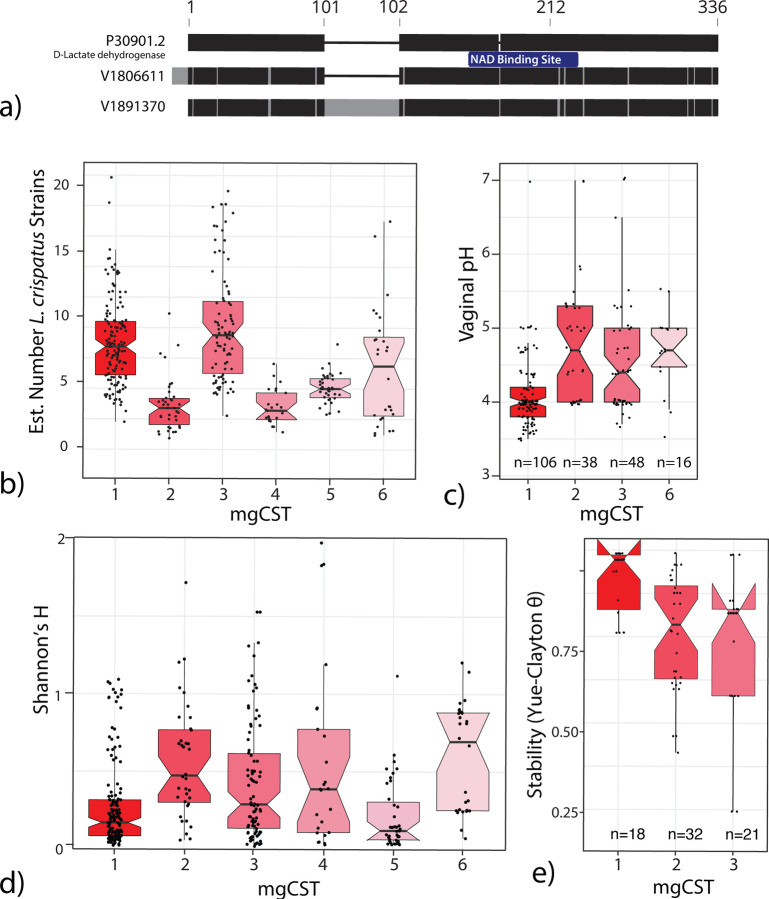
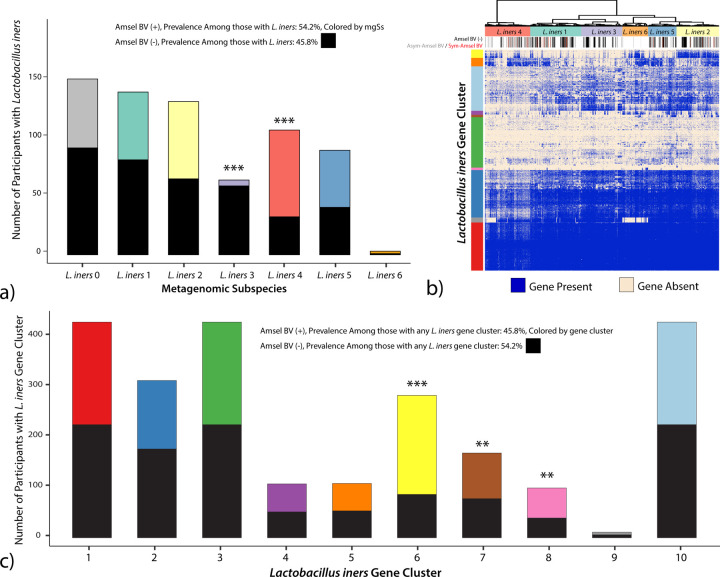
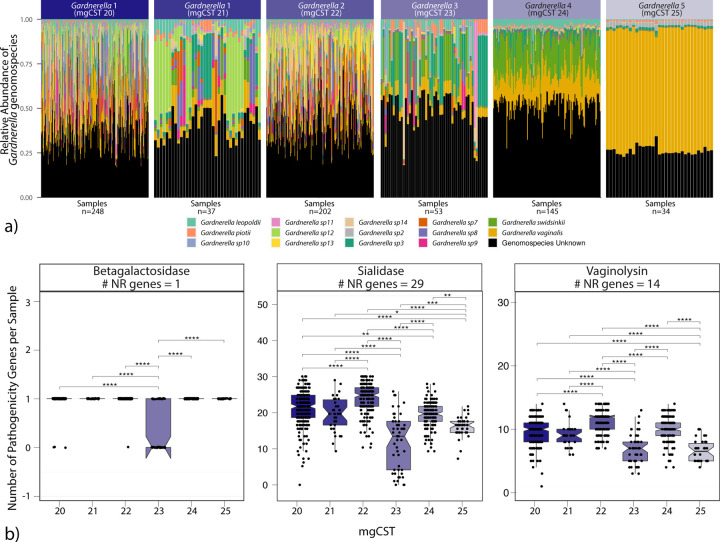
Results: MgCSTs are categories of microbiomes classified using taxonomy and the functional potential encoded in their metagenomes. MgCSTs reflect unique combinations of metagenomic subspecies (mgSs), which are assemblages of bacterial strains of the same species, within a microbiome. We demonstrate that mgCSTs are associated with demographics such as age and race, as well as vaginal pH and Gram stain assessment of vaginal smears. Importantly, these associations varied between mgCSTs predominated by the same bacterial species. A subset of mgCSTs, including three of the six predominated by Gardnerella mgSs, as well as a mgSs of L. iners, were associated with a greater likelihood of Amsel bacterial vaginosis diagnosis. This L. iners mgSs, among other functional features, encoded enhanced genetic capabilities for epithelial cell attachment that could facilitate cytotoxin-mediated cell lysis. Finally, we report a mgSs and mgCST classifier as an easily applied, standardized method for use by the microbiome research community.
Conclusions: MgCSTs are a novel and easily implemented approach to reducing the dimension of complex metagenomic datasets, while maintaining their functional uniqueness. MgCSTs enable investigation of multiple strains of the same species and the functional diversity in that species. Future investigations of functional diversity may be key to unraveling the pathways by which the vaginal microbiome modulates protection to the genital tract. Importantly, our findings support the hypothesis that functional differences between vaginal microbiomes, including those that may look compositionally similar, are critical considerations in vaginal health. Ultimately, mgCSTs may lead to novel hypotheses concerning the role of the vaginal microbiome in promoting health and disease, and identify targets for novel prognostic, diagnostic, and therapeutic strategies to improve women's genital health.
Keywords: bacterial vaginosis; genital health; metagenome; sequencing; vaginal microbiome.
Conflict of interest statement
COMPETING INTERESTS STATEMENT JR is co-founder of LUCA Biologics, a biotechnology company focusing on translating microbiome research into live biotherapeutics drugs for women’s health. JR is Editor-in-Chief at Microbiome. All other authors declare that they have no competing interests.
Figures


References
-
- Witkin SS, Mendes-Soares H, Linhares IM, Jayaram A, Ledger WJ, Forney LJ. Influence of vaginal bacteria and D- and L-lactic acid isomers on vaginal extracellular matrix metalloproteinase inducer: implications for protection against upper genital tract infections. mBio. 2013;4(4); doi: 10.1128/mBio.00460-13. - DOI - PMC - PubMed
Publication types
Grants and funding
LinkOut - more resources
Full Text Sources
