


Elevated Anxious and Depressed Mood Relates to Future Executive Dysfunction in Older Adults: A Longitudinal Network Analysis of Psychopathology and Cognitive Functioning
- PMID: 36993876
- PMCID: PMC10046395
- DOI: 10.1177/21677026221114076
Elevated Anxious and Depressed Mood Relates to Future Executive Dysfunction in Older Adults: A Longitudinal Network Analysis of Psychopathology and Cognitive Functioning
Abstract
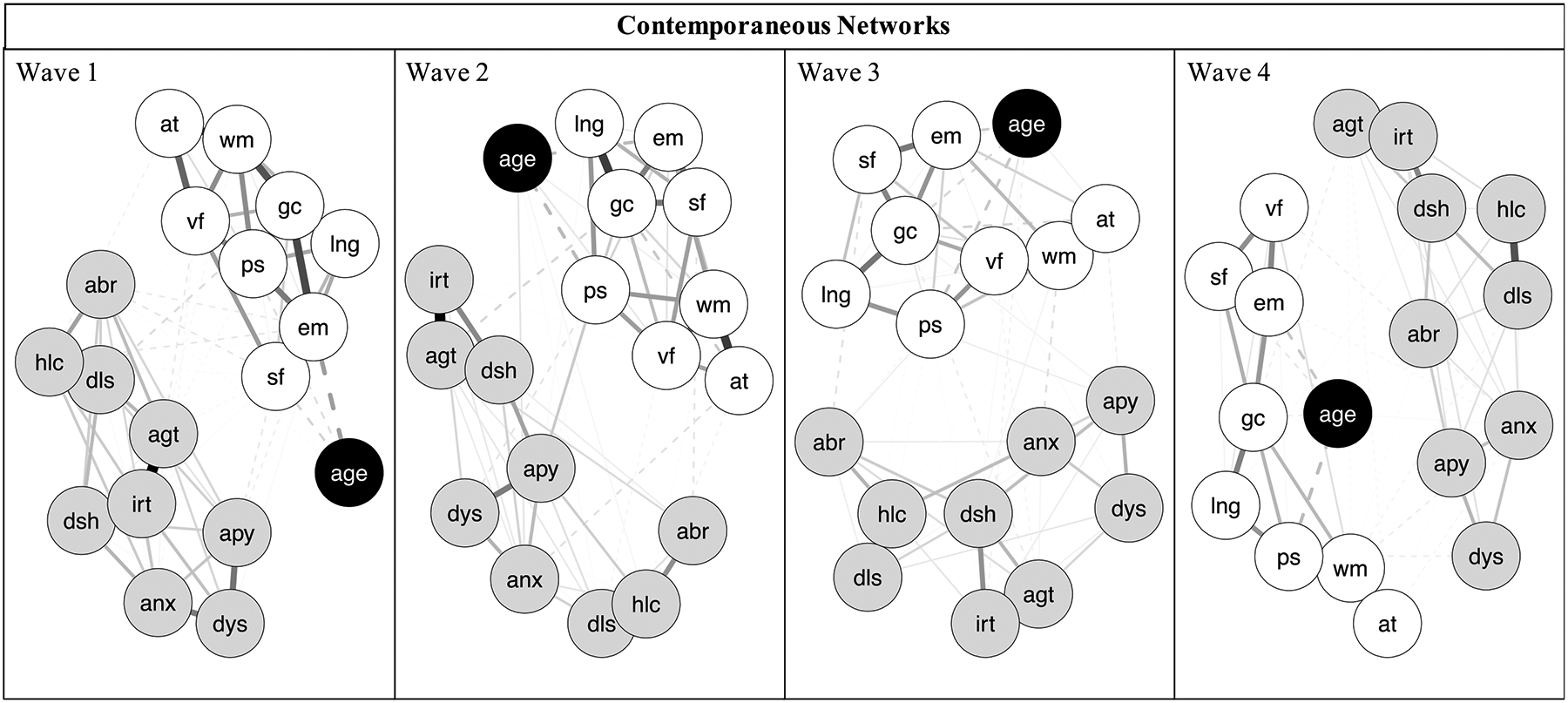
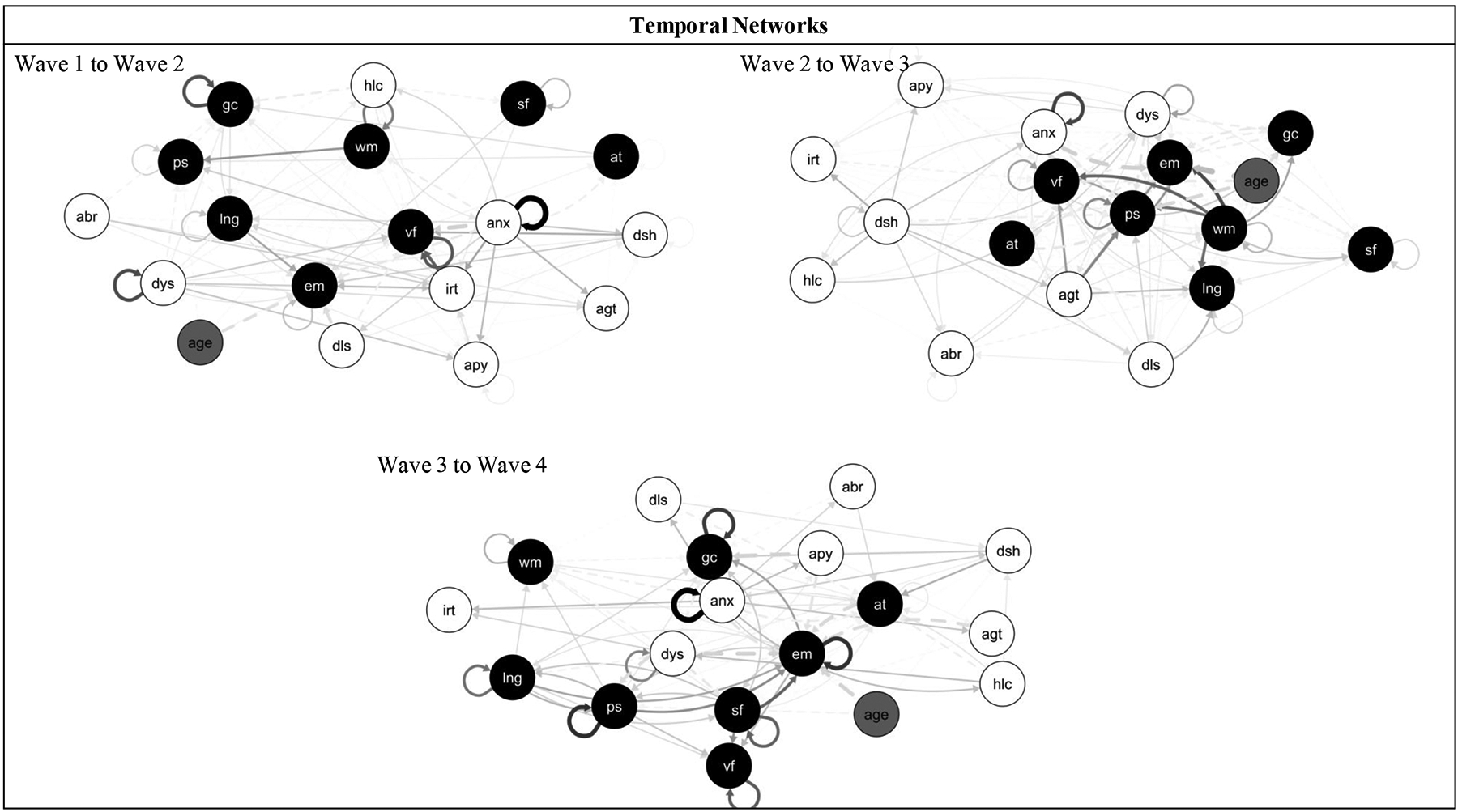
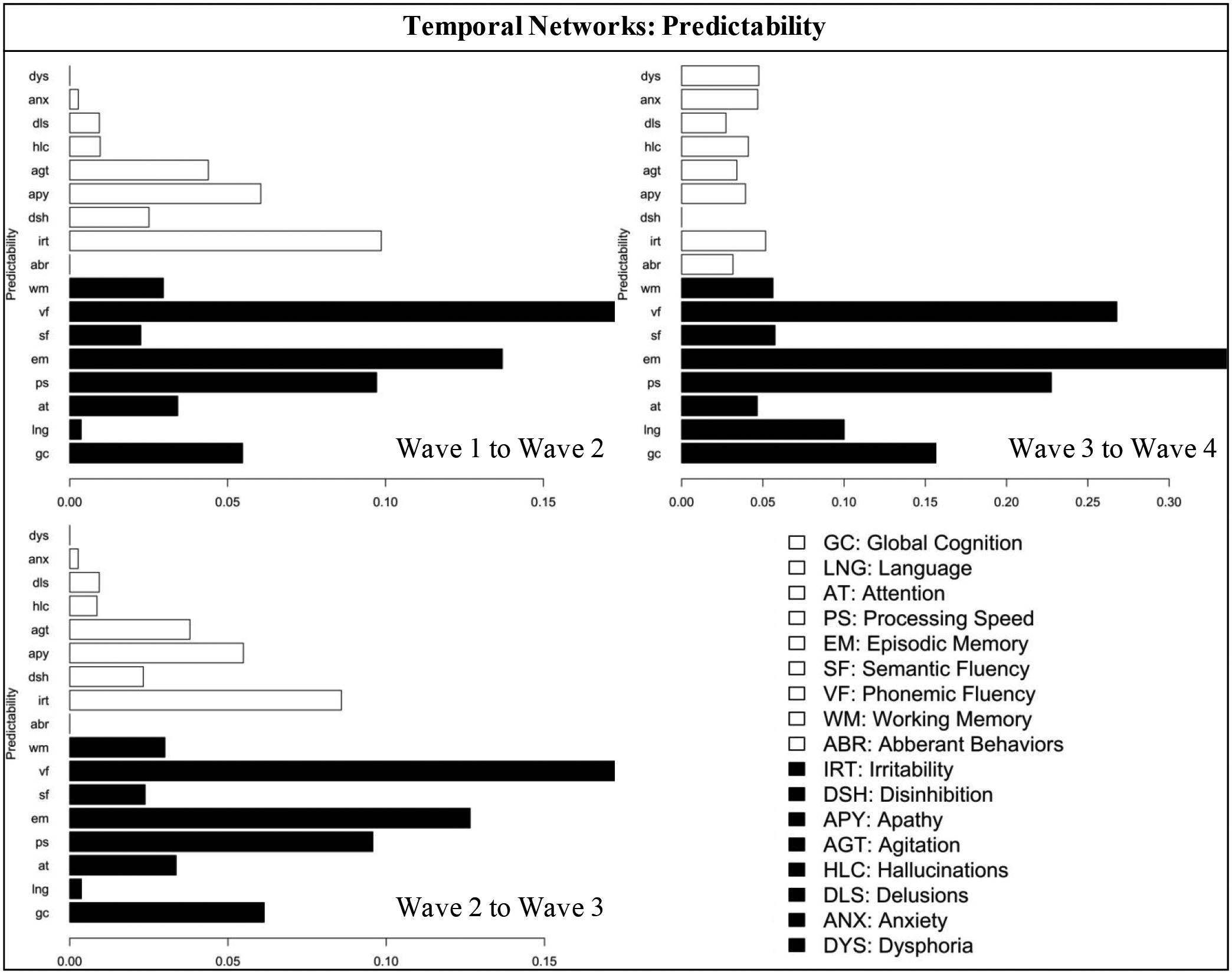
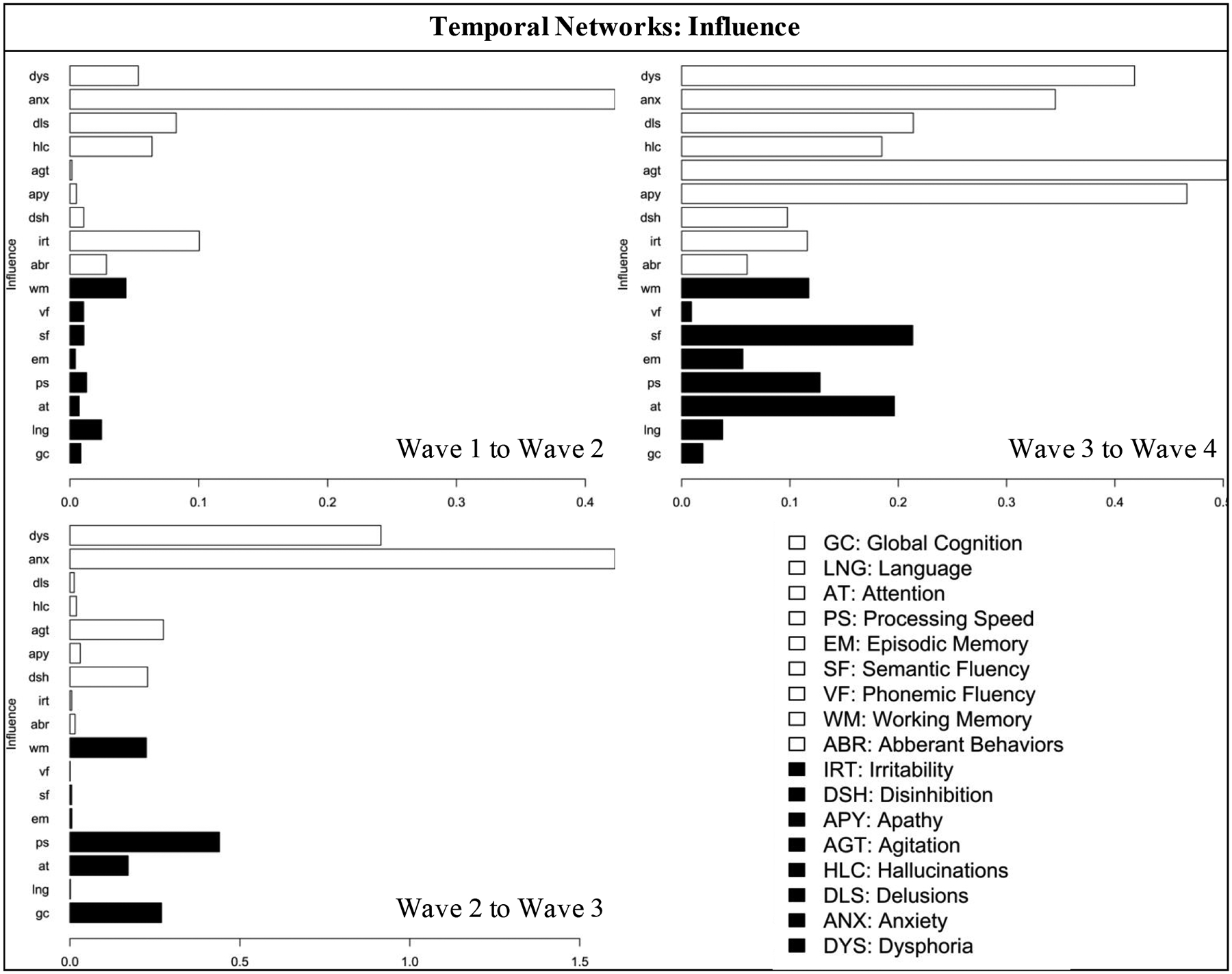
Vulnerability models posit that executive functioning (EF) problems centrally impact future common (vs. rare) psychopathology symptoms. Conversely, scar theory postulates that depression/anxiety (vs. other psychopathology) symptoms centrally influence reduced EF. However, most studies so far have been cross-sectional. We used cross-lagged panel network analysis to determine temporal and component-to-component relations on this topic. Community older adults participated across four time-points. Cognitive tests and the caregiver-rated Neuropsychiatric Inventory assessed nine psychopathology and eight cognitive functioning nodes. Nodes with the highest bridge expected influence cross-sectionally were agitation and episodic memory. Episodic memory had the strongest inverse relation with age. Agitation had the strongest negative association with global cognition. EF nodes tended to be centrally impacted by prior depressed and anxious moods rather than influential on any future nodes. Heightened anxious and depressed mood (vs. other nodes) centrally predicted future decreased EF-related (vs. non-EF-related) nodes in older adults, supporting scar (vs. vulnerability) theory.
Keywords: anxiety; cross-lagged panel network; executive function; network analysis; psychopathology.
Figures
References
-
- Alexopoulos GS (2003). Role of executive function in late-life depression. Journal of Clinical Psychiatry, 64 Suppl 14, 18–23. - PubMed
-
- Alloy LB, Wagner CA, Black SK, Gerstein RK, & Abramson LY (2011). The breakdown of self-enhancing and self-protecting cognitive biases in depression Handbook of self-enhancement and self-protection. (pp. 358–379). New York, NY, US: The Guilford Press.
Grants and funding
LinkOut - more resources
Full Text Sources