Longitudinal patient-reported outcomes in patients receiving chimeric antigen receptor T-cell therapy
- PMID: 36995091
- PMCID: PMC10368828
- DOI: 10.1182/bloodadvances.2022009117
Longitudinal patient-reported outcomes in patients receiving chimeric antigen receptor T-cell therapy
Abstract
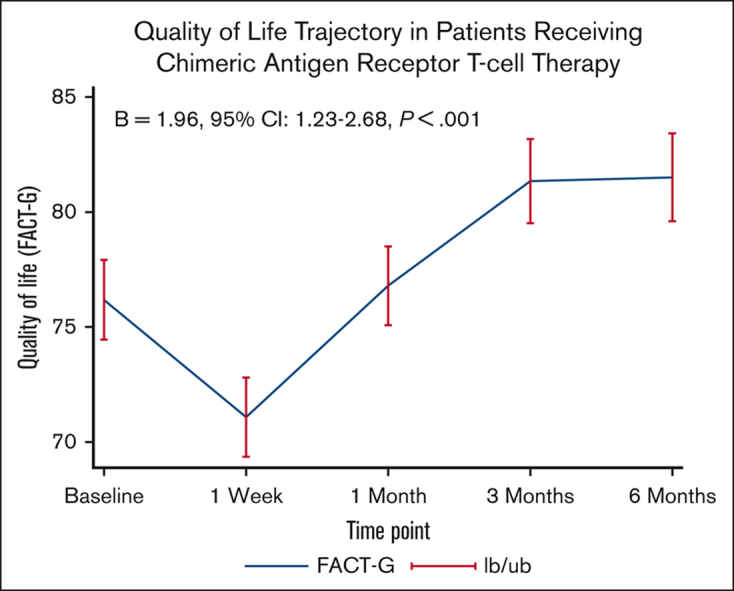
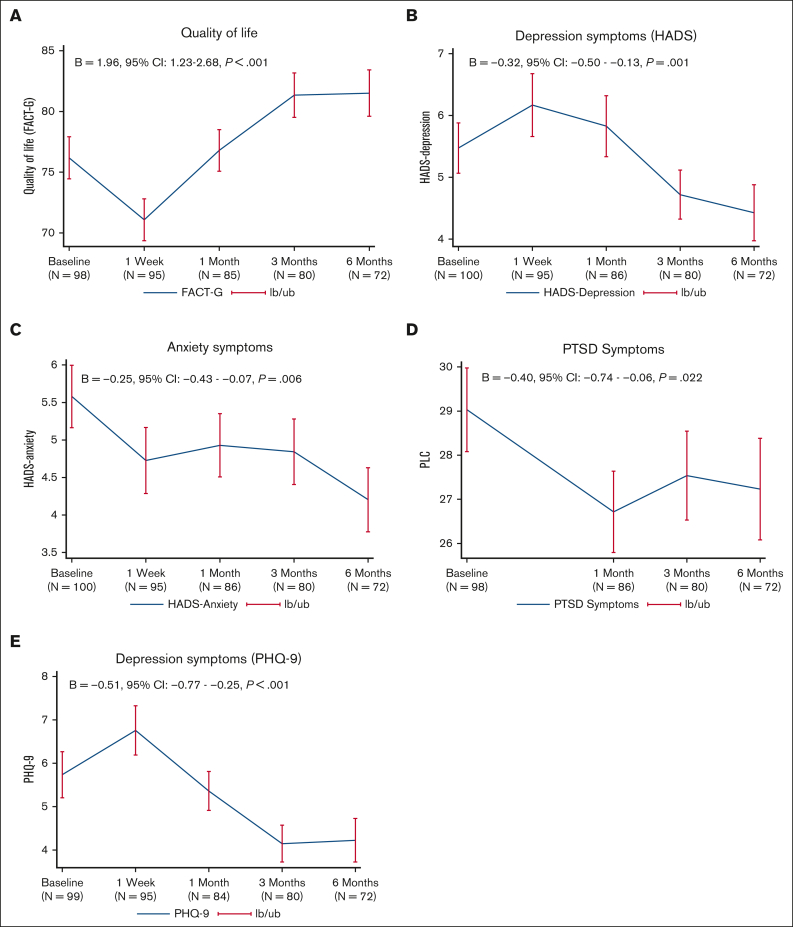
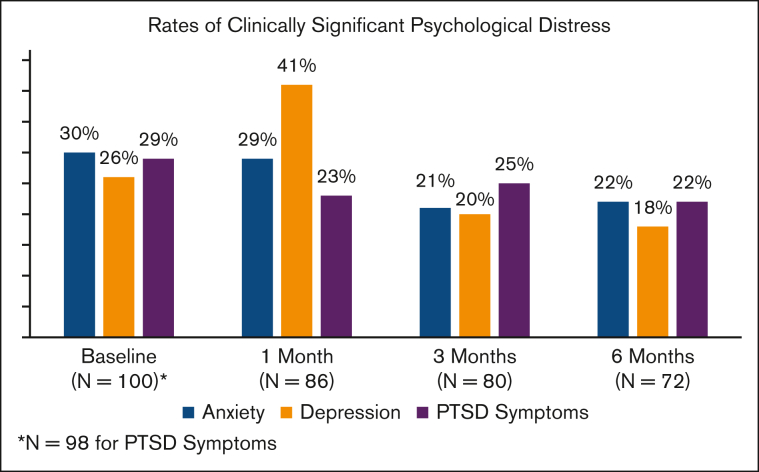
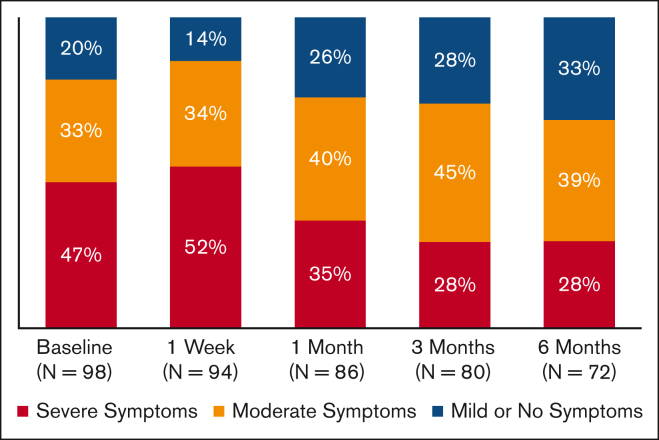
Chimeric antigen receptor T-cell therapy (CAR-T) has transformed the treatment for relapsed/refractory hematologic malignancies; however, data on patient-reported outcomes in CAR-T are limited. We conducted a longitudinal study of adults with hematologic malignancies receiving CAR-T. We assessed quality of life (QOL; functional assessment of cancer therapy-general), psychological distress (hospital anxiety and depression scale, patient health questionnaire-9, posttraumatic stress disorder [PTSD] checklist), and physical symptoms (Edmonton symptom assessment scale-revised) at baseline, 1 week, 1, 3, and 6 months after CAR-T. We used linear mixed models to identify factors associated with QOL trajectory. We enrolled 103 of 142 eligible patients (3 did not receive CAR-T). QOL (B = 1.96; P < .001) and depression (B = -0.32; P = .001) worsened by 1 week and improved by 6 months after CAR-T. At 6 months, 18%, 22%, and 22% reported clinically significant depression, anxiety, and PTSD symptoms, respectively. At 1 week, 52% reported severe physical symptoms, declining to 28% at 6 months after CAR-T. In unadjusted linear mixed models, worse Eastern Cooperative Oncology Group performance status (B = 1.24; P = .042), receipt of tocilizumab (B = 1.54; P = .042), and receipt of corticosteroids for cytokine release syndrome and/or neurotoxicity (B = 2.05; P = .006) were associated with higher QOL trajectory. After CAR-T, QOL declined, and depression increased early, followed by improvements in QOL, psychological distress, and physical symptoms by 6 months after infusion. A significant minority of patients reported substantial psychological distress and physical symptoms longitudinally.
© 2023 by The American Society of Hematology. Licensed under Creative Commons Attribution-NonCommercial-NoDerivatives 4.0 International (CC BY-NC-ND 4.0), permitting only noncommercial, nonderivative use with attribution. All other rights reserved.
Conflict of interest statement
Conflict-of-interest disclosure: P.C.J. provided consultation for AstraZeneca, Seagen, and ADC Therapeutics. The remaining authors declare no competing financial interests.
Figures
References
-
- Schuster SJ, Bishop MR, Tam CS, et al. Tisagenlecleucel in adult relapsed or refractory diffuse large B-cell lymphoma. N Engl J Med. 2019;380(1):45–56. - PubMed
-
- Abramson JS, Palomba ML, Gordon LI, et al. Lisocabtagene maraleucel for patients with relapsed or refractory large B-cell lymphomas (TRANSCEND NHL 001): a multicentre seamless design study. Lancet. 2020;396(10254):839–852. - PubMed