


Hepatic stellate cell activation markers are regulated by the vagus nerve in systemic inflammation
- PMID: 36997988
- PMCID: PMC10064698
- DOI: 10.1186/s42234-023-00108-3
Hepatic stellate cell activation markers are regulated by the vagus nerve in systemic inflammation
Abstract
Background: The liver is an important immunological organ and liver inflammation is part of the pathophysiology of non-alcoholic steatohepatitis, a condition that may promote cirrhosis, liver cancer, liver failure, and cardiovascular disease. Despite dense innervation of the liver parenchyma, little is known about neural regulation of liver function in inflammation. Here, we study vagus nerve control of the liver response to acute inflammation.
Methods: Male C57BL/6 J mice were subjected to either sham surgery, surgical vagotomy, or electrical vagus nerve stimulation followed by intraperitoneal injection of the TLR2 agonist zymosan. Animals were euthanized and tissues collected 12 h after injection. Samples were analyzed by qPCR, RNAseq, flow cytometry, or ELISA.
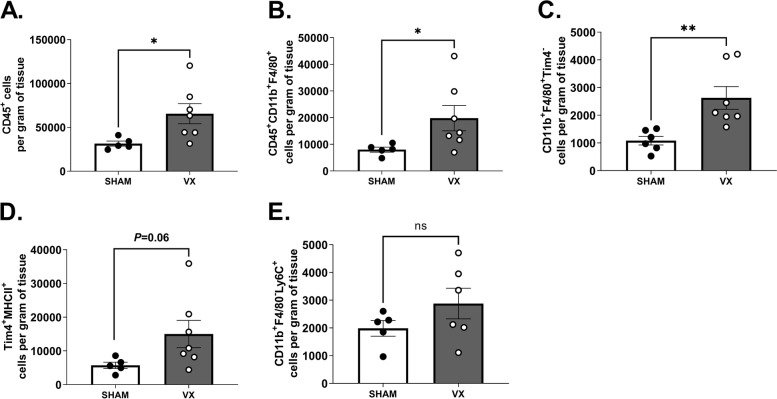
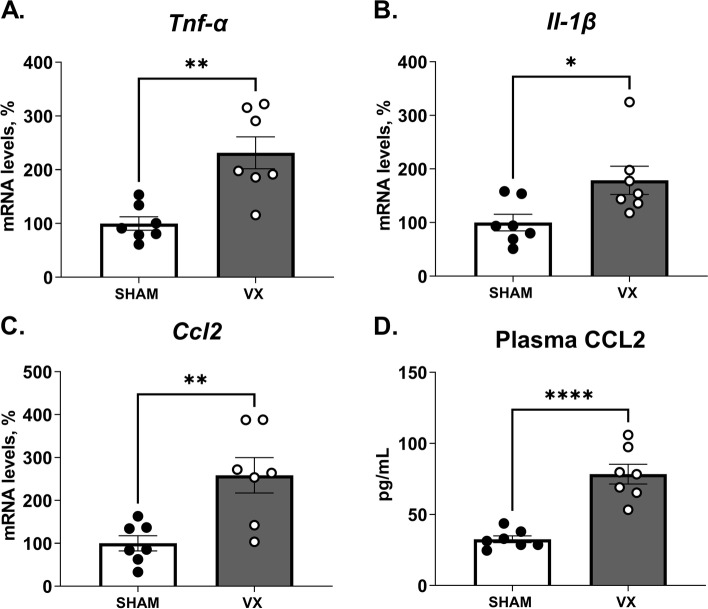
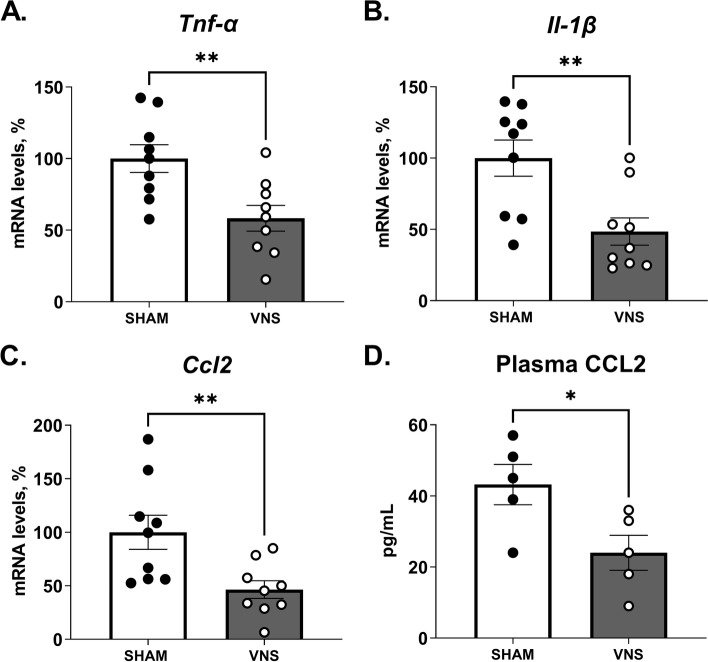
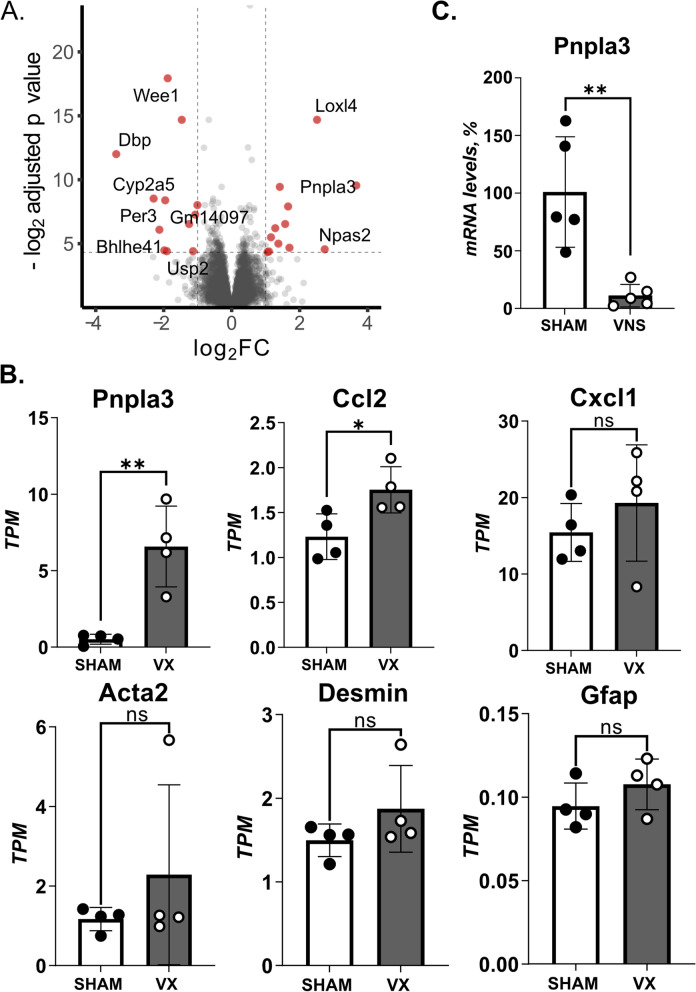
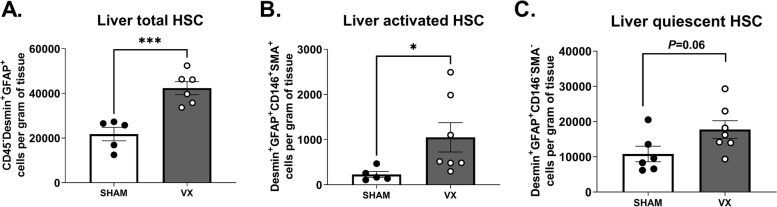
Results: Hepatic mRNA levels of pro-inflammatory mediators Ccl2, Il-1β, and Tnf-α were significantly higher in vagotomized mice compared with mice subjected to sham surgery. Differences in liver Ccl2 levels between treatment groups were largely reflected in the plasma chemokine (C-C motif) ligand 2 (CCL2) concentration. In line with this, we observed a higher number of macrophages in the livers of vagotomized mice compared with sham as measured by flow cytometry. In mice subjected to electrical vagus nerve stimulation, hepatic mRNA levels of Ccl2, Il1β, and Tnf-α, and plasma CCL2 levels, were significantly lower compared with sham. Interestingly, RNAseq revealed that a key activation marker for hepatic stellate cells (HSC), Pnpla3, was the most significantly differentially expressed gene between vagotomized and sham mice. Of note, several HSC-activation associated transcripts were higher in vagotomized mice, suggesting that signals in the vagus nerve contribute to HSC activation. In support of this, we observed significantly higher number of activated HSCs in vagotomized mice as compared with sham as measured by flow cytometry.
Conclusions: Signals in the cervical vagus nerve controlled hepatic inflammation and markers of HSC activation in zymosan-induced peritonitis.
Keywords: Kupffer cells; Liver; Non-alcoholic fatty liver disease; PNPLA3.
© 2023. The Author(s).
Conflict of interest statement
PSO is a founder and shareholder of Emune AB. OA is a co-founder and shareholder of Lipoprotein Research Stockholm AB. The remaining authors declare no competing interests.
Figures
References
-
- Bonnardel J, T’Jonck W, Gaublomme D, Browaeys R, Scott CL, Martens L, et al. Stellate Cells, Hepatocytes, and Endothelial Cells Imprint the Kupffer Cell Identity on Monocytes Colonizing the Liver Macrophage Niche. Immunity. 2019;51(4):638–654.e9. doi: 10.1016/j.immuni.2019.08.017. - DOI - PMC - PubMed
Grants and funding
- 2019/the MedTechLabs
- 20170199/ALF Project Funds
- 20180502/ALF Project Funds
- 2014/Knut och Alice Wallenbergs Stiftelse
- 2017-03366/Vetenskapsrådet
- 2020-04443/Vetenskapsrådet
- 2020-01645/Vetenskapsrådet
- 2020-01557/Vetenskapsrådet
- 20200827/Hjärt-Lungfonden
- 20190672/Hjärt-Lungfonden
- 2021043122/Hjärt-Lungfonden
- 20210520/Hjärt-Lungfonden
- 20210532/Hjärt-Lungfonden
- 2019/Novo Nordisk postdoctoral fellow program at Karolinska Institutet
- (MINECO/Ministerio de Economía y Competitividad
- BES-2017-079711)/Ministerio de Economía y Competitividad
- PMP21/00057/Ministerio de Economía y Competitividad
- 19047SABI/Fundación AECC PROYE
LinkOut - more resources
Full Text Sources